The Interactive doc: Bob Lang and Diamond Road

MR_in_SL
From The Diamond Road

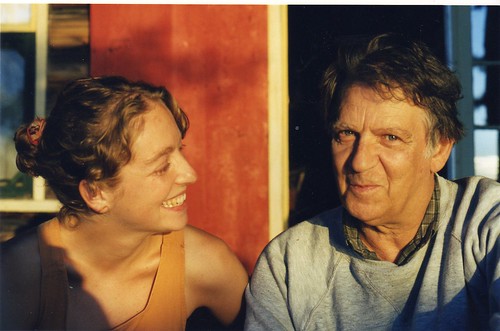
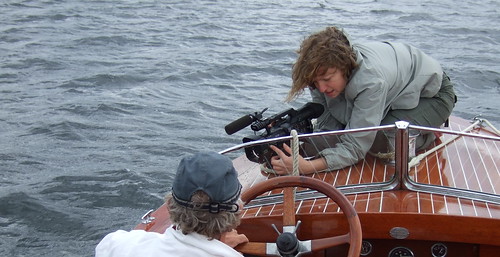
Can you be a documentary filmmaker in the present tough context and still have a life I do my best to have time for family and friends, and to get out in the bush or on a river somewhere regularly. This past weekend I was out paddling with another documentary producer/director, my friend Bob Lang from Port Hope. Bob has made some terrific films and television series, and he is one of the sanest people I know in the ‘business.’ For one thing, he has a great sense of story, only works on things he cares about, and makes very smart decisions. This has allowed him to keep his company, Kensington Comunications, going successfully for some twenty-seven years. Among his many excellent productions are The Sacred Balance, a four-hour series with David Suzuki.

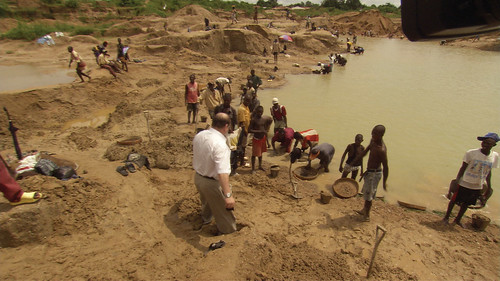
One of Bob’s recent productions is the series Diamond Road, three television hours but also a feature film version which just received the top documentary award at the Houston 41st Annual WorldFest . In addition Bob and his team have created a non-linear interactive version of the film, Diamond Road Online. Here you can dip into the complex story of the world diamond trade at whatever entry point you select on a world map. After viewing the segment you picked, you can select another one, out of a total of more than three hundred, and in that way construct your own story. It’s an ingenious use of Web 2.0 technologies, driven by a new sense of interactive, non-linear storytelling. The underlying architecture is such that it is able to calculate your personal interests by the choices you make and then offer suggestions, Amazon-style, for where to go next. You can even, as a user, contribute stories, edit clips and thus enrich the site for others.

This reminded me of my visit to the World conference of Wikipedia two years ago. I interviewed one of the founders of the movement whose name now escapes me, and asked what he thought would be the next cutting edge, the next frontier. His answer was instantaneous, short, and to the point: ‘collective story-telling.’
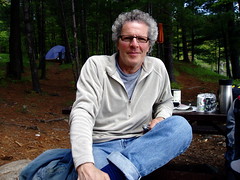
Bob Lang
Bob Lang in Frontenac Park.

Bob and I discussed whether we, as documentary filmmakers, used to structuring our stories in ‘auteur’ fashion, should be afraid of these kind of developments. I think we both agreed that yes, there will always be a place for stories in which we fashion and control the dramatic arc and editorial ‘line,’ but we should also welcome the participatory and democratic nature of these new experiences. If we trust the viewers they will make good use of the story material. Have a look at Diamond Road Online, it’s very well made.
http://www.diamondroad.tv/


a really inspiring doc: Young@Heart

groupshot[1]
Young@Heart

One of the most inspiring documentaries I have seen in recent years is playing in at least one theatre in Montreal right now. Young@Heart , by British filmmaker Stephen Walker, tells the story of a choir of elderly people preparing for an important concert in their Massachusetts home town. But they are not singing old folk songs and the national anthem. Classics of rock and roll and hip hop like Yes We Can or Shizofrenia take on a completely new meaning – or perhaps they just reveal their true meaning – when sung by people who are at the end of their lives. The preparations for the concert give the film a natural dramatic arc, but unforeseen events add surprising and touching turns of events. An impromptu prison concert is one of the best scenes in the film, and the death of two of the choir’s oldest members in the last week before the big concert adds a lot of poignancy. This is a must see film !

And it’s of special interest to me in the context of my own work. About ten years ago I made a film about a choir of homeless men in Montreal, called Enfants de Choeur in French and The Choir Boys in English. It was edited by Louise Côté and produced by Paul Lapointe at Érezi productions. Of all my own films, this is one of my favourites. It tells the real inside story behind the simple success story much covered by the media. The main theme of the film is the conflict between the choir director, a Mormon missionary, and the chorists who – in spite of all their addictions and other issues – aspire to controlling their own lives. As in Young@Heart, thanks to Louise, the songs really speak to what’s going on in the lives of the characters. The film was broadcast on the CBC and and on Radio-Canada’s flagship sunday night program Les Beaux Dimanches, a blessing in disguise as it came on the heels of the sound mix and on-line and prevented any theatrical distribution.

Also, right now I am working on the creative aspects of my film on the Raging Grannies, another film which will combine music and entertainment with serious social issues. As in Young@Heart and another recent film, Acros the Universe, I am planning to shoot some of the songs as video clips. This is going to be a lot of fun, for me and the crew, and also for our Granny friends who tend to be in their eighties.

CSTC Summer Institute just around the corner

Summer
Documentary instructors Peter Raymont and Steve Lucas with director Derreck Roemer and Jan Rofekamp, president and CEO of Film Transit International, at SIFT 2007.

Last december I had the opportunity to teach a two-day workshop on the basics of doc-making for the Canadian Screen Training Centre in Montreal. At the same time Nettie Wild and others were doing the same in other cities across the country.

Right now is registration time for the CSTC’s main activity, the Summer Institute of Film and Television (SIFT), which annually draws 250 participants from across the country to Ottawa for an intensive week of workshops, screenings and networking. ‘In sessions taught by seasoned documentary filmmakers, workshop participants explore the art and the business of capturing true stories on film, learning the essentials of concept development, pitching, shooting, editing and distribution.’ This year’s session starts on May 27th.

Here is a summary of who will be teaching and what (edited down from the CSTC’s material.)

Documentary : Getting Greenlit
From Development to Production with Steve Lucas
Five-day workshop (May 27-June1)

Level: Introductory

Getting Greenlit covers getting your documentary idea out of development and into production. If you’re ever going to make this film of yours, you’ll need to come up with a compelling way of talking about it. You’ll need to write about it in a compelling way, too. It’s a daunting proposition, no question, but it can be done. Thousands of people have done it—and so can you. This workshop is designed to help. You’ll meet documentary filmmakers who will share their films and experiences, and be able to pitch your idea for valuable feedback. There’s special focus on the art of the pitch and on what constitutes a promising film premise.

Suitable for: People who have a film idea or a story they want to develop and who are looking for a practical guide to documentary filmmaking. This is not a production course. Participants should bring two different ideas for a documentary or reality-based film – and come prepared to pitch.

About the instructor: Steve Lucas received an Academy Award nomination for his first film, a documentary feature entitled After the Axe, in 1983. He has been in the film and television business ever since.

Interventionist and Participatory Media
Making documentary media that matters with Katerina Cizek
Three-day workshop (May 28-30)

Level : Introductory/Intermediate

The course covers the basics of building media projects with partners that aim to change world-views, lives, policies, conditions – and tell good stories too. In this highly interactive workshop, you’ll learn about proven methods, projects and experiences, and we’ll brainstorm your own ideas and projects to develop concrete strategic plans. Bring your bright mind and ideas for projects.

Suitable for: Those who have made at least one film or media project (in documentary or other format).

About the instructor: Katerina Cizek explores the boundaries of the documentary genre with many and any media: video, internet, photography, audio, text, digital, blogging. She is this year winner at the 2008 Webby Awards (called “the Oscars of the internet” by The New York Times), winning for best online documentary series.

DOCOLOGY: Transforming Ideas into Images
with Peter Wintonick
Five-day workshop (May 27-June1)

Level : Intermediate/Advanced

This is a complete meal of a workshop including a few appetizers and drinks for dessert. We’ll examine the process of making marketable, idea-driven documentary from start to finish. From conception through to financing and how to gain exposure across the nowmedia world of multi-platform possibilities for documentary. An excursion into non-fiction whirl-wind of docmedia-making for intermediate and advanced level documentary a-fiction-ados, this workshop is suitable for everyone looking for wide-ranging exposure to the art, craft, philosophy and business of idea-driven, social filmmaking. For everyone hoping to turn fiction into faction.

Suitable for: Those who have made at least one film (in documentary or other format).

About the instructor: Peter Wintonick is a docfilmmaker and nowmedia maker among other incarnations, with a career spanning 30 years and more than 100 films. Known internationally as an Ambassador for Documentary Film, he was recently winner of the 2006 Governor General’s Prize in Media Arts, Canada’s highest such honour, and the Ontario Premier Prize.

For complete workshop and registration details visit www.cstc.ca/sift

CBC commissioning editors disagree with perceptions

791[1]
Up The Yangtze, a film by Yung Chang

When I attended the Hot Docs Festival in Toronto a few weeks ago, a heard a lot of talk about the CBC, much of it disgruntled. Once back in Montreal, I summarized these concerns and sent them to Andrew Johnson, Commissioning editor and senior producer of ‘The Lense’ who was very generous with his time and also consulted his colleageues, Catherine Olsen and Michael Claydon. Here’s our exchange:

Dear Andrew, hope this finds you well. I publish a blog on doc matters. I noticed at Hot Docs that there’s a perception that the CBC no longer plays the role it used to in documentary, especially social-political, and that the private broadcasters are picking up the slack. Some com-eds from private networks told me they find themselves with a lot of projects which even they think would be – or used to be – a natural fit for the CBC. Who at CBC would be the right person to ask a few questions to about this ?
Do you yourself have a (quotable) opinion on the subject ?

The response:

Magnus:

Thanks for your note and the information about your blog. I’ve consulted with my colleagues Catherine Olsen and Michael Claydon and, with respect, we all disagree with the implication that CBC is somehow less interested in or less engaged in the creation of documentaries, “especially social-political” documentaries. Each of us has the following response…

Catherine Olsen:

“The CBC & CBC Newsworld continue to be a champion of documentaries dealing with political and social issues. Is it true that we’re focusing more on Canada and Canadian social political issues in our commissioning – possibly – just as many other Canadian and international broadcasters are championing stories on their home turf. This is a worldwide trend …. but we still have some extraordinary examples of international stories that we commission including the theatrical and television hit Up the Yangtze, Liberty USA, Anthrax War, Stolen Babies, The Last Planet (the latter 4 still in production). On the acquisition and pre-sale front, The Passionate Eye continues as it has for the past 15 years to show more docs dealing with international social political issues than any other channel in Canada. (2 nights a week, 52 weeks a year).”

Michael Claydon:

“Most of the documentaries shown on the DOC ZONE are social/political in nature – what has changed is that we are putting more of an emphasis on a more journalistic approach at the main net, and trying to develop a brand that CBC viewers will respond to. That may not fit with the approach of some documentary makers, but the fact remains that CBC TV, CBC Newsworld and Documentary commission more hours than any other broadcaster in Canada.”

Andrew Johnson:

Lens docs primarily deal with contemporary social and political issues – in fact we’re more committed than ever to these films, but they do need to connect with the national audience we serve at CBC Newsworld – a news and current affairs network. All of our docs are, of course, are made by independent Canadian film-makers, mainly through commissions.

This season and next we have aired or will air commissioned films dealing with everything from anti-Wal-Mart activists, same-sex couples trying to adopt children, and the collision of drug issues & US-Canada relations to an experimental diet that may lead to a breakthrough in the fight against the obesity and diabetes epidemics in First Nations communities, the human cost of Canada’s refugee backlog, and the enormous social cost of revenue-generating video lottery terminals. We also look forward to airing a film about the collision of conflicting interests (government, environmental, tourism & First Nation) as efforts to cope with a unique, people-friendly orca lead to a tragic ending. This documentary has already won a dozen international and Canadian awards.

All of these films deal with tough or difficult subjects through engaging and dramatic stories. They pursue social-political issues through a wide range of approaches and are of real interest to Canadians. At Newsworld, we’ve been very pleased with the huge audience response to our documentaries this season just we’re gratified by the numerous awards our films and our filmmakers have won in recent years.”

Of course, there are other outlets for documentaries (including social-political) on CBC – such as The Nature of Things and Documentary.

In conclusion, we simply can’t accept the assessment of CBC that you’ve mentioned -we believe we’re still a home for provocative, cinematic and entertaining social-political docs. Of course, we can’t participate in all of the worthwhile projects that come to us so we’re happy to hear that the private networks are now entertaining these kinds of stories too. Nevertheless, we remain open to receiving new proposals from Canadian documentary-makers at anytime – and we will continue to commission and broadcast powerful, independently-made documentaries.

with best wishes,
Andrew

Andrew Johnson
Commissioning Editor &
Senior Producer, “The Lens”

A beautiful film : ‘My father’s studio’

image
Jennifer Alleyn with her dad Edmund.

Not long ago I had the chance to see ‘My father’s studio’, a beautiful film by Jennifer Alleyn produced by Jeannine Gagné at Amazone Films. The opening screening will be at ExCentris in French and at Cinéma du Parc in English starting May 9th. Excellent editing by Annie Jean. It’s one of those films one should see on a big screen. It won the award for best Canadian production at the Festival des films sur l’art (FIFA) in Montreal.

He was a great artist, Edmund Alleyn: a master colorist, very creative and original. We learn from Jennifer’s movie that her dad made many new departures during his career. Every time he had a real success, he let go of whatever style he’d been working in, and started again in a new uncertain adventure.

Creative, original, but not talkative. Jennifer did one interview with him which is placed right at the top of the film. What he sais is heartfelt and full of meaning, but she had to work really hard to get just a few sentences from him. He died not long after. The movie is a testimony about his life and his art.

Beyond the cinematic qualities of the film, I found myself in familiar territory, because my dad Arne is an artist. He lives in Sweden and he still painting and teaching at age 91. My uncle Torsten, who died one year ago, was a painter and sculptor. My sister Eva paints watercolours and does drawings. Watching Jennifer’s film, I almost could smell the oil paint of the artist studios of my childhood.

I am sure it was not easy for Jennifer to make a film about her dad, and I asked her some questions.

How came up the idea to make a movie about you’re dad?
I’ve been wanting to do a film about my father for a long time. His double identity intrigued me. Born to an English family in Quebec City, he liked to say he was “French to the skin, English to the bone”. I feel connected to that reality. I was born in Paris in May 1968 and we immigrated back to Quebec in 1971. His life span covers recent Quebec history.
But it took me years and his departure, to find the approach that would allow me to plunge into his universe, his imaginings, while remaining respectful of his privacy. Can we ever access the soul of another being? During the research, I discovered he was quite a free thinker, and a philosopher as well as a painter. But the film doesn’t resolve or explain anything. It offers images to the viewer’s own interpretation. One mustn’t forget it is a posthumous dialogue, taking place in the silence of painting..

What are, do you think, the big themes in the movie?
I was very inspired by his work & notes . The fact that I started filming while he was alive and persued the shoot in his absence, gave a particular tonality to the film. In a way, it gave me the opportunity to follow some of his privileged themes: movement and stillness.
Life and death coexist in the film. But it was a celebration of life that I wanted to put on the screen. The title of the film refers to the physical space in which he worked for 40 years, but also to the creator’s mind, constantly processing images, memories, ideas, hopes or unfinished projects.
image2

It’s a really personal film, did you hesitate before starting the process?

I never hesitated, but I went to television to see if the subject could interest others. Surprisingly, the French CBC immediately agreed to the voyage I was proposing. I knew my father was not a celebrity in Quebec, like Jean-Paul Riopelle or Borduas. But his path was very inspiring. He was as free spirit. Now that the film is finished I wonder what will be the next project that will drive me with such strength. It was so dense and deep.

Could you have done the movie while you’re dad was still alive? Do you regret that you didn’t ?

My only regret is that he couln’t be at the premiere of the film!

But had he still been around, it would have been impossible to do this film . He was quite a director himself. He would have called the shots and hired me as his assistant! So I waited for my turn. After his departure, I could revisit his life, question his trajectory, search for the missing fragments. Inheriting his studio gave me a dramatic starting point. The idea of structuring the film according as a stream of consciousness imposed itself very soon. Knowing my father’s love for Virgina Woolf, I would’nt be surprised if she whispered from the darkness…

In the narration,you decided to talk to you’re dad. Is it mainly a choice you made to communicate with the public, or is it because you had things to tell him, to clear up between the two of you ?
During the scriptwriting process, I wrote short texts to my father. Like Haicu’s. Some of them were too personal, but some made their way to the final narration.Through this very intimate dialogue, the father-daughter relationship is offered up. I though people could enter more easily into this intimate space if it was raw. No detour, no mask. Bluntly intimate!. The father figure has always been one of knowledge for me. His absence made me realise I had to turn to other sources to find answers. I guess I had a few unanswered ones I needed to bounce at him. I hope people can interchange characters and address their own parent, in the anonymity of the cinema!

Un trés beau film: L’atelier de mon père

image
Jennifer Alleyn avec son père Edmund.

Il n’y a pas longtemps j’ai eu l’occasion de voir ‘l’Atelier de mon père’, un trés beau film de Jennifer Alleyn produit par Jeannine Gagné à Amazone Films. Le film prend l’affiche à ExCentris en français et au Cinéma du Parc et anglais à partir du 9 Mai. Excellent montage par Annie Jean. C’est un film à voir au grand écran.

Il était tout un artiste, Edmund Alleyn: un grand coloriste, créatif et aussi très original. Il ressort du film de Jennifer que son père a effectué bien des ruptures au cours de sa carrière. Chaque fois qu’il obtenait un grand succès il délaissait le style qu’il avait affectioné pour se lancer dans une nouvelle aventure imprévisible.

Créatif, original, mais pas loquace. Jennifer a faut une entrevue avec lui, qui commence le film. Il livre des vérités lourdes de sens, mais elle a du travailler fort pour lui les arracher. Et il est mort pas longtemps après. Le film témoigne de sa vie et de son art.

En plus des grandes qualités du film en termes cinématographiques je me suis en quelque sorte reconnu dans ce film, puisque mon père Arne est un artiste. Il vit en Suède, il a quatrevingt-onze ans, et il continue à peindre. Mon oncle Torsten, décédé il y a un an, était peintre et sculpteur. Ma soeur Eva peint des aquarelles et fait des dessins. En regardant le film de Jennifer j’ai presque senti l’odeur de la peinture d’huile des studios d’artistes de mon enfance.

J’ai imaginé que ça n’a pas été facile pour Jennifer de faire un film sur son père, et je lui ai posé quelques questions.

Comment t’es venue l’idée de faire un film sur ton père?
Je me suis trouvée devant une pensée, une philosophie que j’ai eu envie d’approfondir, de mieux connaître. Le fait qu’il s’agisse de mon père m’est même d’abord apparu comme un obstacle. J’étais consciente qu’il n’avait ni la reconnaissance de Riopelle, ni le pouvoir d’attraction d’un Borduas. Mais son parcours me fascinait. C’est celui d’un esprit libre.

Quels sont, dirais-tu, les grands thèmes que l’on retrouve dans le film?
Le film s’articule autour de deux thèmes chers à Edmund Alleyn, qui sont la mouvance et la fixité. La mouvance, métaphore de la vie, se retrouve non seulement dans le parcours géographique de cet artiste qui a vécu à Québec, puis à Paris et enfin à Montréal; mais aussi, d’un point de vue iconologique, dans les symboles représentés dans les oeuvres, au premier plan le motif de l’eau qui traverse la peinture d’Edmund Alleyn, du début à la fin. L’idée de fixité, qui apparaît plus tardivement dans l’œuvre, est présente dès le début du film. Cet atelier déserté par l’artiste, ce lieu où le temps est suspendu, suggère la fixité de la mort, un arrêt du mouvement.

image2

C’est un film très personnel, as-tu hésité avant de l’entreprendre ?

Je n’ai pas hésité, mais j’ai attendu longtemps. Je savais qu’il serait impliquant et truffé de risques! J’avais déjà tenté d’approcher mon père avec une caméra, mais il redoutait les entrevues, il était secret. Puis, trois ans avant sa mort par un après-midi d’été, il a ouvert la porte et j’ai pu lui poser quelques questions. Après son décès, ces bandes vidéo ont pris une autre valeur. Et lorsque j’ai hérité de son atelier, le projet s’est imposé de lui-même.

Aurais-tu pu faire le film pendant que ton père était en vie? Regrette-tu de ne pas l’avoir fait?

Le seul regret que j’ai, c’est qu’il n’ait pas pu assister à la première du film!
Mais il aurait été impossible de faire le film de son vivant parce qu’il aurait voulu tout contrôler et j’aurais fait son film! Un peintre, par définition, est un créateur total. Avec son décès, un mur est tombé. Maintenant je le remercie d’avoir mis cette paille, si riche, dans mon berceau. Il a fallu qu’il parte, que le lien émotif ne soit plus là, entre nous, comme une interférence, pour que je puisse entrer dans son monde.

Tu as choisi de parler à ton père. Est-ce avant tout un choix de communication avec le public, ou parce que tu avais des choses à lui dire, ou à mettre au clair entre vous ?
En cours de recherche, il m’arrivait d’écrire à mon père de courts textes. Ils étaient souvent trop intimes, mais ils ont nourri la narration. Et j’ai gardé le Tu qui me semblait à la fois personnel et permettant une implication du spectateur. On a tous un père à qui l’on a dit tu. J’ai fait ce film parce que je crois au dialogue, à l’humain, à la richesse des idées partagées. Mais le dialogue dont je parle à la fin du film est celui que j’entame avec son oeuvre. C’est celui de l’art, qui va de soi à soi et qui ne finit jamais.