Socially commited docs: special issue of the Quebec magazine ‘Possibles’

AndreThibault_SimonBujold2090
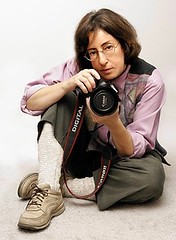
André Thibault, photo by Simon Bujold

Invited by André Thibault, I recently had the opportunity to collaborate on the latest issue of the magazine ‘Possibles’ on the subject of ‘Documentary: socially committed art’. ( my translation). In this issue you will find – in french -a round table with documentary filmmakers, articles on the collective Lucioles, on Gilles Groulx, on documentary film and women, and many other subjects. In addition to participating in the round table, I contributed an interview with India’s great documentarian Anand Patwardhan and an article entitled ‘Time is on Our Side.’ I asked André Thibeault, editor in chief, a few questions about the magazine and the special issue.

Could you tell us a little bit about the magazine ‘Possibles’?

This 31 year old journal was from the very beginning a review of progressive ideas and non-conformist criticism of an ideological orthodoxy, combining essays on political, social, economical and cultural subjects summed around a specific theme each time, and fictional and poetic writings. The founders were socially committted sociologists (ex. Marcel Rioux, Gabriel Gagnon) and poets (ex. Gaston Miron, Roland Giguere). The central theme, present in all different subjects examined over the years, is that of values found in emancipation and autonomy. The magazine is distributed by Dimédia and is present in all major culturally oriented bookstores. You can also subscribe or order a copy by calling this number 514 529 1316. The web site Possibles offers the editorial and table of contents of previous issues, but isn’t interactive.

Why did you decide to publish a special issue on socially committed documentaries?

We thought that in the light of the recent revival of social movements and criticism, the documentary has emerged as a more mature art form and is now an equal and important partner to other more classical forms of mobilization and awareness rising, such as books, conferences, demonstrations. We needed to understand (and share it with our public) the specific contribution of documentary films and examine why are the creating such a craze. It was also an occasion to create bonds with different partners pursuing the same goals, but not having many opportunities to meet and even less to work together.

What did you learn while researching this issue?

First of all I became aware of the enthusiasm present in the virtual community of documentary filmmakers, this enthusiasm is as much social as it is creative. As I pointed out in my editorial, what really struck me is the strong bond between social involvement and empathy: more human emotion in the engagement and more social awareness in the exploration of the human emotion. The documentary filmmakers who stand for these tendencies don’t have a magical solution to propose and let-alone one to impose. They don’t divide the world in two categories, the all bad and the all good. Instead they reach out for the sensitive human being and the citizen present in all of us and they make us question ourselves and incorporate these ideas in a permanent and invigorated civic debate. And this by using all the artistic means to tell a story but a real one.

Panel sur le cinéma engagé aux RVCQ

panel RVCQ

Photo Sylvain Légaré.

IL Y A DES EXTRAITS VIDÉO DANS CE POST, CERTAINS USAGERS DOIVENT LES ACTIVER EN BAS DE LA PAGE.

La semaine passée j’ai participé à une discussion de panel sur le cinéma engagé, dans le cadre des Rendez-vous du Cinéma Québecois . J’ai trouvé fort intéressant d’entendre des réalisateurs de fiction parler du documentaire, et j’ai demandé à mon assistante Dijana Lazar de résumer le débat et d’en choisir quelques extraits. Voici ce qu’elle a retenu:

La discussion sur ce sujet percutant et pertinent, autant pour le cinéma que pour la société en générale, a rassemblé cinq réalisateurs, vivant chacun à leur manière la vocation de ‘cinéaste engagé’. Manon Barbeau, Philippe Falardeau, Richard Desjardins, Bernard Émond et Magnus Isacsson ont tous, à travers leurs oeuvres cinématographiques, exprimé leurs préoccupations sociales ou politiques et débusqué des injustices et des inégalités dans le monde qui les entoure.
L’animatrice, Marie-Louise Arsenault a introduit la discussion en posant la même question révélatrice à tous les invités : « Qu’est-ce l’engagement pour vous? »

Bernard Émond a souligné que l’engagement social se trouve au coeur de ses préoccupations en tant que cinéaste, et même s’il ne fait de pas des films politiques en soi, ces notions sont toujours présentes dans ses oeuvres.
Il s’est aussi penché sur la question du cinéma documentaire par rapport au cinéma de fiction, dénonçant la situation très difficile et injuste dans laquelle se trouvent les documentaristes aujourd’hui au Québec et soulignant que les meilleures productions du cinéma québécois sont issues du cinéma documentaire.

[youtube IUJy7iO2gwg]

Pour Philippe Falardeau être engagé : ça veut surtout dire être cohérent et fidèle à ses idées et à ses principes. Il a aussi parlé du sort difficile du film documentaire, accusant les télédiffuseurs de charcuter les films des documentaristes qui travaillent souvent avec moins de moyens mais ayant les mêmes obligations au niveau dramatique que les cinéastes de fiction.

[youtube oITHGBosDNg]

Questionné sur l’ampleur de son engagement et parlant de la controverse qui entoure souvent ses films, dont ‘L’Erreur Boréale’ qui a soulevé un grand débat sur la coupe de bois au Québec, Richard Desjardins a profité de la tribune pour dénoncer la manière discriminatoire dont les amérindiens sont traités dans la société québécoise, et préconiser une démarche sur la scène internationale afin de remédier à leur situation et améliorer leurs conditions de vie.

[youtube 6_hSYEcFuZA]

Manon Barbeau, interrogée sur la facilité de faire les films engagés au Canada et au Québec, a répliqué que c’était beaucoup plus facile de réaliser ce genre de films ici que dans d’autres pays, qui subissent les mêmes problèmes sociaux mais qui ont des systèmes de censure très rigides. Elle a dit que le problème avec le cinéma engagé au Canada, c’est souvent la diffusion des films et non leur réalisation en soi.

[youtube vf6Reo_u29k]

En finissant la discussion, les invités ont tous partagé avec le public les titres de quelques oeuvres cinématographiques qui leur tiennent particulièrement à coeur, et Magnus Isacsson a souligné qu’il aime beaucoup voir des oeuvres de fiction car il en tire une inspiration pour ses propres films surtout par rapport à la construction de la courbe dramatique et l’exploration des personnages. Il a aussi parlé de ce qu’il considère être des ‘conditions gagnantes’ pour réaliser un documentaire qui sera satisfaisant, non seulement par la pertinence du sujet, mais aussi du point de vue dramatique.

[youtube lU35tY4XxtA]

Merci à Michael Julian Berz pour le tournage, à Dijana Lazar pour le résumé et les extraits vidéos, et aux RVCQ pour la photo.

Impressive doc hits big screen: Up the Yangtze

yantze1

I just saw the very successful Canadian-produced documentary ‘Up the Yangze’ and was very impressed. This is a first film, by a young Montreal-based director of Chinese origin, Yung Chang. It tells an epic story, with grand visuals of the transformation of the Three Gorges and the Yangze river valley, but it tells it through a touching and closely filmed story mainly of one family. They are poor uneducated farmers, and they cultivate a small plot of land by the river. As the plans for damming the river move ahead, they know their land will be flooded and they will be displaced along with 2 million other people. Unable to pay for her education, they send their oldest daughter to get a job on a tourist tour boat which travels up the river to the dam, in the final stages of construction. This provides terrific opportunities for showing the encounter of two worlds, and for cutting back and forth between the obsequious tour guides who are prepared to say anything to please the authorities and make a buck, and the struggling farm family for whom this whole development is a disaster. The filmmakers mine this rich vein for all it’s worth, to great effect. The numerous ironies and the poignancy of the situation steers the film away from any kind of simplistic analysis. And far from romanticising the old ways, they contrast the hardships of the age-old poverty with the glitter of a new shamelessly promotional commercialism. Through the story of one family you get a portrait of all of China and its dilemmas, economic, environmental, human. It’s also beautifuly filmed and edited. What an accomplishment ! I encourage you to go and see this film on the big screen, we need to show that there’s a place for theatrical screenings of docs.

My assistant Steven Ladouceur added the following information and links – apologies for the repetition.

This Friday February 22nd opens the Montreal screenings of Yung Chang’s highly acclaimed first feature-length documentary film, Up the Yangtze, at the AMC Forum. The Mirror says viewing this film is “one of those experiences that reinvigorates and restores your faith in the documentary film medium.” Chang graduated from Concordia University’s Film Production programme and his latest achievement stems from a “surreal” journey with his family to China in 2002. One year later, Chang was receiving support from EyeSteelFilm productions through former professor Daniel Cross and then the National Film Board. After developing and refining the project throughout 2004 and 2005, the film was mainly shot in 2006 and post-production ended in July of 2007. From it’s inception Up the Yangtze has been receiving awards and is continuing to do so now more then ever as it is breaking box office records.

Doc impressionnant prend l’affiche: Up the Yangtze

yantze1

Je viens de voir le succès documentaire Up the Yangtze, production canadienne qui m’a vraiment impressionné. C’est un premier film de Yung Chang, jeune réalisateur d’origine chinoise, basé a Montréal. Il raconte l’épopée de la transformation du Three Gorges et de la vallée de la rivière Yangtze avec des éléments visuels grandioses, mais la raconte principalement à travers l’histoire touchante et intimement filmé d’une famille. Ils sont des fermiers pauvres et sans éducation et ils cultivent un petit lot de terre près de la rivière. Alors que les plans pour créer un barrage avancent, ils savent que leur terre sera inondée et ils seront déplacés ainsi que 2 millions d’autres personnes. Incapable de payer pour son éducation, ils envoient leur fille aînée pour obtenir un emploi sur un bateau de croisière pour touriste qui voyage le long de la rivière jusqu’au barrage, qui en est a ses dernières étapes de construction. Ce qui permet une opportunité formidable de montrer la rencontre de deux mondes et couper entre les guides de tournée obséquieux qui sont prêts à dire n’importe quoi pour plaire aux autorités et faire de l’argent, et la lutte de famille de fermier pour qui ce développement est un désastre. Les documentaristes minent cette veine riche à fond avec brio. Les nombreuses ironies et le caractère poignant de la situation dirige le film loin d’une analyse simpliste. Et loin d’idéaliser les anciennes façons, ils créent un contraste entre les vieilles difficultés de la pauvreté et le scintillement effronté d’un nouveau commercialisme promotionnel. À travers l’histoire d’une famille, vous avez le portrait de toute la Chine avec ses dilemmes économiques, environnementaux, humains. Il est aussi magnifiquement filmé et monté. Quel accomplissement!

Mon assistant Steven Ladouceur ajoute ceci: ( pardonnez quelques répétitions.)

Ce vendredi 22 février a Montréal débutera les projections de Up the Yangtze, le premier long-métrage documentaire extrêmement acclamé de Yung Chang au Forum AMC. La version française du film prendra l’affiche le 7 mars au cinéma Quartier Latin. Le Mirror dit que voir ce film est « une de ces expériences qui revigore et restaure la foi en medium du film documentaire. » Chang est un diplômé du programme de Production Cinéma de l’Université Concordia et son dernier accomplissement trouve ses origines d’un voyage «surréaliste » avec sa famille en Chine en 2002. Un an plus tard, Chang recevait du support des productions EyeSteelFilm à travers un ancien professeur Daniel Cross et puis par l’Office National du Film. Après avoir développé le projet en 2004 et 2005, le film a principalement été tourné en 2006 et la post-production a terminé en juillet 2007. Dès ses débuts, Up the Yangtze reçoit des prix et continue à le faire maintenant plus que jamais alors qu’il établit de nouveaux records au guichet.

Les Rendez-vous du cinéma québecois

Angelina dortoir
Scène du film ‘De l’autre côté du pays’ de Catherine Hébert

La 26e édition des Rendez-vous du cinéma québécois présentera du 14. au 24. Février une vaste sélection de 299 films produits au Québec dont un grand nombre de très bons documentaires.

À travers cette riche programmation, quatre films documentaires que nous avons déjà mentionnés sur ce blogue, prendront l’affiche. Voici les détails :

Catherine Hébert août07
DE L’AUTRE CÔTÉ DU PAYS réalisé par Catherine Hébert
Une œuvre méditative et esthétiquement achevée qui plonge au cœur de la guerre qui fait rage depuis 20 ans au nord de l’Ouganda. Un film qui jette un regard incisif sur l’une des pires – mais des plus méconnues – crises humanitaires du monde. Entièrement tourné en Ouganda et dépourvu de narration, ce documentaire donne la parole aux gens de ce pays coupé en deux.

Séance :
24 février 2008
16h00
Cinémathèque québécoise – Salle Fernand-Séguin

Pour en savoir plus sur ce film, vous pouvez lire mon post précédent

Photo Raymonde
LE DÉSHONNEUR DES CASQUES BLEUS réalisé par Raymonde Provencher
Ils portent les casques bleus de l’espoir. Ils arrivent dans des pays où des conflits meurtriers ont déchiré les populations. Leur rôle consiste à séparer les belligérants et à protéger les populations civiles. Mais savons-nous vraiment ce que font les Casques bleus? Des victimes et des témoins parlent.

Séance :
15 février 2008
20h30
Cinémathèque québécoise – Salle Fernand-Séguin

Pour en savoir plus sur ce film, visitez mon post précédent

Photo-Karina
UN COIN DU CIEL réalisé par Karina Goma
Mille et une histoires s’entrechoquent au CLSC Parc-Extension, l’un des quartiers les plus cosmopolites de Montréal. Cet étonnant «village» dans la ville rassemble des exilés qui rêvent de trouver un coin de ciel paisible à installer au-dessus de leurs têtes.

Séances :
18 février 2008
19h00
Centre Segal des arts de la scène

20 février 2008
18h00
Cinémathèque québécoise – Salle Fernand-Séguin

Pour en savoir plus sur ce film, vous pouvez lire mon post précédent

desjardins
LE PEUPLE INVISIBLE réalisé par Richard Desjardins et Robert Monderie
Le peuple invisible sort de l’ombre la nation algonquine. Riche de 5000 ans d’histoire, cette culture autochtone apparaît sérieusement menacée. Comptant environ 9000 personnes réparties dans une dizaine de communautés au Québec, souvent pauvres et aux droits constamment bafoués, ce peuple amérindien se trouve maintenant à la croisée des chemins.

Séances :
16 février 2008
19h00
Centre Segal des arts de la scène

19 février 2008
18h00
Cinémathèque québécoise – Salle Fernand-Séguin

Pour en savoir plus sur ce film, lisez mon post précédent

Une ressoruce précieuse: le site web de Lois Siegel

wisemanmodel
‘Model’ de Frederick Wiseman

Il y a un mois j’ai parlé de plusieurs listes de ‘meilleurs documentaires’ sur ce blogue et il semble que cela a engendré toute une discussion. Tant mieux, car ces listes, qui sont toutes subjectives bien sûre, ont besoin d’être examinées. Et comme toujours quand on se penche sur un sujet, on apprend quelque chose de nouveau. Une des nombreuses ressources apportées à mon attention ces dernières semaines est le formidable site web de Lois Siegel, qui comprend aussi une liste de documentaires. Lois n’a pas de prétention particulière quant à sa liste, mais c’est une très bonne source pour les gens à la recherche de bons documentaires. J’en ai parlé avec Lois:

Comment as-tu commencé ta liste ?

La Liste des Films Documentaires fait partie de mon site web Film Fanatics :
Le site web en question contient toutes sortes d’informations : sur le jeu, l’animation, les films documentaires, les cinéastes, le financement, l’histoire, la scénarisation, les écoles…Tout ce qui pourrait être intéressant à mes lecteurs et me servir comme une bonne référence. Mes étudiants en production vidéo à l’Université d’Ottawa ont accès au site, ainsi que les jeunes cinéastes que je conseille et encadre.

Quels sont tes critères pour inclure un film ?

Quand je vois un film que j’aime, je vais souvent l’ajouter sur la liste.
Je n’ai pas eu le temps de rajouter tous les films que j’ai aimés sur la liste. J’en rajoute au fur et à mesure. J’ai une liste de presque 200 films que je faisais visionner dans mes cours au Collège John Abbot et maintenant à l’Université d’Ottawa.
Il me reste encore à ajouter les films affichés sur mon site sur les Cinéastes Documentaires
Il s’agit d’un ouvrage en cours. J’aimerais avoir plus d’heures dans ma journée pour y consacrer. Je travaille comme photographe pigiste, musicienne et j’enseigne, alors mon temps est assez limité.
Parfois les films que je trouve bons reflètent mes intérêts personnels, par exemple le film ‘Model’ de Frederick Wiseman. J’ai vraiment aimé ce film…Étant photographe, le sujet du film m’intéresse et il y a aussi toute la partie qui montre comment tourner une publicité, ce qui me concerne en tant que cinéaste. J’aime aussi son film ‘The Store’ car j’ai grandi dans des magasins dont mon père était propriétaire. Quelqu’un d’autre verrait ce film autrement car cette personne n’a pas eu la même expérience que moi.

Nous apportons aux films notre personnalité, notre vision du monde et notre façon de le concevoir. Il n’existe pas deux personnes qui ont la même expérience.
J’aime les films sur les joueurs d’échecs car je jouais aux échecs quand j’étais jeune. Si vous n’êtes pas un joueur, vous pourriez trouver ce genre de films ennuyants.
J’ai plus de 1000 pages sur mon site web principal.
J’ai beaucoup d’intérêts et je travaille sur mon site un peu tous les jours.

lois07by tomfixedsmall
Lois Siegel

Est-ce que tu cherches des films qui correspondent à tes critères ou tu prends des films que tu vois par hasard ?

J’inclus les films que je vais voir au cinéma, mais je suis à toujours à la recherche de films intéressants. Je regarde des films tout le temps. Et j’allais voir des films au Festival des Films du Monde à Montréal pendant des années.
En tant que cinéaste, je veux voir autant de films que possible. Quand je travaillais à l’ONF, j’avais l’habitude de prendre les films 16mm à la maison pour les visionner, après c’était des cassettes VHS. Maintenant je loue les films à la Bibliothèque publique d’Ottawa et à l’Université d’Ottawa (VHS, DVD)
L’enseignement me permet d’avoir accès aux films que je ne verrai pas autrement. J’ai peux commander des films pour les visionner ou les acheter. Je vais aussi voir les films au Cinéma Bytowne – visionnements de presse, car j’écris des critiques pour mon site et pour le Glebe Report (Ottawa)

Ton site est très populaire, est-ce que tu sais qui sont les visiteurs?

Mon réseau de pages Web reçoit 55.000 visites par jour. (non seulement la page sur le cinéma documentaire).

Les gens de partout dans le monde vont sur mon site.
Octobre dernier il y a eu 1.5 million de visites.

Merci à Dijana Lazar pour son aide avec ce post

A precious resource: Lois Siegel’s website

wisemanmodel
Model by Frederick Wiseman

A month ago I talked about several lists of ‘best documentaries’ on this blog, and seem to have started quite a discussion. Good, because these lists – all of course subjective – need to be discussed. And as always when you do something you learn someting, One of the many resources brought to my attention over the last few weeks is Lois Siegel’s terrific web site, which includes a list of documentaries. Lois has no particular pretensions with her list, but it’s one good source for people looking for good docs. I spoke to Lois about it:

How did you come to start your list ?

The Documentary Film List is part of my website Film Fanatics. The site has all kinds of information on it: acting, animation, documentary films, feature films, filmmakers, funding, history, screenwriting, schools…anything that I think might be of interest to someone and it serves as a good reference for me. and my video students at the University of Ottawa also have access to it and young filmmakers I mentor.

What are your criteria for including a film?

When I see films that I like, I often add them to the list. I haven’t had time to add every film I like to the list. I add a bit at a time. I have a list of almost 200 films that I used to show in my classes at John Abbott College, and now at the University of Ottawa. I still have to add films that appear on my Documentary Filmmakers site. This is a work in progress. I need more hours in a day. I’m working as a freelance photographer, a musician and I teach, so my time is limited.

Sometimes the films I like reflect my personal interests… e.g. “Model” by Frederick Wiseman. I really like this film… I’m a photographer, so this film interests me, and I’m a filmmaker, and there’s a section on filming a commercial in Wiseman’s production. I also like his film “The Store” because I grew up in department stores. My father owned them. Other people wouldn’t see this film the same way I see it because of my background.

We bring to films who we are, how we see the world, and what we understand about it. No two people have the same background. I like films about chess players because I played chess as a child. If you didn’t, then these films might bore you.

I have over 1000 pages on my main website now. I have many interests. and I work on the pages a bit every day.

lois07by tomfixedsmall
Lois Siegel

Do you try to find all films that correspond to your criteria, or you just go with films you happen to see ?

I include films I see, but I’m always looking for interesting films. I view films all the time. And I went to the Montreal World Film Festival for years. As a filmmaker, I wanted to see as many films as possible. When I worked at The National Film Board, I used to take 16mm films home to screen all the time, then it was VHS tapes. Now I borrow films from the Ottawa Public Library and the University of Ottawa library (VHS, DVD).

Teaching allows me to see films I might not otherwise have access to. I can request films for purchase or for viewing. I also see films at the Bytowne Cinema – press screenings, because I write reviews for my website and for The Glebe Report (Ottawa).

Your site attracts a lot of traffic, do you know who visits?

My complex of web pages attracts 55,000 hits a day (not just the documentary page).

People from all over the world visit my site. Last October there were 1.5 million hits.

Launching the Granny Power fundraising campaign

Grannies unvonv,,int.#D6B12
Raging Grannies at their last Unconvention. Photo Simon Bujold.

For the last three years I have been working on a film about the Raging Grannies. This film is about a Canadian movement which has become international. It’s about using humour to fight for peace, social justice and the environment. It’s about learning how to grow old and remain an active citizen. It’s about a voice in society for older women. We have a French-language broadcaster but there is little interest among English-language ones. That’s why we – our producers at Island Filmworks and our team – are launching a private fundraising drive. We want to collect some of the money needed for the film, and we want to build momentum.

My desire to make a film about the Raging Grannies stems from many years of seeing these wonderful and inspiring women in action, at rallies and demonstrations for peace, environmental protection and social justice. The theme that runs through all my work is that of people standing up for their rights. And whenever there’s a David fighting a Goliath, the Grannies are never far away! I even remember seeing them singing, one of them in a wheelchair, against the background of clouds of teargas at the Quebec City Summit of the Americas.

Over the last three years I have been privileged to meet and get to know Raging Grannies across Canada and the U.S., including the founding Grannies in Victoria B.C. I filmed their 20th anniversary celebrations (see my previous post on the Victoria Grannies shoot), as well as several other events we didn’t want to miss – the arrest and trial of 20 grannies arrested for their anti-war protests in New York was one of them. It was a little unfortunate that so much of the travel and other expenses had to be charged to our credit cards – but the footage is in the can, that’s what counts.

And here is a short video which gives you an idea of what kind of situations you might find in the film:
[youtube 8yDj098xCGE]

I have the privilege of working with some veteran filmmakers who are also good friends on this project, Martin Duckworth, Carole Roy and Terre Nash among them. It seems all the conditions are there for making a great film. My personal hope is that we will succeed in doing just what those wonderful Grannies do: use humor, irony and creativity to entertain an audience while making it think about important issues.

One of our main characters, Muriel Duckworth, is now preparing to celebrate her 99th birthday. The founding Grannies in Victoria are still active but frail as they celebrate the 20th anniversary of the movement. It is high time to make this film. If the broadcasters won’t support us, we’re convinced the public will.

I am fortunate to have an excellent coordinator for the fundraising campaign, Dijana Lazar. I’ll let her tell you how it is organized:

We have decided to launch a private on-line fundraising campaign to help finance the Granny Power project, using an internet fundraising platform called GiveMeaning.Com

With the help of a Montreal based NGO called Alternatives and our interns from Montreal and Toronto, we are aiming to raise 25000$ to kick start the project and prove we have popular support. We need your help to achieve that!

You can contribute to this campaign in many ways : by voting for our project (voting process lasts for another week), by supporting it financially (fundraising starts on February 12th and all donations over 5$ are tax deductible), by spreading the word amongst your friends and contacts, by posting a link for our web page on your blog or web site…
Your support will be greatly appreciated!

Please visit our web page on GiveMeaning : Granny Power project

And our web site for the Granny Power film

Thank you!

Lancement de la campagne de financement pour Granny Power

Grannies unvonv,,int.#D6B12
Les Mémés Déchaînées à l’occasion de leur dernière ‘Unconvention’. Photo Simon Bujold

Depuis trois ans je travaille sur un film sur les Mémés Déchaînées, un mouvement canadien à la base, mais qui est depuis devenu international. C’est un film qui va montrer comment se servir de l’humour pour réclamer la paix, la justice sociale et le respect de l’environnement, c’est un film sur le vieillissement et comment rester actif, c’est un film qui donne la parole aux femmes âgées dans notre société. Nous avons un télédiffuseur de langue française, mais il y a peu d’intérêt du côté des télédiffuseurs de langue anglaise. C’est pour cela que notre équipe, appuyée par nos producteurs chez Films de l’Isle, lance une campagne de financement privé. Nous voulons recueillir une partie de la somme nécessaire pour réaliser le film et nous voulons aussi créer un élan d’énergie entourant ce film.

Mon désir de faire un film sur les Mémés Déchaînées découle de mon expérience de voir pendant des années ces magnifiques femmes protester lors des manifestations pour la paix, la protection de l’environnement et la justice sociale. Le thème qui traverse tout mon travail est celui des gens qui militent pour leurs droits. Et les Mémés ne sont jamais loin quand il y a un David qui lutte contre un Goliath! Je me souviens de les avoir vues, une des mémés était même en chaise roulante, en plein milieu d’un nuage de gaz lacrymogène pendant le Sommet des Amériques.

Pendant ces trois dernières années, j’ai eu le privilège de rencontrer les Mémés Déchaînées à travers le Canada et les États-Unis, y compris les Mémés fondatrices à Victoria en Colombie-Britannique. J’ai filmé les célébrations à l’occasion de leur 20ème anniversaire (voir mon post précédent sur le tournage à Victoria), ainsi que plusieurs autres événements importants, dont l’arrestation à New York de 20 mémés lors d’une manifestation contre la guerre en Iraq. Malheureusement une grande partie des déplacements et autres coûts reliés au tournage devaient être chargés sur nos cartes de crédits, mais l’important c’est que nous avons le matériel filmé.

Et voici un petit vidéo qui montre le genre de situations que vous allez voir dans le film:
[youtube 8yDj098xCGE]

J’ai aussi la chance de travailler avec quelques vétérans du métier, qui sont aussi mes très bons amis, dont Martin Duckworth, Carole Roy et Terre Nash. Mon souhait personnel est qu’on réussisse à faire exactement ce que les mémés font : utiliser l’humour, l’ironie et la créativité pour divertir le public tout en le faisant réfléchir à des problèmes pressants.

Un de nos personnages principaux, Muriel Duckworth se prépare à fêter son 99ème anniversaire. Les mémés fondatrices à Victoria sont toujours actives mais fragiles, en célébrant le 20ème anniversaire de leur mouvement. C’est vraiment le moment de faire ce film. Si les télédiffuseurs ne veulent pas nous appuyer, nous sommes convaincus que le public le fera.

J’ai la chance de travailler avec une excellente coordonnatrice pour la campagne de levée de fonds, Dijana Lazar. Elle va vous expliquer comment ça marche:

Nous avons décidé de lancer une campagne de levée de fonds en ligne pour aider à financer le projet de film Granny Power, en utilisant la plateforme Internet de collecte de fonds appelé GiveMeaning.Com

Avec l’aide de l’ONG montréalaise Alternatives et nos stagiaires basés à Montréal et à Toronto, on vise à recueillir 25000$ pour démarrer le projet et montrer qu’il bénéficie d’un support populaire. Et nous avons besoin de votre aide pour atteindre ce but!

Vous pouvez contribuer à cette campagne de plusieurs façons: en votant pour le projet (le processus de vote se poursuit encore une semaine), en faisant un don monétaire (la collecte de fonds débute le 12 février et tous les dons de 5 $ et plus sont déductibles d’impôts), en faisant suivre le message à vos contacts et amis, en affichant le lien pour notre page web sur votre site ou blogue…
Votre appui sera grandement apprécié!

Veuillez visiter notre page web sur Give Meaning : Projet Granny Power

Ainsi que le site web du film: Granny Power film

Merci!

Doc Challenge, Quickie filmmaking !

team_beijing_dreams_from_china
Team Beijing Dreams From China – behind the scenes of award-winning Lao Shan Lao Yin – Jakob makeup


I am amazed how many people are able and willing to make films without funding. A couple of years ago I chaired a competition called Green Camera ( Caméra verte) and we received 135 short films although the deadline was tight. There are also a number of competitions where teams make films in 48 hours of a week. One of the better established ones is The International Documentary Challenge which returns to Hot Docs in April 2008. Registration for the 3rd annual Doc Challenge held from March 6 to 10 2008, is now open. I put a few questions to the producer of the event Doug Whyte.

doug_whyte
Doug Whyte, Doc Challenge Producer.


1. Where did the idea come from?

I work for KDHX Community Media (www.kdhx.org), a non-profit community media organization in St. Louis, MO. (Though I am now based out of Portland, OR.) I produce the St. Louis 48 Hour Film Project (www.48hourfilm.com) for them and after seeing how the fiction filmmaking community has embraced the 48 Hour Film Project, I figured I’d try and launch a similar event for non-fiction filmmakers. Of course, I wasn’t sure how this would work for docs since it often takes years to make a decent one. But the results have been tremendous! The films are so good that Hot Docs Canadian International Documentary Film Festival (www.hotdocs.ca) came on board to be the Presenting Partner and host the premiere of the finalists and the awards ceremony. Other screening partners include SILVERDOCS, the Big Sky Documentary Film Festival, the International Documentary Association, the Documentary Organization of Canada and the 48 Hour Film Project.

2. And how many times have you done this?

This will be the third year of the Doc Challenge and the second year at Hot Docs. This year we will be doing more regional screenings in cities with clusters of participants, including (most likely) Los Angeles, Seattle, Portland, St. Louis, Washington DC, Missoula, and Toronto. These screenings will showcase the locally made films as well as some of the international winners.

3. Is there a theme, or constraints? When do the contestants learn what they are?

On Thursday morning March 6 each team is given the choice of genres for its film, be it Character Study, 1st Person, Music, etc. In addition, all filmmakers will be given a broad theme (such as “Freedom”) that must be addressed at some point in their film. To ensure the films were made within the required time frame, each team must prove the date the film was made by adding a time element to the film or credits (such as the main subject holding a newspaper.)

Then the film must be sent to Doc Challenge headquarters with a postmark no later than Monday, March 10.

4. It seems more and more people are willing to contribute audiovisual pieces for free, to competitions and web sites. Do you think established people with a production company or whatever have an edge here, or that it’s really a pretty equal playing field given how accessible new technologies are?

I would say in a competition like this it is a fairly equal playing field. With such a short time frame, it comes down to engaging characters and story (as it usually does.) That’s not to say that very professional camera work and editing doesn’t give a film an advantage, but it must have the story first. Some of our finalists in the past 2 years have ranged from established filmmakers like Doug Hawes-Davis (Libby, Montana on POV) to first-timers that found extremely engaging and unique subjects. The Doc Challenge is an event that appeals to both novice and professional filmmakers alike: novice filmmakers have the opportunity to go through the whole filmmaking process in less than a week, learning the art of documentary production in a trial by fire situation, and professionals have the opportunity to work on a creative, personal project without having to commit years of their life. One thing I would like to say about this event is that filmmakers are doing much more than just entering a festival. First, we limit the number of entries (250) where festivals do not. (Sundance just had over 8,000!) Second, by registering, they are in the competition, not just “considered” for it. We work toward getting the films screened and distributed, no matter if they are winners or not. At a festival you get one screening (maybe two.) In the last 2 years we worked all year on getting the films screened many times and we actually got more TV distribution for non-winners than winners! And if we find distribution for a film, the split is 75% (filmmaker) to 25% (Doc Challenge.) Also, we are a non-profit organization and all proceeds go back into the event to make it better.

Thanks to Steven Ladouceur for the help with this blog.


doc_challenge_logo

Complete details and entry forms can be found online at http://www.docchallenge.org/
Email info@docchallenge.org with questions.
Check out Hot Docs here: http://www.hotdocs.ca