Canada’s shame: H2Oil.

Tar sands.27[1]

This is about a film which was nominated in three categories at the recent Rencontres internatinales du documentaire de Montreal, and which I saw at Cinema Parallèle the other day. Very much à propos, as the Copenhagen climate change conference enters the real negotiating stage. The film, H2Oil by Shannon Walsh (Loaded Pictures), is about the incredibly wasteful and polluting oil sands industry in Northern Alberta and its impact on both people and the environment. It struck me how similar this film is to my own first films, somewhere midway between a journalistic ‘dossier noir’ and a dramatically structured film. The footage of the tar sands is depressingly impressive, and some of the characters are excellent, including a doctor who shows real civil courage and some very touching aboriginal people from the most affected community, Fort Chipewayan.

I asked Shannon a couple of questions.
Shannon_4
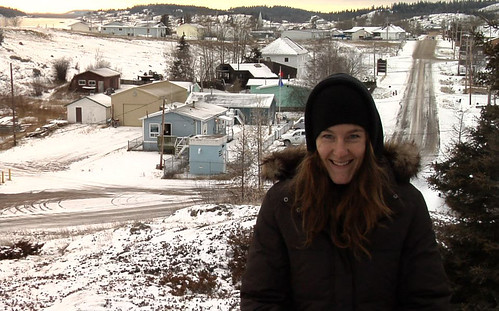
Shannon Walsh, the director of H2Oil.

· This is a huge subject which one would think would attract a lot of television journalists and filmmakers – have there been other films?

I was really shocked that there weren’t really any feature length films on the subject. There had been a doc aired on CBC called “Tar Sands: The Selling of Alberta” while we were still filming, and there were a couple of pro-industry pieces that had been done, but there really wasn’t much. I felt a lot of responsibility to try to tell the story in as complete a way as I could without losing the human dimension because so many people I met had no idea what was happening in the tar sands.

· And how did you get the funding to do yours in what I presume to be a competitive context?

I think we were in the first wave of projects coming through on the subject looking for funds, but to be honest it is such a complex and difficult subject to tackle. With the help of some supportive initial private funding we made our first trips out to Alberta and put together a short demo that I think reflected the film we wanted to make. That demo I think was a big part of how we set ourselves apart and were able to show that we could handle the subject matter with a sensitive approach.

· Excellent animation, how did you work on that?

I really wanted to find a way to get across some of the tough informative details in a fun and engaging way. I loved the work James Braithwaite had done on “I Met the Walrus” and I thought it would work for H2Oil, so we got in touch with him to see if he was interested. James brought in the excellent animators Dale Hayward and Sylvie Trouve, and we brainstormed together around the content I wanted to put in each of the three animations. I had basic points of what I felt needed to be put together in the animations then I set about writing the scripts. James did the initial drawings and Dale and Sylvie brought them to life. We met several times to tighten and revise the sequences, as the initial drafts became more formal drawings, and were finally. It was amazing working with such talented, smart creative people who really understood what I wanted to do.

· Which were your biggest challenges?

There were a lot of challenges: Getting access to the government and industry. Trying to tell a rounded story that still got to the heart of the issues. Weaving all these very complex technical details, and making an argument without being didactic and losing the human story….END.

RCI, the International arm of the CBC, has announced a competition called Roots, calling for videos under 8 minutes. Sounds like a good challenge ! Rest here: http://roots.rcinet.ca/

Thanks to Jessica Berglund for the help with this post.
Mon documentaire préféré cette année: Les damnés de la mer

Les damnés de la mer

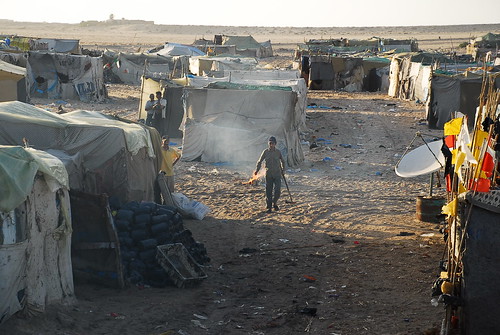
Aux Rencontres internationales du documentaire de Montréal j’ai vu un film formidable, intitulé Les Damnés de la mer – qui a reçu le prix du meilleur film dans la section Écosociété. C’est aussi un film qui a eu un impact dans la réalité qu’il décrit. Le réalisateur Jawad Rhalib filme avec aplomb la surexploitation des ressources de pêche du Sud de la côte Atlantique du Maroc par d’énormes chalutiers venant d’autre pays, qui laissent les pêcheurs côtiers dans une situation intenable de pénurie et de misère. Rhalib a eu accès à des chalutiers Suédois qui sortent de l’eau d’énormes quantités de poisson à l’aide d’instruments ultra-modernes mais aussi de méthodes illégales. Les images sont impressionantes. Il les met en contraste avec le matériel tourné de façon très subtile, près des personnages, dans le village côtier de La Sarga, ou les pêcheurs ne savent plus quoi faire pour assurer leur survie. Et au coeur de cette situation il situe une femme, Ghizlaine, qui se bat contre une discrimination bien installée qui réserve le droit de pêcher aux hommes. C’est un coup de génie qui donne une dimension additionelle à un film déjà porteur de problématiques essentielles.

J’ai posé deux questions à Jawad Rhalib.

Ton film a l’air tellement parfait. Est-ce que tu l’avais scénarisé, ou imaginé comme il est là, ou les morceaux sont tombés en place à mesure que tu travaillais ?

Jawad: Si vous avez l’occasion de voir mon avant-dernier film “El Ejido, la loi du profit”, vous comprendrez ma façon de filmer, de traiter mes sujets, de leur donner la parole. Il y a toute un processus de repérage, de rencontre avec les personnes et d’écriture, il y a un canevas, un traitement qui me permet de savoir où aller. Je ne filme jamais à l’aveuglette, je ne pars jamais à la chasse à l’image et dire « on filme et on verra ce que nous ferons avec les images après », je suis contre ce procédé sauf si on fait du reportage d’investigation. J’ai une histoire, des personnes et je décide de la façon dont je vais les mettre en avant, mettre au devant de la scène leur message, choisir la meilleure forme. Bien entendu, il y a toujours des surprises vu que ce sont des personnes réelles, mais généralement ce sont toujours de bonnes surprises. Un réalisateur doit avoir aussi de la chance.

Pour Ghizlane, oui, au moment où je l’ai rencontré je savais qu’elle allait être mon personnage central, mais il y aussi l’histoire de la fête du mouton. Ghizlane était l’élément qui ramenait un peu l’histoire à sa dimension humaine. J’ai toujours était sensible à la situation de la femme dans mon pays d’origine, et avoir une histoire de femme au milieu de la mondialisation, le profit, la globalisation était tout simplement parfait. Ghizlane c’est un peu l’histoire dans l’histoire. Bien sûr, il ne faut pas mettre de côté les autres personnes qui restent aussi forts que la femme.


Le film a aidé à forcer des changements de politique, tu peux nous en parler ?

Jawad: Il y avait quelques mouvements mais c’était très timide. A croire que les mouvements en question avaient besoin d’une preuve pour dire au monde ce qui se passe dans ce coin du Maroc. Pour dire aux marocains ce qui se trame dans leur propre pays, avec leur propre ressource et pour dire au monde ce que le Nord, avec son poids politique et économique, inflige au sud. Dakhla et le Maroc n’est qu’un exemple de ce qui se passe dans le monde, en Afrique, en Asie et en Amérique du Sud. Oui, je ne boude pas mon plaisir de dire que le film, comme El Ejido, la loi du profit, a apporté des changements inespérés. Il y a le gouvernement suédois qui vient de prendre des décisions pour réduire, voire interdire à sa flotte de piller les ressources du sud, il y a le gouvernement marocain qui vient d’arrêter les deux chalutiers suédois, et entrain de mettre en place de nouvelles lois pour la protection des ressources, et enfin il y a un changement de la loi vis-à-vis des femmes qui veulent devenir « pêcheuses ». Et Ghizlane vient d’avoir son permis de pêche. Il faut savoir que Ghizlan sortait en mer sans permis, et si elle se faisait arrêter, elle risquait la prison et le patron de la barque une amende et la perte de sa barque. Aujourd’hui le film sert de preuve et de support pour changer les choses.

Merci à Jessica Berglund pour l’aide avec le blogue.

Bananas!*

BANANAS_plane2

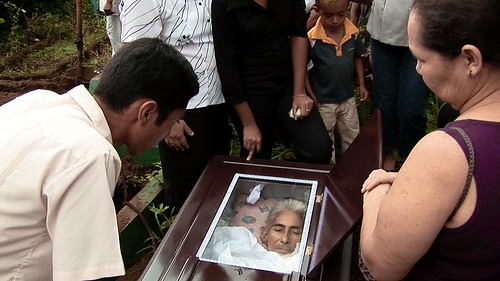
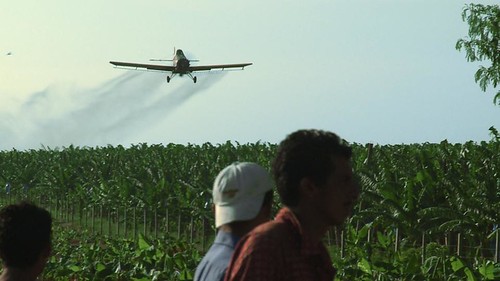
During the Rencontres Internationales du documentaire de Montréal which just ended, I saw a number of really excellent documentaries. Over the next few weeks I’ll tell you about a couple of them, not just because of their qualities as films but because they are making a difference, having a real impact. To start with, here is a Swedish film which I already saw in Stockholm a few months ago, Bananas!*, by Fredrik Gertten.

It tells the outrageous story of the banana plantation workers in Nicaragua and Honduras who have been made sterile by exposure to the pesticide DBCP (which goes under several brand names including Nemagon) and the flamboyant L.A. lawuer Juan ‘Accidentes’ Dominguez who takes their defense. He does so without any funding, at his own expense, choosing a group of only 12 workers as a test case. The film has real suspense, following the ups and downs of the legal case. I was at the edge of my seat, dying to see how the law suit was going to end. Well shot, well edited, and with judicious use of archives and court room footage, this is a really important film.

BANANAS_Byron_burial_300dpi copy

The film has its suspense, and so did the release of the film. Dole, the company running the plantations, put enormous pressure on the filmmakers and the L.A. film festival where the film premiered last June. The company managed to have the film removed from competition, but didn’t manage to have the screenings canceled. It then sued the filmmakers, surely a grave public relations mistake. There was an uproar among documentary filmmakers, and the producers filed an anti-SLAPP motion in the U.S. (A SLAPP is a ‘strategic lawsuit against public participation’ intended not to right a wrong but to force the defendants to spend more time and money than they can afford….) What also made a difference was the reaction in Sweden, where the main medical journal (Läkartidningen) examined the health impacts of DBCP, the federation of Journalists and the Swedish Film Institute condemned the law suit as a threat to freedom of expression, the hamburger chain MAX and major supermarket chains like ICA put their relationship with Dole into question. All this pressure led to Dole withdrawing the law suit on Oct. I5th.
You can read a detailed chronology of all these developments on the Bananas!* web site, complete with the director’s twitter messages.

Thanks to Jessica Berglund for help with this post.

Tusarnituuq: the MSO goes to Nunavik

IMG_3145_thmb
Kent Nagano directs throatsingers Taqralik Partridge and Evie Mark
(credit: Robert Fréchette)

The other day at Cinéma Parallèle I saw a really excellent new documentary on the Montreal Symphonic Orchestra‘s visit to three Inuit communities in Nunavik. Tusarnituuq! Nagano in the Land of the Inuit was directed by Félix Lajeunesse and produced by Katarina Soukoup. It’s a moving account of the preparations for and the realization of this exceptional concert tour and of Nagano and his musicians encountering the Arctic and Inuit culture. The real strength of the film is in the characters from the young Inuit throat singers to famed MSO conductor Kent Nagano whose unassuming charm makes for a compelling screen presence. The editing by Marie-Christine Sarda is excellent. I put a couple of questions to the director and the producer.

Felix, this shoot was a very concentrated one, just a few days. Was that difficult? How did you prepare?

Answer : It definitely was a very intense shoot! I knew from the start that most of the 52 minutes film would have to be shot in just four days. So I tried to figure out in advance what «moments» or scenes were absolutely essential for the characters and story of the film. By imagining those moments in advance, I knew I would get a better sense of what to focus on during the actual shooting, and what sacrifices I could make. As an example, I knew that four days was a very short time for M.Nagano and the musicians to adapt to the North and the Inuit culture. So I spoke to my producer Katarina (who was also producing and organizing the Tour itself) and we both agreed that it was necessary, as early and often as possible in the Tour, to bring Kent Nagano and the musicians somewhere far out on the land (with Inuit guides), away from their schedules, rehearsals and instruments. Because I knew from my own previous Arctic experiences, that when you travel into the emptiness and grandeur of the Arctic with Inuit people (whether it’s the first time or whether you haven’t done it in a while), something quickly changes inside you. Time, space and light as you knew them cease to exist and you need to raise your awareness, open-mindedness and sensitivity to fuse with this new and powerful reality. I knew these moments would somehow make the characters of the film «come out» and it would help in bringing together the Inuit and OSM musicians. I worked with my director of photography and soundman to make sure we would be ready to film these moments properly when they come.


IMG_0760_thmb
The full-house at the first concert in Inukjuak (photo: Robert Fréchette)

Katarina, you had almost all the key players on board, this must have taken quite a bit of time?

Answer : I found out about the tour while I was working with Avataq Cultural Institute. In addition to producing documentaries for Catbird, at the time I was also organizing a new Nunavik Arts Secretariat for Inuit artists in northern Quebec through Avataq. Avataq is a non-profit organization for the preservation and promotion of Inuit language and culture in Northern Quebec and the OSM approached them to help organize a tour of Nunavik about 2 ½ years ago. The idea of making a documentary about the tour came to me almost instantly – I knew that an artistic collaboration across cultures such as this one would be a very, very special encounter and felt it was vitally important to bear witness and share it with a wider public through the medium of film. I gathered up a group of talented collaborators, including Félix, who are all experienced in filming in the Arctic (and more importantly, working with Inuit) and we started brainstorming about how to make the film. The financing for the documentary, however, was quite tough, probably a reflection of how difficult it is to finance arts documentaries in these times. I started pitching it about 6 months before the tour began and knocked on every door you could imagine. We actually didn’t close financing until our documentary was at the rough cut stage, which meant Catbird took a huge financial risk in going ahead with the shoot with no guarantee that we would be able to finish the film. It made for quite a few sleepless nights! But ultimately what made me take that risk was the strong, driving belief that this cross cultural moment HAD to be documented and shared no matter what. And I hope our audiences find that it was worth it too.

Our financers include Radio-Canada and ARTV (the first broadcasters to become attached to the project), as well as Rogers Fund, SODEC, APTN, Filmoption International, Department of Indian and Northern Affairs, the Kativik Regional Government, and tax credits. It’s a mix of standard and non-traditional doc financing, again I think a reflection of how creative doc producers must be these days in raising the financing for their films.

Thanks to Jessica Berglund for the help with this post.
Thought-provoking! Lech Kowalski and the ‘post-doc’ age

Hey_Is_Dee_Dee_Home
An image from Lech Kowalski’s ‘Hey! Is Dee Dee Home?’

Last week I saw the most creatively radical documentary I have ever seen, East of Paradise (2004) by Lech Kowalski. It breaks every convention of story development. The first half of the film is made up of an interview with Kowalski’s mother, about the horrors she experienced as a young girl at the end of the Second World War, in Russian-occupied Poland. Then he cuts to a medley of his own films of junkies on the New York underground scene, filmed over the last couple of decades. And what’s the link? The extreme. That becomes clear in the film, towards the end. Kowalski was here in Montreal for a retrospective of his films at the Cinémathèque Québecoise and had a chance to elaborate. To Kowalski life is real when you’re at the extreme limits of what can be tolerated, and that is what throws light on the rest of our existence. He explained how the horrors his mother had experienced set a sort of standard against which, it seemed, all his own experiences had to be measured. This led him to search out, in his own life and work, some extremely harsh realities. So in a sense, the totally unorthodox structure of his film was totally logical. At the discussion after the film the son of a holocaust victim talked about how he totally identified with this psychological dilemma, and brought up the question of a ‘survival gene.’ Kowalski totally agreed, he had received that also from his parents. After all they had been through to survive, he would not have the right to waste his own life, to become one of those junkies you see dying of overdose or AIDS in his own films.

Lech_Kowalski
Lech Kowalski [Photo: Jocelyne Clarke]

Kowalski believes that we are in a ‘post-documentary era’ where reality is too complex to be dealt with in an ordinary film, especially since film production and distribution are largely controlled by vested interests who are set against free creativity and analysis. He has created a web site called Camera War TV to create a new kind of documentary experience. I think this is a great concept, even though I found some of the films on the site less than impressive.

A fascinating encounter. And during the coming month we will have the time to see more of Kowalski’s films. D.O.A.: A Right of Passage (1980), Born to Lose: The Last Rock and Roll Movie (1999), Gringo: The Story of a Junkie (1987), Rock Soup (1991) and two films on Eastern Europe: The Boot Factory (2000) and On Hitler’s Highway (2002).

There is an excellent interview with Kowalski [in French] on the Cinémathèque’s web site.

P.S. I am sure you saw the British clip on YouTube about Susan Boyle, the ‘unattractive’ woman singer whose performance brings down the house in a resounding victory over prejudice (represented by the attitudes of a talent-show jury). A wonderful little film with important issues, suspense, a terrific main character, excellent character development, a surprising turn-around, an uplifting outcome, reminiscent of classical stories like the ugly duckling and Cinderella. What more can you ask of a doc?

http://www.youtube.com/watch?v=9lp0IWv8QZY

Thanks to Jorge Bustos-Estefan for help with this blog.

Black Wave – l’héritage désastreux de Exxon Valdez

DSC_5406 - 72
Manifestation en août 2006, réclamant que Exxon nettoie les plages et qu’il paie pour les dommages.

Un des meilleurs films que j’avais vu aux Rencontres Internationales du Documentaire de Montréal au mois de novembre sera aussi présenté cette semaine au Festival des Films sur les Droits, aussi à Montréal, et sera également diffusé à Radio-Canada la semaine prochaine. Le film est le produit d’un travail d’enquête de longue haleine, réalisé par Robert Cornellier dans le cadre de l’excellente maison de production Macumba International – dont je vous reparlerai au cours des prochaines semaines. Black Wave raconte la choquante histoire de l’impact environnemental dévastateur de l’accident du pétrolier Exxon Valdez en Alaska et la lutte des communautés affectés pour des réparations et une compensation adéquate. Je me suis entretenu avec Robert Cornellier.

Cette histoire est choquante. A-t-elle été bien couverte par les médias ? Aux États-Unis notamment ?

Il y a eu une grande couverture médiatique au moment de la catastrophe en 1989. Des journalistes et des caméras du monde entier se sont rendus sur les lieux pendant quelques mois. Puis cette histoire est tombée, peu à peu, dans l’oubli. Il y a eu un regain d’attention, principalement en Alaska, au moment du 10e anniversaire. Quelques bons articles faisant un bilan des conséquences ont été publiés. Puis c’est tombé dans l’oubli. J’ai commencé à couvrir cette histoire en 2004, lors du 15e anniversaire. Riki Ott et un groupe de citoyens de Cordova ont alors organisé une conférence de presse et quelques événements à Washington DC pour attirer l’attention sur leur cause, mais il n’y a pratiquemment pas eu de couverture. À peine quelques lignes provenant d’agences de presse. Finalement il y a eu une petite attention apportée par les médias lorsque la cause a été entendue à la Cour Suprême. Mais aucun papier d’analyse ou reportage de fond sur cette question. Pourtant les conséquences de ce jugement sont très importantes pour l‚avenir. Les citoyens américains viennent, ni plus ni moins, de perdre toute forme recours contre les compagnies pétrolières en cas de déversement pétrolier.

J’ai beaucoup aimé le film, seulement j’avais l’impression qu’on racontait beaucoup des événements du passé plutôt que de les vivre au moment ou les choses se passaient. Les événements se sont déroulés sur quelle période, et tu as tourné sur quelle période ?

J’ai commencé à travailler sur cette histoire en janvier 2004. La catastrophe datait déjà d’il y a 15 ans. À Cordova, le village de pêcheurs où nous avons tourné, les gens ne voulaient plus parler de cette histoire. Ils voulaient simplement reprendre leur vie en main et tourner la page sur le passé. Et la saga judiciaire était rendu au niveau de la Cour d’Appel (9th Circuit Court), et traînait depuis plusieurs années. La difficulté qui s’est posé, c‚est qu’il ne se passait pas grand chose. Le tournage de Black Wave a débuté en août 2006 avec la manifestation de bateaux juste en face du village. Ce fut la seule qu’il y a eu au cours des deux années du tournage. J’ai été constamment à l’affût d’événements. J’ai fait une douzaine de voyages en Alaska. Nous sommes allés pour le carnaval, pour la fête du 4 juillet. À chaque fois que j’apprenais que quelque chose allait se dérouler dans le village ou ailleurs, je m’y rendais. Il faut dire aussi, que du mois d’avril jusqu’au mois de septembre, toute la vie s’articule autour de la pêche. Le village est alors très tranquille. Puis au cours de l’hiver, une grande partie du village se vide, parce que beaucoup de pêcheurs et leur famille vivent ailleurs où ils gagnent leur vie parce qu’à Cordova il n’y a rien. Ce fut donc un réel défi de parler de cette histoire et d’essayer de la rendre vivante, parce qu’il ne se passait pas grand chose.Comme il y a eu beaucoup de déplacements, il fallait aussi faire des choix pour essayer de garder les coûts de production le plus bas possible. Il y a une partie du tournage où j’étais seul, c’est-à-dire que je réalisais, faisait la caméra et le son. Au cours de ce tournage j’ai réalisé à quel point c’est difficile de parler d’événements qui se sont déroulés dans un passé récent mais qui ne sont plus dans l’actualité, tout en essayant de les rendre le plus vivant possible.

DSC_5142 Equipe - 72
Equipe: Une partie de l’équipe de tournage à Cordova: de la gauche: Robert Vanherweghem, dir. photo; Riki Ott; Paul Carvalho, co-producteur et scénariste; Robert Cornellier, réalisateur et co-producteur.

Thanks to Jorge Bustos-Estefan for help with this blog.

8, la fiction au service de l’engagement

J’étais invité à l’ouverture du 4ème Festival de Films sur les Droits de la Personne de Montréal il y a quelques jours mais je n’ai pas pu y aller. Mon proche collaborateur Franck Le Coroller s’y est rendu à ma place et nous fait le résumé suivant.

eight_film
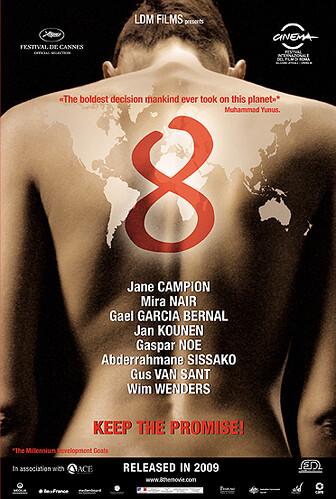
Affiche du film 8

La salle était pleine à craquer. On aurait pu s’attendre à voir un documentaire en film d’ouverture, genre de prédilection pour l’engagement et la justice sociale mais c’est une compilation de 7 courts métrages de fiction et d’un documentaire qui était à l’honneur.

Les Objectifs du Millénaire pour le Développement (OMD) : un plan clair qui s’est probablement effacé peu à peu de notre mémoire. Voilà déjà 9 ans que 191 gouvernements ont adopté officiellement un plan visant à éliminer la pauvreté dans le monde d’ici 2015. LDM Productions a eu la fabuleuse idée de convoquer 8 réalisateurs de renom et leur a laissé carte blanche pour traiter chacun d’un de ces 8 objectifs. Ce film s’adresse à tout un chacun mais vise surtout à rappeler aux gouvernements leur engagement vis-à-vis des plus démunis de notre planète. À mi-parcours, les objectifs paraissent malheureusement bien loin.

Une magnifique séquence d’ouverture nous rappelle les étapes ayant mené à l’adoption de ce plan depuis la seconde guerre mondiale avec notamment la transformation de la Société des Nations en l’ONU et la dégradation accélérée de la condition humaine de par le globe. Des images d’archives des dirigeants de ce monde sont projetées sur un corps maigre et nu. Le ton est donné : ce film vous rentre dans le corps.

La plupart des courts métrages, tournés un peu partout sur la planète, abordent leur objectif à travers le portrait d’une personne. Le journal d’une petite fille, le rêve d’une autre, les pensées d’un petit garçon, la maladie d’un homme, le sort d’une femme enceinte prennent le singulier pour parler d’un universalisme à résoudre. On est pris aux tripes dans les histoires de ces personnes. Un sens de la réalité sait effacer toute trace de misérabilisme. Ces petits moments magiques qui nous accrochent dans un documentaire sont habilement et subtilement mis en scène. Le documentaire c’est « le traitement créatif de la réalité », nous disait John Grierson, ne serait-ce pas valable aussi pour la fiction engagée?

Dans SIDA, le seul documentaire, Gaspar Noé nous emmène dans cette maladie et toutes celles qu’elle convie. Le traitement visuel épuré (un enchaînement quasi total de plans fixes, la nuit) met l’accent sur la voix off de l’homme que nous voyons, seul. Tout comme dans Irréversible, rien n’est épargné. La réalité brutale de cet homme nous contant son histoire est hypnotisante : ses maux, son combat, ses conseils, ses regrets et sa solitude n’ont d’égale que la triste puissance de ce virus dont la propagation doit être enrayée au plus vite, ne l’oublions pas.

8 met aussi en lumière les rapports Nord-Sud, cruciaux pour améliorer le sort de tous. Dans Le rêve de Tiya d’Abderrahmane Sissako, l’instituteur demande à Tiya pourquoi elle ne dit pas plus fort le premier objectif du millénaire qu’est la réduction de la faim et de l’extrême pauvreté. Tiya répond : « Parce que je n’y crois pas. La réduction de la pauvreté, ça passe par le partage et on ne partage pas. » Un rappel urgent et efficace. Wim Wenders dans Person To Person termine le film avec une salle d’information cynique prise d’assaut par ceux qui ont des solutions, continuant ainsi la vague d’espoir et d’engagement indispensable pour aller de l’avant. Les sujets de l’information sortent des écrans de montage et refusent qu’on ne les voit que dans la misère. Ils agissent déjà (par le micro-crédit entre autres) et convient les médias occidentaux à les suivre. C’est une superbe pirouette cinématographique de Wim Wenders pour exprimer le besoin de partenariat Nord-Sud.

Certains verront peut-être dans 8 un film de propagande mais il fait surtout l’état des lieux sur une situation qui nous concerne tous. On ne peut pas rester indifférent à notre sort commun. Et s’il y a une promesse que nos gouvernements devraient tenir, c’est bien celle-là, surtout en contexte de récession mondiale.

Depuis 2000, le gouvernement du Canada a réduit sa participation financière vouée aux Objectifs du Millénaire pour le Développement alors qu’il avait promis de l’augmenter jusqu’à 0,7 % de son PIB.

8 [site officiel du film]
Festival de Films sur les Droits de la Personne de Montréal [site officiel]

Merci à Jorge Bustos-Estefan pour l’aide avec ce blogue.

The philosopher-filmmaker at Rideau Hall – part 2

Obama_Jean_Lalonde
Barack Obama, Michaëlle Jean, and Jean-Daniel Lafond

‘Cinéaste frustré, philosophe comblé.‘ (‘Frustrated filmmaker, fulfilled philosopher.’)

Following up on my post from last week, here’s part two of my interview with Jean-Daniel Lafond. How has he adapted to his newest role as “His Excellency” and a very active partner to Canada’s Governor General, Michaëlle Jean?
[Video interview clip further down.]

Of his current circumstances, Jean-Daniel says, “The challenge is to remain oneself and to defend the values one has always defended. There is a space for that.” His position is of a volunteer with an official status. He jokes that Canadians are getting “two for the price of one” and professes total solidarity with Michaëlle.

In his official capacity, Jean-Daniel has made culture his bailiwick, and suggests perhaps it is sorely in need of being defended in this country. It is critical to demonstrate the importance of culture, not just complain about lack of support, he says. He has created Point des arts/Art Matters, a forum and network for reflection and debate about artistic matters from all disciplines, bringing together practitioners, theorists and arts administrators of all political stripes. He has initiated the internet site Citizen Voices/Écoute des citoyens in an attempt to make the office of the Governor General more relevant and accessible, particularly to Canadian youth.

About making films, Jean-Daniel says he finds himself constantly in unexpected and extraordinary circumstances, for example in private conversation with heads of state, and in a most privileged position to observe the world, governance, diplomacy, the very highest echelons of power. He finds it simultaneously stimulating and frustrating. Given the opportunity, he would be making films all the time, but contents himself with gathering as much information – and some video material – as possible, building blocks or sources of inspiration for future projects.

Thanks to Jocelyne Clarke and Jorge Bustos-Estefan for help with this blog.

The philosopher-filmmaker at Rideau Hall – part 1

Jean-Daniel Lafond
Jean-Daniel Lafond

The other day, as U.S. President Obama touched down in Ottawa, I asked my students at l’INIS, the Quebec Film school, a question. ‘Which documentary filmmaker will be meeting with Obama today?’ Puzzled looks, no answers. They asked for a lead. ‘OK, I said, he is also a French citizen.’ ‘Oh, of course,’ said Nathalie who used to work at the NFB. ‘I know who it is, but he’s not there because he’s a filmmaker.’

I recently had a chance to meet with and interview Jean-Daniel Lafond, the husband of Governor General Michaëlle Jean, during a visit to Montreal and on the occasion of a retrospective of his works, curated by Tom McSorley at the Canadian Film Institute in Ottawa and running until March 8th. The vast conceptual range of the 15 films he has directed since 1986 defy obvious notions of a continuous oeuvre.

I asked Jean-Daniel two questions, which, given his habitual eloquence, spun into a 30-minute answer, weaving in and through a wide range of topics and philosophical musings about his life’s work. Given how much there is to report from our discussion, I’ll share the first answer with you this week and the second next week.
[Video interview clip further down.]

Folle_de_dieu
Marie Tifo playing the role of Marie de l’Incarnation, in the film ‘Folle de Dieu’ (‘The Madwoman of God’)

First question: What impulses and/or issues tie together what initially appears to be a very disparate range of works?

Jean-Daniel begins enigmatically by saying “Nous faisons ce que nous faisons en suivant le chemin qui nous échappe…” by which he means that the documentary impulse for him is always a movement toward the unknown, and stems from a desire to understand. He cites Spinoza at the start of his 2006 film, The Fugitive, “Not laughter, not tears, understanding”, an adage which he says is perhaps most fundamental to his work.

Jean-Daniel says that this retrospective, along with a “perspectives” tribute at La Rochelle documentary festival last year, have enabled him to articulate more clearly the connecting threads. He sees his most recent film, Folle de Dieu (The Madwoman of God), about the ideas and writings of an 18th mystic – Marie de l’Incarnation – who came to Nouvelle France to found a country, as utterly coherent with his first film, Les Traces du rêve (Dream Tracks), a portrait of seminal documentarist Pierre Perrault and of his films in relation to the creation of a country. Both interrogate the act of writing/filmmaking in the context of ideas of place, Otherness, dreams and utopias.

What he calls his fight for “the humanization of humanity” precedes his trajectory as a filmmaker. His first career was as a philosopher, a political thinker and defender of culture against the “absolute evil” of ignorance. He was transformed both by his exile and by his encounter with cinema, which he says is humbling, because it always begins from a place of ignorance. “As a philosopher, I always transmitted what I knew. As a filmmaker, I transmit my experience of the unknown, of the unpredictable, what is beyond me.”

Lafond’s films defy categories and cannot easily be summarized, as they offer an almost seamless extension of his philosophical journey, exploring and confronting the major ideas of the past half-century – exile, négritude, religion, the Other, barbarism.

Next week, the second question: How has Jean-Daniel adapted to his newest role as “His Excellency” and a very active partner to Canada’s Governor General, Michaëlle Jean?

Thanks to Jocelyne Clarke and Jorge Bustos-Estefan for help with this blog.

A year in class, fiction meets documentary.

Entre_les_murs
A still from Laurent Catnet’s film The Class [original French title: Entre les murs]

Have you noticed how many and how many recent fiction films look like documentaries, or are inspired by documentaries? I recently wrote about Milk – up for several Oscars – which borrows many scenes from the documentary The Times of Harvey Milk. Last fall I saw a marvellous fiction film which had many scenes with a purely documentary quality, Tulpan, a story from the life of sheep herders on the Kazakh steppes, by Sergei Dvortsevoy. And one of my favourite films this year, nominated for best foreign film at the Oscars, is the French film The Class, by Laurent Cantet (Entre les murs is the French title). The director came upon a reality-inspired novel by François Begaudeau, a teacher in a ‘difficult’ multiracial school in the suburbs of Paris, describing some of the challenges he was up against. Cantet then organized improvisation groups with actual college students and did a combination of casting and training, until he was able to put together his own fictional class. The students drew upon their own experiences to develop their characters. The result is surprisingly convincing, subtle but dramatic, and very documentary-like. It got the ‘Golden Palm’ award at Cannes.

Etre_et_avoir
A frame from Nicolas Philibert’s documentary Être et avoir [‘To Be and to Have‘]

Seeing this film reminded me of two other excellent documentaries which also did nothing more than spend a year in class, but did it well. There was the touching Être et avoir (To Be and to Have) by Nicolas Philibert, shot in a small class in a primary school in France, which had a long run in theatres there and in many other countries. The film got additional press coverage as the main character, the marvelously attentive school teacher Georges Lopez who showed another side of his personality and claimed large sums of money from the producers after the film was successful. And there was La Classe de Madame Lise, a film shot in the multicultural neighborhood of Mile-End in Montreal, nearby where I live. Directed by Sylvie Groulx and produced by Galafilm, the film got a Genie for best doumentary in 2006.

(Another Oscar-nominee for best foreign film this year is Waltz with Bashir, a hybrid, combining documentary and animation.)

La_classe_de_Mme_Lise
An image from La Classe de Madame Lise – a movie by Sylvie Groulx

Thanks to Jorge Bustos-Estefan for help with this blog.