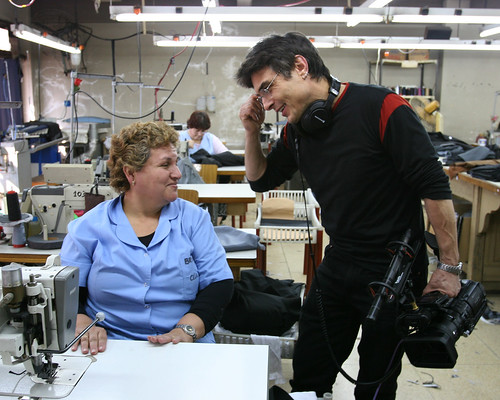
Monique Simard sur les changements dans l’industrie

Monique S. & Magnus

Juste avant d’être nommée Directrice du Programme Français de l’ONF cet été, Monique Simard fêtait le dixième anniversaire de productrice au sein de la compagnie Virage fondée par son mari Marcel Simard. Monique a dévéloppé une connaissance profonde de l’industrie et des conditions de production du documentaire. Son anniversaire était l’occasion pour moi de lui poser des questions sur les changements survenus depuis dix ans.

Magnus Isacsson : Qu’est-ce qui a changé à ton sens depuis 10 ans?

Monique Simard : L’industrie. Le documentaire est devenu une industrie. Avant, la demande n’était pas là; le marché n’était pas là. Et ce qui a fait qu’en sorte que c’est devenu une industrie, c’est l’explosion des chaînes câblées et satellites, pas juste ici, mais partout sur la planète. Comme je dis tout le temps, il faut nourrir la bête. Comment? Il faut produire, notamment dans le genre documentaire. Et quand je dis genre documentaire, j’inclus tout: la série animalière, la série tous sujets et le documentaire unique. Donc, c’est devenu vraiment une industrie.

Lire la suite »

La Mémoire des Anges

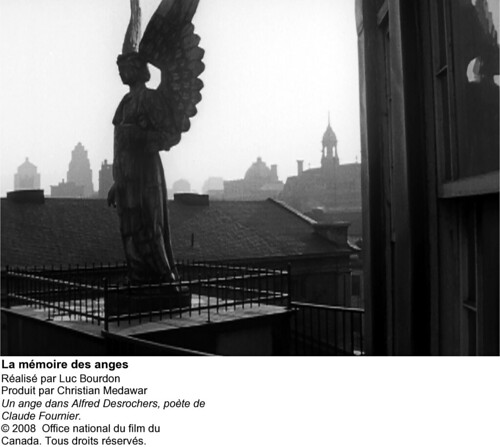
La mémoire des anges

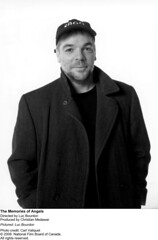
Peut-on savoir qu’un film est exceptionnellement beau sans l’avoir vu ? Dans ce cas, oui, parce que des amis auxquels je fais confiance l’ont vu. Et je connais le talent des cinéastes qui l’ont fait. Luc Bourdon l’a réalisé, Michel Giroux l’a monté – et le monteur est ici ( comme toujours, mais plus encore…) un artisan crucial, puisqu’il s’agit d’un film composé uniquement d’archives- et Christian Medawar l’a produit pour l’Office national du film. J’ai demandé à Luc et à Michel de me dire qu’est-ce qu’ils ont trouvé particulièrement important avec ce projet aui nous présente Montréal à l’époque de nos grands-parents.

Luc Bourdon
Luc Bourdon

« Avoir du temps… Ce temps si précieux qui permet de faire de la recherche afin de cerner un sujet. Avoir aussi, dans le cadre de ce projet, le privilège de scénariser avec l’aide d’un petit banc de montage et la complicité d’un bon ami qui a du talent (et de l’écoute), soit le monteur Michel Giroux. Avoir le temps d’effectuer un premier travail de montage (maquette) afin de voir s’il y a un projet à poursuivre, à nourrir, à faire grandir. Une fois le sujet et un style clairement définis… Administrativement approuvé… Pouvoir numériser 200 films issus de la collection de l’ONF et jouer… avec les images et les sons… rigoler… se perdre… Bref, pouvoir rire et pleurer en toute impunité. Se retrouver face à des souvenirs, des réminiscences d’un passé pas si lointain mais totalement oublié. Avoir du temps et la légitimité de créer et pouvoir ainsi retrouver une époque, des moeurs, des attitudes. Revoir des rêves. Voir des gueules d’hier qui nous ont rappelé celles d’aujourd’hui. Se souvenir de nos pères, mères, s¦urs et frères, nos voisins et nos pairs… Retrouver des fragments d’une société bien documentée, vachement bien filmée et prendre, ainsi, au vol, une grande leçon de cinéma. Avoir du temps pour travailler, c’est pour ainsi dire… être libre de créer! Maintenant, l’espoir est que tout cela (le résultat – un film!) soit contagieux… à suivre.»
Luc Bourdon

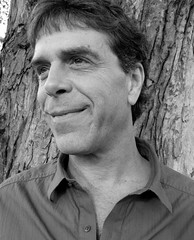
Michel Giroux
Michel Giroux

« Le plaisir immense de revisiter ces films, de jubiler, fantasmer, monter avec Luc, un ami avec qui il fait bon créer, dans un cadre idéal fournit par l’ONF, à partir d’une source de matériel aussi riche. Le pouvoir évocateur des archives, des vieilles images des souvenirs. Les anges, ceux que l’on voit, cette vie qu’on observe confortablement car eux ne nous voient pas. Cet espace, le même dans lequel nous vivons aujourd’hui s’est métamorphosé et ces gens ne sont pour la plupart plus là. Parfois, être touchés des fois juste d’unir ces images aux sons, aux voix, aux musiques et aux chansons et de les sentir nourrir le sens, l’émotion, l’énergie de ce qu’on voit. La joie de se faire parfois surprendre par ce qui émerge sur l’écran et dans nos oreilles. On nous a appris que les anges nous voient, qu’on ne peut pas les voir. Les anges c’est aussi tous ces créateurs et artisans, qui ont mis au monde cette mémoire, auxquels on a eu le sentiment de rendre hommage. »
Michel Giroux

La Mémoire des Anges sera à l’affiche au Festival du Nouveau Cinéma les dates suivantes:
• vendredi 10 octobre – salle Fellini à 19h00
• dimanche 12 octobre – salle Cassavetes à 17h00
• dimanche 19 octobre – salle Parallèle à 21h20
[Le festival aura lieu du 8 au 19 octobre.]

Par la suite, Mémoire sortira au Cinéma Parallèle, à Ex-Centris, le 20 octobre et au Clap à Québec le 31 octobre.

Merci à Jorge Bustos-Estefan pour l’aide avec ce blogue.

CHANGE – Le 10e anniversaire de l’ATSA

AnnieChange.0883
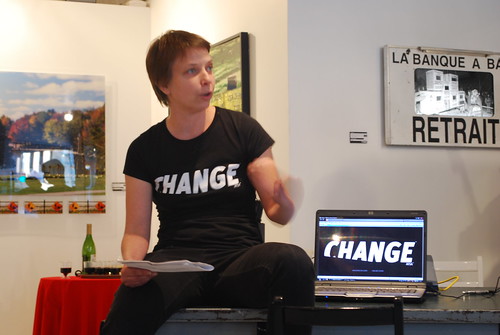
Annie Roy à l’occasion de l’overture de CHANGE, le nouveau magasin de l’ATSA

Cette semaine nous avons fait un tournage important lors du 10e anniversaire de l’ATSA, l’Action Terroriste Socialement Acceptable, sujet du film URGENCE CRÉATION que je fais avec Simon Bujold. Annie Roy et Pierre Allard lançaient une publication et ouvraient en même temps un magasin intitulé CHANGE sur la rue St. Laurent, à deux coins de rue de chez moi. CHANGE a ici un double sens: c’est à la fois le changement social et le petit change que Annie et Pierre voudraient ramasser en vendant des produits dérivés de leurs installations réalisées depuis dix ans. Le tout est un pied-de-nez à une société commerciale où tout est question d’argent et de produits.

Pour vous décrire les événements de la soirée de lancement, je laisse la parole à mon stagiaire Jorge Bustos-Estefan :

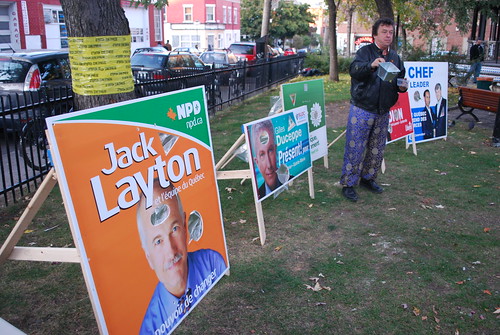
« L’ouverture de CHANGE (le nouveau magasin de l’ATSA sur Saint-Laurent, coin Marie-Anne) faisait partie des célébrations de leur 10e anniversaire. Annie Roy y a présenté un nouveau livre qui a pour titre ATSA, Quand l’art passe à l’action, auquel ont participé plusieurs écrivains et artistes. Elle a aussi expliqué qu’en ce moment, la motivation principale de l’ATSA est d’empêcher la victoire de Stephen Harper et des conservateurs aux prochaines élections fédérales. Ceci étant dit, le lancement du livre a été suivi par un rassemblement en plein air au Parc du Portugal, de l’autre côte de la rue, où des interventions d’artistes avaient pour principal sujet (et objet) les politiciens et les partis politiques. Ces interventions à l’allure de foire (un stand de tir, un stand d’un magicien, un bac à sable, etc.) invitaient le public à participer et prendre position avec eux. Autant l’ouverture du magasin que l’événement en plein air se sont déroulés magnifiquement et ont réussi à attirer une grande foule. Il y aura d’autres activités au magasin au cours des prochaines semaines. Pour l’instant, vous pouvez visiter leur magasin à Montréal ou le site web de CHANGE ici. »

FGourdchange888
Les politiciens et les partis politiques étaient le sujet principal de l’événement à l’extérieur.


Vidéo par Jorge Bustos-Estefan et Isabelle Kostecka

CHANGE – Fliming ATSA’s 10th Anniversary

AnnieChange.0883
Annie Roy speaking at the opening of ATSA’s new store CHANGE

The other day, we went to shoot an important event involving ATSA (Action Terrosite Socialement Acceptable). To commemorate their 10 years of doing art interventions, they opened a new store, CHANGE. The name has a double meaning, referring to both the spare change they hope to make by selling some of the franchise products, spinoffs from their major art installations over the last ten years, an social change. We got the chance to catch Pierre Allard and Annie Roy in the middle of bustling last-minute preparations (our film isn’t called CREATIVE EMERGENCY for nothing!) and what’s more, we got to see them interact with the crowd attracted by the press conference and the launch activities. Now I’ll let my intern Jorge Bustos-Estefan say a few words to fill you in:

“When I first heard about ATSA, I was intrigued by the name (ATSA is the French acronym for Socially Acceptable Terrorist Action). Then, as I read on and learned that it is really an art-driven venture, things started to make a little more sense; yet, it wasn’t until I got the chance to attend one of their events and be exposed to their art firsthand that I really caught on to the drive behind ATSA. Being the artists/activists that they are, they seek to engage the community in a number of topics through their art and events; and their agendas change over time, based on the issues they deem need to be dealt with most urgently at a particular moment.

The opening of CHANGE (ATSA’s new store on Saint-Laurent, corner Marie-Anne) was part of their 10-year anniversary celebration. There, Annie Roy presented a new book titled ATSA, Quand l’art passe à l’action, in which a variety of writers and artists participated. She also explained that ATSA’s main motivation these days is to galvanize people to prevent Stephen Harper and the conservatives from winning the upcoming federal election. With this in mind, the book launch was followed by an outdoor gathering at the Park of Portugal across the street, where the artists’ latest interventions treated the politicians and all the political parties as the main subject (and object). These interventions, which were of the street-festival type (shooting galleries, a magician’s stand, a sandbox, etc.) invited the public to take part and make a statement with them. Both the store opening and the outdoor event were successful in attracting a lot of people and turned out magnificently. I am looking forward to their next event. In the meantime, you can come and visit the store in Montreal or go the CHANGE website here.”

FGourdchange888
The politicians and the political parties were the main subject at the outdoors event.

Video by Jorge Bustos-Estefan and Isabelle Kostecka [in French]

With the Raging Grannies at Bread and Puppets

With the Raging Grannies at Bread and Puppets
Myself and Martin Duckworth filming the Grannies in Vermont.

I am still working on my film about the Raging Grannies, the movement of elderly women fighting for peace, social justice and the environment with satirical songs and the occasional guerrilla action. I have decided to edit some of the Grannies’ songs as music videos, and so I am gathering some special footage in addition to the usual documentary material. The idea is, in my mind, to obtain striking visuals and special effects without having to spend much money. As part of this effort I recently went to the Bread and Puppets Theatre in Vermont with Louise-Édith Hébert, a francophone ‘Mémé déchaînée’ who is an important person in my film. Two other members of our team, Carole Roy and Terre Nash came along for the weekend, along with my wife Jocelyne who has vivid memories from visits to the Bread and Puppets theatre when she was young.

Indeed, Bread and Puppets has been going for several decades now, performing with giant puppets in a natural setting. I thought the images of the theatre could be a way to evoke street theatre as one of the original inspirations for the Raging Grannies, founded in Victoria, B.C., 21 years ago. And thanks to DOP Martin Duckworth, we did get some spectacular images of the Grannies and the puppets. Also, we filmed Louise-Édith making her own puppet and bringing it to the show. In addition, eleven Vermont Grannies responded to our appeal and showed up to sing some songs. A good time was had by all, and a few more tapes were added to my pile. This film is severely under-financed, and it is just the kind of film that will become harder to make with the conservative government’s cutbacks. In fact, if my friends and colleagues didn’t support it, I wouldn’t be able to make it at all.

Louise-Édith Hébert with puppet
Louise-Édith Hébert with the puppet she made. Bread and Puppets actors and staff are meeting in the background.

Thanks to Jorge Bustos-Estefan for help with this blog.

Méta-Morphosis: cinematic still photograpy at its best

Meta-Morphosis
Exposition Méta-Morphosis

My friend the excellent D.O.P. Stefan Nitoslawski, who received the prize for best direction of photography at Hot Docs in 1999, also works with experimental and artistic photography, studying the anatomy and movements of the human body in evocative photographs. The beautifully textured result is reminiscent of Norman McLaren’s ‘Pas de Deux.’ I recommend going to his exhibition at the Cinémathèque Québécoise from September 17 to November 9. I asked Stefan a few questions.

For more info:

http://www.cinematheque.qc.ca/affiche/metamorphoses.html

How did you come to create the photos?

Stefan : Through several years of experimenting. I started by wanting to explore portrait photography but the results didn’t grab me. Through playing around with ways in which to photograph people, I came to shooting with progressively longer exposure times. What fascinated me was that through specific movement I could achieve a new figurative form that radically departed from the form of the model that I was shooting. This kind of transformation now interests me.

What do you mean by transformation?

It is a shorthand term that I use to describe the change I’m trying to achieve within the images. Movement in photography doesn’t interest me per se; I’m not trying to capture a movement blur. What I’m trying to get is a shift in the human form that will jog the viewer into looking at people in a different way. Basically, through these images I want to evoke an interior state of being. I’m interested in what is going on inside a given person. The way in which we see people in our daily live is one way of seeing them. The classic snap shot is great at capturing that outer expression. I am trying to record a different reality and, in a sense, reflect on issues of perception.

It looks like the images have been manipulated by computer.

There is no manipulation. I construct the images though working out a kind of choreography, with the model that creates the various shapes. Lighting is critical as with any film or photo situation; it helps to highlight or hide certain aspects of the form. With exposure I control the layers of movement and it’s degree of deconstruction.

Are you photographing the model or are you using the model to create an image from your own imagination?

I think it’s a bit of both. No one model registers the same way. With certain models there seems to be an interesting transformation but with others it is difficult to get something to occur. No one moves in the same way, with some it’s interesting with others it is less so. So, for the images that I have retained, I feel that there is an important component of the models spirit in the picture. On the other hand, my perception is also important. The ideas for the images come from my imagination and I create a movement sequence to achieve that form. Then, during the exposure, I’ll direct the model to highlight rhythm, energy and amplitude of the action.

Is your exhibit at the Cinémathèque an installation?

Yes, ways in which to represent the transformations have evolved beyond the photos. I have always imagined how I could get these still images to move. The Cinémathèque gave me an opportunity to do just that. So with traditional animation techniques I’m sequencing several hundred images into moving shots. The result will be a projection that will be running in a loop. Chantal Dumas, an electro-acoustic artist, will be creating a soundscape. So, along with the design of the exhibit space, we are trying to create a more immersive environment to explore how we perceive ourselves.

Thanks to Jorge Bustos-Estefan for help with this blog.

Les Femmes de Bruckman

CeliaetIsaac
Isaac Isitan avec une des travailleuses, Celia

Je viens de voir un très bon film sur la prise de contrôle d’une usine de vêtements en Argentine par les travailleurs, et surtout travailleuses. Un film réalisé par Isaac Isitan et co-produit avec Carole Poliquin, pour Isca Productions. C’est dans le contexte de la crise économique terrible de 2001 que les employées de la firme Bruckman se sont retrouvés sans patrons et sans leur paye, les propriétaires ayant pris la fuite avec leur argent. Plutôt que de s’en aller chez elle et chômer, elles ont décidé de prendre charge de l’usine et de continuer à travailler. Elles sont devenues leurs propres patronnes. Mais avec l’amélioration de la sitution économique, les patrons ont voulu revenir et reprendre l’usine. Le film documente la lutte qui s’ensuit, sur une période de cinq ans. On a l’impression d’assister à un leçon d’auto-organisation tout à fait exemplaire, selon les principes défendues par la gauche anti-autoritarie dans laquelle j’avais moi-même milité quand j’étais jeune. J’ai bien aimé le film, entre autre parce que le réalisateur n’a pas peur de parler des nombreuses contradictions et conflits internes qui sont inévitables dans de telles luttes. J’ai quand même posé quelques questions critiques à Isaac Isitan.

Il n’y a pas beaucoup de suspense dans le film, on a l’impression de savoir dès le début comment la bataille va se terminer. Commentaire ?

Pour la majorité de spectateurs c’est tout le contraire. C’est juste les gens plus activistes, très informées et préoccupés sur l’actualité qui connaissent la fin de l’usine Brukman.

Tu as très bien couvert la lutte dans l’usine et dans la rue, mais on ne rentre jamais dans l’intimité des femmes, on ne voit pas la conséquence sur leurs vies personnelles. Pourquoi ?

Le focus du film était l’éveil politique des femmes, ainsi que leur découvert de certains tâches qu’elles avaient jamais pensé réaliser, tel que l’administration et gestion d’une usine. Ce qui m’intéressais était montrer les changements soufferts dans leurs vies face à la gestion et control de la manufacture Bruckman, qui sont aussi des changements personnels.

L’action initiale a lieu dans le contexte de la crise de 2001, mais après on n’apprend rien sur l’évolution de la situation politique et économique, si ce n’est que la visite de quelques ministres. Est-ce que le changement de la situation en Argentine n’a pas conditionné ce qui se passait dans l’usine?

Oui, absolutement. L’élection de Kirchner a influencé dans la victoire sur le plan égal, mais c’est grâce aux mouvement sociaux que Kirchner est arrivé au pouvoir et que les femmes ont récupéré l’usine. C’est ça que j’ai voulu montrer dans le film. Je ne voulais pas faire un film comme The Take dans lequel on ne fait que suivre la crise argentine. Mon film raconte l’évolution des femmes, leur éveil, leurs façons de faire. Comme les femmes de Brukman dissent: “C’est la lucha popular (la lutte sociale) qui les a aidé et les a emmené où elles sont présentement” C’est cette lutte que j’ai voulu montrer dans mon film.

Leaving the Fold, Interview with Eric Scott

LTF_La_Chaim
Rivens, father and sons

The other day I went to see an excellent documentary directed by Eric Scott and produced by my friend Frederic Bohbot and Evan Beloff of Bunbury Films, here in Montreal. The film is called ‘Leaving the Fold’ and it’s about young people who have left their Orthodox jewish families and culture to live an ordinary life.

It is still playing at the Park Cinema in Montreal, and will be shown on Radio-Canada later in the season. ( It was turned down by the CBC, hard to understand !)

I was very impressed with the choice of characters, and with the access to the normally very closed Hasidic milieu. One of the things you learn is that life among the Hasidim is strictly regulated and controlled, and the rebellion of those who decide to leave the fold seems totally comprehensible. But of course they have grown up with those very strong values and strictures, and will never be able to completely leave them behind.

As a result, they are ‘free’ but still conflicted individuals. The way they open up and share their thoughts and feelings is very touching.

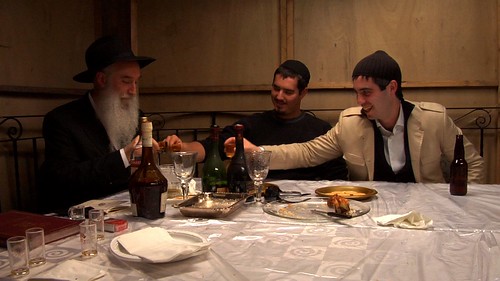
The most fascinating scenes are with a father, Pincus Riven, and his two sons Hudi and Levi who have left the fold. They all speak very honestly and emotionally. We follow the father to prayer sessions and ceremonies where his deep concern and sorrow for his ‘lost’ sons is clearly in evidence. But then, in a surprising twist which ends the film, we find them eating and drinking together and discussing their differences with a considerable amount of compassion and mutual understanding.

I put a few questions to Eric.

Eric_Scott_Head_shot
Eric Scott

How did you get access ? Was it possible because you were dealing with Lubavitch orthodox jews who are known to be relatively more open to the world ?

Although Pinchus Riven is a member of the most “open” Lubavitch Hasidic sect, that alone was not sufficient grounds to give me access. In my mind the more determining factor is that Pinchhus is a ‘baal tshuva’, someone who has repented, in other words become hasidic. He is familiar enough with “outside” culture so as not to be afraid of it. In the course of my research I met other ex-Lubavitch kids who came from “old line” Lubavitch families and the stories were as shocking as those of kids coming from more “closed” Hasidic sects. In those cases there was no question of the parents ever considering participation in a documentary.

The father and sons, in spite of their differences and the father’s sadness, they seem to have a very warm relationship – is this surprising to you, as someone who knows the community ?

The Riven boys do have a surprisingly warm relationship with their father, considering the gravity of their decision and its impact upon the family and its status in the community. Often the arranged marriage negotiations of younger siblings are put into jeopardy because a family would be considered “tainted” if another child has chosen to leave the fold.

The father thinks he did something wrong… is it possible that the reason two of his sons left was instead that he had some special quality, openness, curiosity… that he passed on ?

In the case if the Riven family, the reason that the boys left came more from their personal dissatisfaction with Hasidic life than from their father’s openness or curiosity. After all, they have 6 other siblings who have stayed firmly in the fold. The boys’ two religious brothers (the eldest and youngest of the four) are no less intellectually gifted or curious than Hudi or Levi.

Le contenant le le contenu: Le Moulin à Images

PaulLap
Paul Lapointe

Je vous avais parlé, avant de partir en Europe, de la projection fantastique de Robert Lepage, ‘Le Moulin à Images’, dans le cadre du 400e de Québec. Voici la réaction de mon ami Paul Lapointe. Il a longtemps travaillé pour l’ONF avant de devenir producteur indépendent et de fonder la compagnie Érézi en octobre 1996. Il a produit trois de mes films, et je le connais comme quelqu’un qui soulève toujours des questions de fond. Voici son point de vue sur ‘Le Moulin à Images’. (S’il nous parle de Orwell et Huxley, c’est qu’il sait que j’admire ces deux auteurs de romans d’anticipation et que je travaille sur un projet sur leur oeuvre. )

L’expérience du Moulin à images produit invariablement l’émerveillement. Une projection en extérieur jetée sur un écran de plus de 25 silos créant un rapport horizontal fabuleux, tout ça est effectivement inédit et remarquable d’audace. Le contexte du 400e anniversaire de Québec ajoute à cette expérience parfaitement singulière. Les défis techniques y sont vraiment formidables. Au delà de ces aspects, toutefois, personne ne réfère jamais au contenu, si ce n’est pour mentionner que Lepage y fait un survol historique de la ville de Québec. J’ai, comme tous, été très impressionné par le dispositif et par certains effets d’animation, notamment ces images saisissantes des chutes de Montmorency. Mais j’ai aussi été surpris et déçu de la linéarité du récit, de même que par l’absence complète de point de vue. Lepage est un artiste de grand renom, et mon intervention ne vise nullement à remettre en cause son oeuvre ou son génie. Mais son survol historique de Québec me parait non seulement linéaire et descriptif, il ne produit aucune émotion, et ne commente RIEN.

Mettre en place pareil dispositif pour ne rien dire me scie. Se rendre éloquent à ne rien dire, et dire ce rien au monde entier me stupéfait. Essayons d’imaginer une œuvre de Dominique Blain qui n’aurait pas de point de vue. Impensable, non ? Pourquoi Lepage se donne-t-il autant de mal à ne rien dire? L’attrait de la technologie aurait-il donc l’effet du parfait anesthésiant sur la raison ? Qu’en penseraient George Orwell ou Aldous Huxley?

Robert Lepage’s Image Mills: a fantastic experience

moulin3
Image Mills in Quebec City

The other day my friend Stefan Nitoslawski and I undertook a pilgrimage to Quebec City to see theatre director – and sometimes filmmaker – Robert Lepage’s Image Mills. It is part of the celebrations of the 400th anniversary of Quebec City. Lepage comes from there, and his company Ex Machina is based there. The Image Mills tells the history of the city in a dense 40-minute audiovisual montage projected onto the abandoned grain silos of the port. The silos provide for a strong vertical theme, but then the considerable number of silos make up a projection ‘screen’ which must be a couple of hundred meters long, allowing for striking horizontal themes. The montage is beautifully done and full of surprises. I asked Sefan, who is an excellent DOP ( among the many documentaries he has shot are several of Brian McKenna’s series on wars) what impressed him the most about Image Mills. His answer:

Stefan
Stefan Nitoslawski

Stefan : ‘The first thing that hits you is the scale of the projection. It is fantastic; so wide and panoramic that you feel it is a long series of unfolding post-cards telling a story. Then, Lepage cleverly integrates the architecture of the silos into the narration. The towering cylinders could be a unified screen or rows of cigarettes, candles, or people. Finally, I loved the many playful ideas for animation that tied together the history of Quebec.’

As a DOP, anything more specific ?

‘I didn’t really look at this projection with DP eyes. I looked at it more through my experience with animation. What I found inspiring was the simplicity of the ideas that were juxtaposed in very imaginative ways. So graphic, almost psychedelic patterns become waves as a ship slowly emerges from the bottom of the screen. Described in a sentence it seems banal but the experience is multilayered and powerful.’

We also went to see an exhibition called Passengers, which tells you about experiences of immigration and settlement in Quebec City, beautifully shot in black and white.

Stefan : ‘Passengers was fun because you get to look at immigration as a modern-day airplane traveller. At the ‘gate’ you are given a suitcase that you register and that, as you enter subsequent rooms, triggers, video interviews of different peoples experience of their arrival or their origins in Quebec. I travel a lot and it became a very accessible way of getting a sense for the trepidation of new immigrants or the ties to old roots.’

And anything more specific that impressed you?

‘I was struck by how the installation delivered the experience without dwelling on facts and explanations. There were only a few statistic provided and practically no historical explanations. What I liked about this balance is that it posed more questions than it gave answers. As a result, i left with a feeling of wanting to go and find out more about Quebec City on the one hand, and my own origins on the other.’

These two experiences together, do they say anything about where we’re at in terms of the presentation of documentary images ?

‘Both shows further expand the documentary pallet. The technology has become so sophisticated and seamless that there is a freedom in these productions making them light yet completely engaging. It also underscores the fact that our experience of the documentary is going beyond television and cinema in both its form and format. Multiple or single projections, huge or tiny, long or short with various techniques can be used to convey a documentary experience. It struck me to what extent this has become a mainstream language but also to the fact that it is a language susceptible to glitches: as we entered the last room of Passengers, our suitcases would not trigger the video screens. A reoccurring bug that the exhibits technicians are having a hard time killing.’