Une projection fantastique: Le Moulin à Images

moulin3
Le moulin à images

Avant de prendre congé pour un mois, il faut que je vous parle du Moulin à Images de Robert Lepage, présenté chaque soir – gratuitement – dans le cadre du 400ième de la ville de Québec. Mon ami Stefan Nitoslawski et moi avons fait le pélérinage à Québec l’autre soir juste pour voir cette oeuvre, une présentation audiovisuelle de l’histoire de la ville de Québec projeté sur les anciens silos du port de Qubec. Et c’est sensationnel! Lepage exploite à la fois la dimension verticale donnée par les silos, construites en hauteur, mais aussi l’aspect horizontal d’un ‘écran’ de plusieurs centaines de mètres, formée par l’ensemble des silos. Le montage d’images est d’une densité et d’une créativité impressionantes, avec une multitude de trouvailles et de surprises. On peut observer la projection de haut, des remparts, ou d’en bas, des quais du port. La musique composée de René Lussier (qui a travaillé à la musique de plusieurs de mes films) est géniale, souvent plus proche d’un montage sonore que d’une ‘musique’ dans le sens classique. J’ai demandé à Stefan, un excellent directeur photo ( il a tourné un grand nombre de documentaires dont plusieurs séries de Brian McKenna) qu’est-ce qui l’a le plus impressioné avec le Moulin à Images.

Stefan
Stefan Nitoslawski

Stefan : ‘La première chose qui vous frappe c’est la grandeur de l’écran de projection. C’est fantastique! ; si large et panoramique, ça donne l’impression qu’une grande série de cartes postales te racontent une histoire. Ensuite Lepage intégre brillament l’architecture des silos dans la narration. Les grandes tours cylindriques deviennent autant un seul écran, qu’une rangée de cigarettes, de chandelles, de gens… Finalement j’ai aimé sa façon de jouer avec de l’animation pour raconter l’histoire de Québec.’

Avec ton oeil de DP, quelque chose de spécifique t’a marqué?

‘Je n’ai pas vraiment regardé la projection avec mon oeil de directeur photo. Je l’ai plus regardé en tenant compte de ma propre expérience en animation. Ce qui m’a inspiré c’est la façon dont des idées simples ont été juxtaposées de façon trés créative. Une expérience très graphique ; des mouvements d’images presque psychédéliques deviennent des vagues alors qu’un bateau émerge du bas de l’écran. Écrit dans une phrase, c’est banal, mais c’est une expérience visuelle puissante à plusieurs niveaux.’

Nous avons aussi vu l’exposition ‘Passagers’, une présentation de témoignages sur l’histoire de l’immigration à Québec. On se promène avec une valise à travers des salles sombres er lorsqu’on dépose sa valise, une projection est déclenchée.

Stefan: ‘Le plaisir de Passagers est d’avoir un coup d’oeil sur l’immigration comme un voyageur moderne qui prend l’avion. Aux ‘portes d’embarcations’, on vous donne une valise que vous enregistrer, et qui à travers les salles amène des entrevues vidéos de l’expérience diverses de gens sur leur arrivé à Québec ou sur leur origine. J’ai voyagé beaucoup et cette exposition est une façon très accesible de ressentir l’excitation que peuvent vivre de nouveaux immigrants ou de comprendre leur lien avec leurs racines.’

Quelque chose de plus spécifique t’a impressioné?

‘J’ai été surpris par comment l’installation réussi à faire ressentir l’expérience sans bombarder le spectateur par des chiffres ou des explications. Seulement quelques statistiques et pratiquement aucunes explications historiques. Ce que j’aime avec cette balance c’est que ça nous pose plus de questions que sa nous donne de réponses. Le résultat m’a donné envie d’aller en premier lieu en découvrir plus sur la ville de Québec, et aussi sur ma propre origine.’

Ces deux expériences nous disent t-elles quelque chose sur la situation de la présentation d’images documentaires?

‘Les deux présentations font progresser l’étendu de la palette documentaire. La technologie est devenue si sophistiquée et fiable qu’elle donne une liberté dans la production qui les rend simples mais engageante. Cela démontre aussi que notre expérience en documentaire va au dela de la télévision et du cinéma autant dans la forme que le format. Simples ou multiples projections, énorme ou petit, long ou court ; différentes techniques peuvent être utilisées pour nous donner une expérience documentaire. Ca m’impressione de voir à quel point c’est devenu un langage à grand échelle, mais aussi à quel point c’est un langage qui peut dérailler : comme nous entrons dans la dernière salle de ‘passagers’, notre valise ne voulait pas faire activer le projecteur vidéo. Un problème récurent qui était en train de faire vivre un enfer aux techniciens de l’exposition.’

Merci à Georges-Étienne Bureau pour l’aide avec ce blogue.

Un nouveau défi pour Monique Simard

DSC_4722 Monique S & MI

Photo par Simon Bujold.
Monique Simard est une des productrices de documentaires les plus dynamiques du Québec (voir biographie à la fin), et elle a une vision du rôle du documentaire dans la société que je partage entièrement. C’est pourquoi je salue sa nomination au poste de Directrice du programme français de l’ONF. Je connais bien Monique, puisque – en plus d’avoir participé avec elle à des multiples réunions de comités, délégations de lobbying et panels – elle et son mari Marcel Simard ont produit trois de mes films dans le cadre de leur compagnie Les Productions Virage. Monique a une compréhension profonde de l’ensemble du contexte institutionnel de la production documentaire, et lorsqu’elle a fêté ses 10 ans de productrice il y a quelques semaines, je lui avait demandé une entrevue pour mon blogue. Tenant compte de sa nomination, je commence par vous livrer sa réponse à ce qui était en fait ma dernière question:.

Ayant accepté ce poste à l’ONF, comment tu vois ce défi et qu’est-ce que tu comptes y accomplir ?

Monique Simard: Je peux peut-être me tromper, mais j’ai quand même bien lu, 10 fois plutôt qu’une, le nouveau plan stratégique (du Commissaire à la cinématographie Tom Perlmutter, MI) qui m’a réjouit plus que le contraire. Sinon je n’y serais pas allé, j’aurais pas intérêt – je ne m’en vais pas là pour me bagarrer inutilement. Les couleurs sont annoncées, donc il faut que je puisse agir dans un univers ou au moins dans des orientations qui me conviennent; ce qui est le cas.

C’est évident que l’ONF est sous-financée. Il faut le dire, parce que c’est vrai. L’ONF n’a pas été indexée dans ses budgets depuis… très très très longtemps. Donc dans la vie, moi je suis une femme d’affaires. Quand ton budget n’a pas augmenté et que moi, je suis obligée de produire le même film aujourd’hui avec un budget plus bas qu’il y a 5 ans, ça veut dire que j’ai vraiment beaucoup moins de moyens. Donc, c’est vrai aussi pour l’ONF et l’ONF est aussi une institution publique, avec les lourdeurs et les contraintes qu’imposent l’institution publique. Une institution publique c’est de l’argent publique; il y a des comptes à rendre , il y a de la bureaucratie, il y a des conventions, il y a des systèmes, qui font que les espaces ne sont pas aussi libres. C’est-à-dire qu’il n’y a pas un champs de liberté, je dirais, entre guillements comme je peux avoir à Virage, où je me revire de bord sur un 10 cent; si ça ça marche pas je vais faire autre chose: ‘bonjour la compagnie,’ je n’ai des comptes à rendre qu’à moi-même et je n’ai des conséquences qu’à vivre moi-même… J’ai quand même des employés. Je suis toujours très préoccupée du sort des employés, de leur sécurité, de la qualité des productions et de protéger mes cinéastes, mais il reste qu’il y a là une plus grande liberté que quand on travaille dans le cadre d’obligations.

Mais, pourquoi j’ai fait le choix? C’est parce que justement, dans la période que l’on vit actuellement, avec ce cadre plan stratégique qui vient d’ être proposé, je sens qu’il y a là une possibilité d’expérimentation du nouvel univers de production (avec l’équipment plus accessible, les multiples plateformes etc. MI) . Et c’est pour ça que j’ai dit ‘’ok, je vais y aller’’. Moi j’ai surtout travaillé avec le programme français depuis 10 ans. J’ai produit beaucoup de films avec eux. Dont le premier: Des marelles et des petites filles’, mon premier, c’était un hit, celui-là. Peut-être que j’aurais pas continué si ça n’avait pas été ça. Nous sommes donc dans un nouveau contexte où je vais pouvoir oser dans une forme de creation et d’innovation. Aussi, pour avoir beaucoup travaillé avec le programme français, je sais bien ce que le programme a vécu depuis 10 ans. Je pense qu’il y a eu 6 ou 7 directeurs. Écoute, c’est ridicule. Une série aussi de malchances. Par exemple, Claudette Viau qui est tombée malade et qui a dû quitter pour des raison de santé, et il y a eu des démissions et de multiples intérims. Virage n’aurait pas réussi comme Virage a réussi – parce que je considère que Virage est une boîte qui a réussi – s’il n’y avait pas eu quand même une direction assez soutenue, avec une certaine cohérence pendant un certain nombre d’années. Virage a fait des choses différentes au fils des ans. Il y a toujours eu un fil conducteur, dans son propos.

DSC_4709 Monique S mcu

Une orientation vers le documentaire social…
Exactement, dans son propos de société même si les cinéastes peuvent l’aborder de façons différentes, même s’ils peuvent poser des questions d’une façon différente que par exemple, moi ou Marcel on les poserait, il reste que ça reste dans cette lignée-là. Bon, je ne pense pas que je ferais un documentaires sur les chihuahuas. (rires) Ou peut-être le faire d’une autre façon. Mais alors là, en acceptant ce poste-là je prends aussi une lourde responsabilité. C’est-à-dire d’essayer aussi d’asseoir une espèce de stabilité, dans un univers de changements. Alors ça, comment le faire… évidemment j’ai des petites idées, … ou des grandes idées ! En fait je pense que c’est ce qu’on attend de moi. On me l’a dit. Et aussi, je pense que c’est ce qui est nécessaire. Je connais mes capacités. Je sais que je suis capable de diriger des équipes. J’en ai fait pas mal dans ma vie. Je sais que je suis capable de mobiliser des gens. J’ai de l’expérience dans ce que c’est: bon ok, on se fixe un but, ok, pis là, on l’a. De stimuler les gens à aller dans une direction.

Un univers qui est à la fois production, mais aussi assez politique . C’est un avantage en travaillant dans une institution comme l’ONF d’avoir une experience variée.

C’est-à-dire d’une expérience de pouvoir fonctionner dans le cadre d’institutions où il y a plusieurs intervenants, il y a plusieurs intérêts et qui parfois peuvent s’entrechoquer. De pouvoir naviguer dans un univers comme celui-là, ça, je suis de ceux-là. Et ça, oui, parce que j’ai fait ça toute ma vie. Ça fait 36 ans que je travaille ! (rires) Je n’ai pas arrêté beaucoup dans ma vie, Alors c’est de l’expérience. Parfois, je dis… parce que à Virage on travaille avec des jeunes personnes. C’est quand même extraordinaire. Virage est fondé au fond, sur un petit noyau de personnes, outre Marcel et moi. Quelqu’un a dû quitter pour des raisons de santé, mais à part ça, les autres sont de jeunes femmes. Sauf exception, c’était leur première job en sortant de l’université. Que ça soit pour Nadège, Isabelle, Stéphanie ou Mélanie. Et donc, 10 ans, 9 ans, 7 ans et j’ai vu comment on est capable de stimuler, d’agir comme mentor, de former, tout en travaillant, tu vois ? Pis ça, je pense que je sais bien faire ça. Alors, moi je quitte Virage, entre autre, parce que comme je leur ai dit: ‘’Allez-y, là, c’est le temps ! Allez-y là ! Je suis plus là, prenez toute la place’’. Et je répéte tout le temps: ‘’Moi je dirgeais la CSN, j’avais 33 ans…’’. (rires) Alors, si j’étais capable de faire ça à 33 ans, vous êtes certainement capable de produire à Virage !

Voici un extrait du communiqué de l’ONF:

Mme Simard se démarque par son appui toujours renouvelé au cinéma socialement engagé, son énergie et sa vision claire pour le développement du documentaire d’auteur. Mme Simard croit profondément en la force sociale du documentaire, aux extraordinaires possibilités du cinéma d’animation et à l’innovation créative que permettent les nouvelles technologies numériques. À titre de producteur public, elle sait que l’ONF peut prendre des risques et, de ce fait, demeure un endroit unique pour conjuguer engagement, création et innovation.
Depuis 1998, Monique Simard est directrice générale et productrice aux Productions Virage, une des principales maisons de production indépendantes de documentaires au Québec. Son premier film produit, une coproduction avec l’ONF, s’intitule Des marelles et des petites filles’…, réalisé par Marquise Lepage. Monique Simard a depuis produit plus d’une trentaine de documentaires réalisés par des cinéastes de premier plan, dont À hauteur d’homme’ de Jean-Claude Labrecque (Jutra du meilleur documentaire 2004), ainsi que plusieurs coproductions avec l’ONF, dont Les réfugiés de la planète bleue’ d’Hélène Choquette et Jean-Philippe Duval. Toujours à l’affût des nouveaux talents, elle a également soutenu des cinéastes de la relève, telles Anaïs Barbeau-Lavalette et Karina Goma. En 2007, elle s’est associée à Turbulent, une des plus importantes firmes de production interactive au Québec, pour la création du site Internet primé de l’émission Le Fric Show, présentée à la télévision de Radio-Canada.
Très active dans le milieu, elle est formatrice en documentaire à l’Institut national de l’image et du son (INIS) et intervient régulièrement dans les médias au sujet du documentaire, du cinéma et de la télévision. Elle est également membre de plusieurs conseils d’administration, comme celui de l’Association des producteurs de films et de télévision du Québec (APFTQ), dont elle préside la section documentaire, et celui des Rencontres internationales du documentaire de Montréal, dont elle est un des membres fondateurs. Elle a été présidente de la Cinémathèque québécoise, en plus d’être cofondatrice et vice-présidente de l’Observatoire du documentaire.

Merci à Simon Bujold, Marie-Ève Tremblay et Georges-Étiennt Bureau pour l’aide avec le blogue.

‘Sexy’ – an important short film

Affiche_Sexy_inc_fr_lowres_FINAL.pdf - Adobe Reader
Sexy

A report by Quebec’s Conseil du Statut de la Femme (Status of Women Council) published this week sounds the alarm. The stereotyping in the media and in advertising lead to the hypersexualisation of youth, young women in particular. The girls have to be seductive and do everything to please the boys. Their self-esteem is out the window, jeopardizing the advances made thanks to decades of feminist struggles. The Quebec media were – not surprisingly – very critical of the report.

Filmmaker Sophie Bisonnette – who has made a number of feminist films, including Quel NuméroWhat Number – made a film on this subject last year. Seeing her film, it is obvious that there are some serious issues here. I asked her a few questions.

The Council came out with its report now, but you were on to this much earlier. How long have people been aware of these issues, and who were the first people -or organizations – to bring them up ?

Sophie Bissonette : The sexualisation of our environment has happened insidiously and it manifests itself now in all media and consumer products for children and youths. The Women’s Y in Montreal, to my knowledge, was the first association to sound the alarm about it 4 years ago. In the youth programs the Y offers to girls to develop girls’ leadership and self-esteem, the facilitators became aware that the girls were being exposed continuously to sexualized images in their environment and it had a negative effect on them. The Y approached the community services at University of Quebec in Montreal and they put together a research and training project called Outiller les jeunes face l’hypersexualisation, to develop tools to help children and youths face the sexualisation of their environment. I approached the NFB who accepted to produce Sexy inc. which is the result of this collaboration.

This is an important subject, but the film was made on a very mall budget. Why ?

It’s a complex issue and the consequences are many and quite dramatic. The subject deserves to be treated more extensively and with more resources. However, we worked with a strong feeling that we needed urgently to bring out a film about this phenomenon, especially because it is affecting younger and younger children. As you well know Magnus, financing a documentary can take several years. So I decided to do a short half-hour small-budget film so it could be done within the year. I feel it was a sound decision : the film is a blockbuster for the NFB. There is an exceptional demand for it.
I still believe the subject matter deserves to be treated more extensively, so I would really like to do another film to go futher on that topic.

Sexy-director
Sophie Bissonette

Did you make the film for a young audience, or for adults ? Can you do both at the same time ?

The film is intended for an adult public, to help parents, teachers and all people responsible for children’s well-being to understand the phenomenon and be better equiped to talk to children and youths about it. Corporations and marketers have targeted our children and teenagers to sell them sexualized and very stereotypical images. Our children are now immersed in this environment nos. It is crucial that parents and all those responsible for educating children react and act upon it to claim a territory we have lost out to private interests. The film also works very well for 14 to 16 year-olds but it is inappropriate for a younger public.
No, it is not possible to do both. I needed in this film to make adults aware of the images their children were exposed to, including pornography, and to let social workers and doctors talk about the harsh realities kids are experiencing, including their sexual experiences.

Could you make an effective film for a young audience on this subject, when they are already so inundated with messages with the other point of view ?

Our children and youngsters are very uncomfortable with these sexualised images. They do feel under pressure, invaded by these images and resent that a very stereotypical model is being pushed on them, which may not correspond to their personal aspirations. We need to help them develop their critical thinking and to turn them into resistants to these images, we need to offer other models and alternatives (let’s not forget that as parents we ARE their models). We also need to trust them and with them try to push back this phenomenon. It is true that we are facing big interests here, so we must all do it both on a personal level with our children but also collectively if we want to succeed. For instance we see in the film a mother who decides to do an activity with her very young children to dress up in a creative way the half-naked women of an ad by American Apparel on the back cover of « Voir », a weekly magazine in Montreal and they send their art work to the companies. This seems to me to be a very inspiring initiative that could be taken up by others to create a mass movement.

‘Sexy’ – un court-métrage important.

Affiche_Sexy_inc_fr_lowres_FINAL.pdf - Adobe Reader
‘Sexy’ de Sophie Bissonette

Un rapport du Conseil du Statut de la Femme publié cette semaine tire la sonnette d’alarme. Les stéréotypes dans les médias et la publicité conduisent à l’hypersexualisation des jeunes, jeunes femmes en particulier. Les filles doivent être séductrices et tout faire pour plaire aux garçons. L’estime de soi prend le bord, hypothéquant les acquis arrachés de haute lutte par le mouvement féministe depuis les années ’60. Les médias ont contre-attaqué, la controverse fait rage.

La cinéaste Sophie Bisonnette qui a plusieurs films féministes à son actif (dont ‘Quel Numéro’, ‘What Number’, ‘Des lumières dans la Grande Noirceur’ et ‘Partition pour voix de femmes’) a sorti un film sur le sujet l’année passée: Sexy inc, Nos enfants sous influence. En regardant le film, on ne peut pas nier qu’il y a là un probléme sérieux. Produit et distribué par l’ONF, le film est un succès de distribution. Je lui ai posé quelques questions.

Depuis quand est-on conscient de ces problèmes, et qui – ou quel organisme – a été les premiers à mettre le doigt dessus ?

Sophie Bissonette : La sexualisation de notre environnement s’est installée insidieusement dans tous les médias et dans les produits de consommation offerts aux enfants et aux jeunes. Au Québec, c’est le Y des femmes de Montréal qui en premier a sonné l’alarme il y a 4 ans. Dans les programmes que le Y offre aux filles pour développer le leadership et l’estime de soi des filles, les animatrices se rendaient compte que les images sexualisées auxquelles les filles étaient exposées avaient un impact négatif important sur elles. Le Y des femmes a obtenu la collaboration des Services à la collectivité de l’UQAM pour monter un projet de recherche et de formation qui s’appelle Outiller les jeunes face à l’hypersexualisation. Et j’ai approché l’ONF qui a accepté de produire le film Sexy inc. Le film est le fruit de cette collaboration.

C’est un problème imporant, mais ton film a été fait avec un très petit budget. Pourquoi ?

Tu as raison Magnus, le sujet est complexe et les conséquences sont très graves. Cela mériterait que plus de ressources y soient consacrées. Nous avions un sentiment d’urgence qu’il était nécessaire de produire un film rapidement sur le phénomène, d’autant plus qu’il touche des enfants. Comme tu le sais Magnus, trouver le financement pour produire un documentaire prend maintenant plusieurs années. J’ai donc opté pour un film d’une demi-heure à petit budget pour qu’il puisse se faire dans l’année. On ne s’est pas trompé: le film est un blockbuster de l’ONF. La demande est très forte. Ceci dit, je sens qu’il y encore beaucoup à dire sur le sujet, et j’aimerais bien pouvoir faire maintenant un autre film pour poursuivre.

Sexy-director
Sophie Bissonette

C’est un film pour les jeunes, ou pour les adultes ? Est-il possible de faire les deux en même temps ?

En fait, c’est un film pour les adultes, pour aider les parents, les enseignant/e/s, les éducateurs/trices et les intervenant/e/s jeunesse à intervenir auprès des enfants et des jeunes, pour les outiller. Des entreprises commerciales ont ciblé nos enfants et nos jeunes pour leur vendre des images sexualisées et très stéréotypées. Nos enfants baignent dans cet univers-là maintenant. Il faut absolument que les parents et tous ceux et celles responsables de nos enfants réagissent et reprennent le terrain perdu à ces entreprises. Le film est aussi très percutant pour les jeunes de 14 à 16 ans, mais il est inapproprié pour un public plus jeune. Non, il n’est pas possible de faire les deux. J’avais besoin dans ce film de conscientiser les adultes en leur montrant quelles sont les images auxquelles leurs enfants sont exposés y compris la pornographie et d’avoir des témoignages parfois crus sur les impacts, notamment les pratiques sexuelles des jeunes.

Quel rôle un film avec un contre-message peut-il jouer auprès des jeunes, alors qu’ils sont justemment inondés de messages ?

Les enfants et les jeunes sont très mal à l’aise avec ces images. Ils se sentent envahis, sous pression, qu’on leur propose un modèle unique, des stéréotypes qui ne correspondent pas à leurs aspirations personnelles. Il faut développer leur esprit critique et leu discernement pour en faire des résistant/es à ces images, leur proposer d’autres modèles (nous-mêmes en tant que parents sommes les meilleurs modèles) et leur offrir des alternatives. Il faut faire confiance à nos enfants et avec eux et elles repousser ce phénomène. Nous avons affaire ici à de gros joueurs, donc il faut s’impliquer à la fois personnellement auprès de nos enfants et collectivement si on veut y arriver. Comme on le voit dans le film, une mère de famille décide de faire l’éducation de ses jeunes enfants en rhabillant de façon créatrice les filles à moitié nues d’une publicité d’American Apparel à l’endos du journal “Voir” et d’envoyer les créations des enfants avec leur message aux compagnies en question. C’est un exemple d’une très belle initiative qui pourrait être reprise par d’autres.

Uranium movie makes comeback

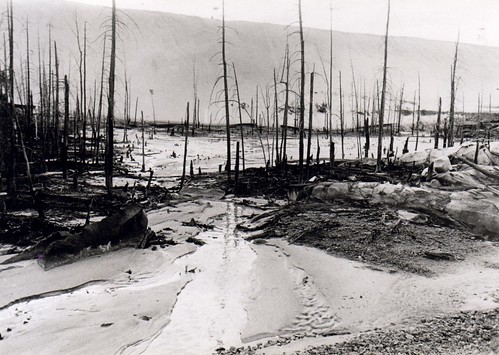
003Uranium_BW
Radioactive uranium tailings at Elliot Lake.

One of my first films, released 18 years ago, was Uranium, about the radioactive wastes from uranium mining on aboriginal lands in Canada. Not a very exciting title, and there was a reason for it. Faced with intense pressure from the uranium mining industry, the NFB sent a letter to the industry promising that the film would not be called ‘Death Rock,’ my preferred title and the literal translation of ‘dada the’, the dene word for uranium. By the time I was told about it, the letter had gone out. I wasn’t happy. But the NFB really supported and promoted the film and organized an exciting cross-county tour with panel discussions. We picked up the award for best documentary at the Yorkton festival.

At the time, Canada was already the world’s leading producer and exporter of Uranium, and huge amounts of radioactive wastes were accumulating on native lands. There is a reason why aboriginal people are much affected by uranium mining, be it in Canada, in Australia or in the ‘four corners’ area in the U.S. Since they were shoved off the best lands but allowed to live on the infertile and rocky hinterlands, they find themselves in the same place as uranium ore.

And now, with oil prices rising, there is a huge upsurge in uranium exploration and mining.

As a result, my film is back in use. It has been shown at numerous conferences in Ontario in particular. According to the organizers, the only thing that has really changed since I made it are the hair cuts.

The man who acted as a consultant to our film back in ’89 was Gordon Edwards, of the Canadian Coalition for Nuclear Responsability. I asked him what he thinks about the present uranium mining boom.

“The soaring price of uranium is something we’ve seen before, in the early
1970’s. In a very short period of time the price went up tenfold. It turned out
to be due to price manipulation; the price then fell steadily for the next
15 years. The result was that uranium mines were welcomed by communtiies,
but the economic benefits never met their expectations. Meanwhile highly toxic long-lived uranium mill residues were left in those areas as a permanent radioactive legacy. Back in 1898, Marie Curie showed that the residues left over after uranium is extracted from the crushed ore are eight times more radioactive than the uranium itself. These residues contain some of the deadliest materials known to science: radium, radon, and especially polonium isotopes, which the industry admits is 250 billion times more toxic than cyanide. These toxic materials are inevitable radioactive byproducts of uranium, produced by the process of radioactive disintegration, and they remain dangerous for hundreds of thousands of years.”

This is from one of the coordinators of the present Ontario campaign, Lynn Daniluk:

The Community Coalition Against Mining Uranium (CCAMU) is a group of concerned citizens from the greater Ottawa Valley and Kingston area, who came together to prevent a uranium mine in Frontenac and Lanark region. A uranium exploration company has staked and claimed 30,000 acres of land at the headwaters of the Mississippi water system, which feeds the Ottawa River. Scientific experts and history tells us that if a uranium mine were developed in this region it would be a serious environmental and public health concern. Our area is renowned for cultural events, tourism, and cottage life.

Our non-native coalition made Canadian history by joining a peaceful protest that had been set up by the Shabot Obaadjiwan First Nation and the Ardoch Algonquin First Nation on June 28th, 2007.

On 15 February 2008, former chief Robert Lovelace, of the Ardoch Algonquin First Nation began serving 6 months in jail for refusing to comply with the court injunction, while following Algonquin law to protect Creation.

The judge in the case handed down this harsh sentence along with heavy fines, saying, “compliance with the orders of this court are not optional”. The underlying issue, however, is that the government of Ontario did not consult with the First Nation community before issuing exploration licenses in Algonquin territory.

To date, fifteen municipalities in eastern Ontario have called for a moratorium on uranium exploration and mining in Eastern Ontario, including the cities of Ottawa and Kingston.

We also have the support of such organizations as Amnesty International, Council of Canadians, Greenpeace Canada, Mining Watch Canada, International Land Coalition, Green Party of Canada and Ontario, United Church of Canada, Physicians for Global Survival, Ontario College of Family Physicians, Lanark Health and Community Services, David Suzuki Foundation, Canadian Association of Physicians for the Environment and many local organizations in the region.

An inquiry was held in four locations (Shabot Lake, Kingston, Peterborough and Ottawa) throughout the month of April 2008. CCAMU now in the process of complying the information and will be writing a report to present the government. For more information go to http://www.ccamu.ca/

The Interactive doc: Bob Lang and Diamond Road

MR_in_SL
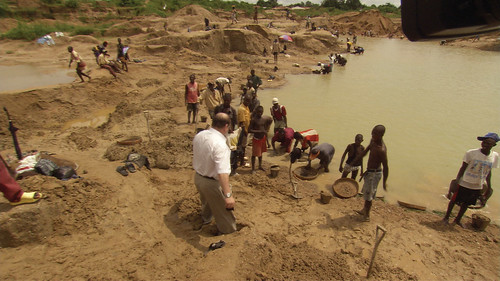
From The Diamond Road

Can you be a documentary filmmaker in the present tough context and still have a life I do my best to have time for family and friends, and to get out in the bush or on a river somewhere regularly. This past weekend I was out paddling with another documentary producer/director, my friend Bob Lang from Port Hope. Bob has made some terrific films and television series, and he is one of the sanest people I know in the ‘business.’ For one thing, he has a great sense of story, only works on things he cares about, and makes very smart decisions. This has allowed him to keep his company, Kensington Comunications, going successfully for some twenty-seven years. Among his many excellent productions are The Sacred Balance, a four-hour series with David Suzuki.

One of Bob’s recent productions is the series Diamond Road, three television hours but also a feature film version which just received the top documentary award at the Houston 41st Annual WorldFest . In addition Bob and his team have created a non-linear interactive version of the film, Diamond Road Online. Here you can dip into the complex story of the world diamond trade at whatever entry point you select on a world map. After viewing the segment you picked, you can select another one, out of a total of more than three hundred, and in that way construct your own story. It’s an ingenious use of Web 2.0 technologies, driven by a new sense of interactive, non-linear storytelling. The underlying architecture is such that it is able to calculate your personal interests by the choices you make and then offer suggestions, Amazon-style, for where to go next. You can even, as a user, contribute stories, edit clips and thus enrich the site for others.

This reminded me of my visit to the World conference of Wikipedia two years ago. I interviewed one of the founders of the movement whose name now escapes me, and asked what he thought would be the next cutting edge, the next frontier. His answer was instantaneous, short, and to the point: ‘collective story-telling.’

Bob Lang
Bob Lang in Frontenac Park.

Bob and I discussed whether we, as documentary filmmakers, used to structuring our stories in ‘auteur’ fashion, should be afraid of these kind of developments. I think we both agreed that yes, there will always be a place for stories in which we fashion and control the dramatic arc and editorial ‘line,’ but we should also welcome the participatory and democratic nature of these new experiences. If we trust the viewers they will make good use of the story material. Have a look at Diamond Road Online, it’s very well made.
http://www.diamondroad.tv/


a really inspiring doc: Young@Heart

groupshot[1]
Young@Heart

One of the most inspiring documentaries I have seen in recent years is playing in at least one theatre in Montreal right now. Young@Heart , by British filmmaker Stephen Walker, tells the story of a choir of elderly people preparing for an important concert in their Massachusetts home town. But they are not singing old folk songs and the national anthem. Classics of rock and roll and hip hop like Yes We Can or Shizofrenia take on a completely new meaning – or perhaps they just reveal their true meaning – when sung by people who are at the end of their lives. The preparations for the concert give the film a natural dramatic arc, but unforeseen events add surprising and touching turns of events. An impromptu prison concert is one of the best scenes in the film, and the death of two of the choir’s oldest members in the last week before the big concert adds a lot of poignancy. This is a must see film !

And it’s of special interest to me in the context of my own work. About ten years ago I made a film about a choir of homeless men in Montreal, called Enfants de Choeur in French and The Choir Boys in English. It was edited by Louise Côté and produced by Paul Lapointe at Érezi productions. Of all my own films, this is one of my favourites. It tells the real inside story behind the simple success story much covered by the media. The main theme of the film is the conflict between the choir director, a Mormon missionary, and the chorists who – in spite of all their addictions and other issues – aspire to controlling their own lives. As in Young@Heart, thanks to Louise, the songs really speak to what’s going on in the lives of the characters. The film was broadcast on the CBC and and on Radio-Canada’s flagship sunday night program Les Beaux Dimanches, a blessing in disguise as it came on the heels of the sound mix and on-line and prevented any theatrical distribution.

Also, right now I am working on the creative aspects of my film on the Raging Grannies, another film which will combine music and entertainment with serious social issues. As in Young@Heart and another recent film, Acros the Universe, I am planning to shoot some of the songs as video clips. This is going to be a lot of fun, for me and the crew, and also for our Granny friends who tend to be in their eighties.

CSTC Summer Institute just around the corner

Summer
Documentary instructors Peter Raymont and Steve Lucas with director Derreck Roemer and Jan Rofekamp, president and CEO of Film Transit International, at SIFT 2007.

Last december I had the opportunity to teach a two-day workshop on the basics of doc-making for the Canadian Screen Training Centre in Montreal. At the same time Nettie Wild and others were doing the same in other cities across the country.

Right now is registration time for the CSTC’s main activity, the Summer Institute of Film and Television (SIFT), which annually draws 250 participants from across the country to Ottawa for an intensive week of workshops, screenings and networking. ‘In sessions taught by seasoned documentary filmmakers, workshop participants explore the art and the business of capturing true stories on film, learning the essentials of concept development, pitching, shooting, editing and distribution.’ This year’s session starts on May 27th.

Here is a summary of who will be teaching and what (edited down from the CSTC’s material.)

Documentary : Getting Greenlit
From Development to Production with Steve Lucas
Five-day workshop (May 27-June1)

Level: Introductory

Getting Greenlit covers getting your documentary idea out of development and into production. If you’re ever going to make this film of yours, you’ll need to come up with a compelling way of talking about it. You’ll need to write about it in a compelling way, too. It’s a daunting proposition, no question, but it can be done. Thousands of people have done it—and so can you. This workshop is designed to help. You’ll meet documentary filmmakers who will share their films and experiences, and be able to pitch your idea for valuable feedback. There’s special focus on the art of the pitch and on what constitutes a promising film premise.

Suitable for: People who have a film idea or a story they want to develop and who are looking for a practical guide to documentary filmmaking. This is not a production course. Participants should bring two different ideas for a documentary or reality-based film – and come prepared to pitch.

About the instructor: Steve Lucas received an Academy Award nomination for his first film, a documentary feature entitled After the Axe, in 1983. He has been in the film and television business ever since.

Interventionist and Participatory Media
Making documentary media that matters with Katerina Cizek
Three-day workshop (May 28-30)

Level : Introductory/Intermediate

The course covers the basics of building media projects with partners that aim to change world-views, lives, policies, conditions – and tell good stories too. In this highly interactive workshop, you’ll learn about proven methods, projects and experiences, and we’ll brainstorm your own ideas and projects to develop concrete strategic plans. Bring your bright mind and ideas for projects.

Suitable for: Those who have made at least one film or media project (in documentary or other format).

About the instructor: Katerina Cizek explores the boundaries of the documentary genre with many and any media: video, internet, photography, audio, text, digital, blogging. She is this year winner at the 2008 Webby Awards (called “the Oscars of the internet” by The New York Times), winning for best online documentary series.

DOCOLOGY: Transforming Ideas into Images
with Peter Wintonick
Five-day workshop (May 27-June1)

Level : Intermediate/Advanced

This is a complete meal of a workshop including a few appetizers and drinks for dessert. We’ll examine the process of making marketable, idea-driven documentary from start to finish. From conception through to financing and how to gain exposure across the nowmedia world of multi-platform possibilities for documentary. An excursion into non-fiction whirl-wind of docmedia-making for intermediate and advanced level documentary a-fiction-ados, this workshop is suitable for everyone looking for wide-ranging exposure to the art, craft, philosophy and business of idea-driven, social filmmaking. For everyone hoping to turn fiction into faction.

Suitable for: Those who have made at least one film (in documentary or other format).

About the instructor: Peter Wintonick is a docfilmmaker and nowmedia maker among other incarnations, with a career spanning 30 years and more than 100 films. Known internationally as an Ambassador for Documentary Film, he was recently winner of the 2006 Governor General’s Prize in Media Arts, Canada’s highest such honour, and the Ontario Premier Prize.

For complete workshop and registration details visit www.cstc.ca/sift

CBC commissioning editors disagree with perceptions

791[1]
Up The Yangtze, a film by Yung Chang

When I attended the Hot Docs Festival in Toronto a few weeks ago, a heard a lot of talk about the CBC, much of it disgruntled. Once back in Montreal, I summarized these concerns and sent them to Andrew Johnson, Commissioning editor and senior producer of ‘The Lense’ who was very generous with his time and also consulted his colleageues, Catherine Olsen and Michael Claydon. Here’s our exchange:

Dear Andrew, hope this finds you well. I publish a blog on doc matters. I noticed at Hot Docs that there’s a perception that the CBC no longer plays the role it used to in documentary, especially social-political, and that the private broadcasters are picking up the slack. Some com-eds from private networks told me they find themselves with a lot of projects which even they think would be – or used to be – a natural fit for the CBC. Who at CBC would be the right person to ask a few questions to about this ?
Do you yourself have a (quotable) opinion on the subject ?

The response:

Magnus:

Thanks for your note and the information about your blog. I’ve consulted with my colleagues Catherine Olsen and Michael Claydon and, with respect, we all disagree with the implication that CBC is somehow less interested in or less engaged in the creation of documentaries, “especially social-political” documentaries. Each of us has the following response…

Catherine Olsen:

“The CBC & CBC Newsworld continue to be a champion of documentaries dealing with political and social issues. Is it true that we’re focusing more on Canada and Canadian social political issues in our commissioning – possibly – just as many other Canadian and international broadcasters are championing stories on their home turf. This is a worldwide trend …. but we still have some extraordinary examples of international stories that we commission including the theatrical and television hit Up the Yangtze, Liberty USA, Anthrax War, Stolen Babies, The Last Planet (the latter 4 still in production). On the acquisition and pre-sale front, The Passionate Eye continues as it has for the past 15 years to show more docs dealing with international social political issues than any other channel in Canada. (2 nights a week, 52 weeks a year).”

Michael Claydon:

“Most of the documentaries shown on the DOC ZONE are social/political in nature – what has changed is that we are putting more of an emphasis on a more journalistic approach at the main net, and trying to develop a brand that CBC viewers will respond to. That may not fit with the approach of some documentary makers, but the fact remains that CBC TV, CBC Newsworld and Documentary commission more hours than any other broadcaster in Canada.”

Andrew Johnson:

Lens docs primarily deal with contemporary social and political issues – in fact we’re more committed than ever to these films, but they do need to connect with the national audience we serve at CBC Newsworld – a news and current affairs network. All of our docs are, of course, are made by independent Canadian film-makers, mainly through commissions.

This season and next we have aired or will air commissioned films dealing with everything from anti-Wal-Mart activists, same-sex couples trying to adopt children, and the collision of drug issues & US-Canada relations to an experimental diet that may lead to a breakthrough in the fight against the obesity and diabetes epidemics in First Nations communities, the human cost of Canada’s refugee backlog, and the enormous social cost of revenue-generating video lottery terminals. We also look forward to airing a film about the collision of conflicting interests (government, environmental, tourism & First Nation) as efforts to cope with a unique, people-friendly orca lead to a tragic ending. This documentary has already won a dozen international and Canadian awards.

All of these films deal with tough or difficult subjects through engaging and dramatic stories. They pursue social-political issues through a wide range of approaches and are of real interest to Canadians. At Newsworld, we’ve been very pleased with the huge audience response to our documentaries this season just we’re gratified by the numerous awards our films and our filmmakers have won in recent years.”

Of course, there are other outlets for documentaries (including social-political) on CBC – such as The Nature of Things and Documentary.

In conclusion, we simply can’t accept the assessment of CBC that you’ve mentioned -we believe we’re still a home for provocative, cinematic and entertaining social-political docs. Of course, we can’t participate in all of the worthwhile projects that come to us so we’re happy to hear that the private networks are now entertaining these kinds of stories too. Nevertheless, we remain open to receiving new proposals from Canadian documentary-makers at anytime – and we will continue to commission and broadcast powerful, independently-made documentaries.

with best wishes,
Andrew

Andrew Johnson
Commissioning Editor &
Senior Producer, “The Lens”

A beautiful film : ‘My father’s studio’

image
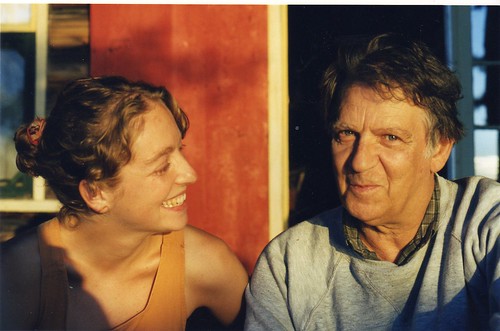
Jennifer Alleyn with her dad Edmund.

Not long ago I had the chance to see ‘My father’s studio’, a beautiful film by Jennifer Alleyn produced by Jeannine Gagné at Amazone Films. The opening screening will be at ExCentris in French and at Cinéma du Parc in English starting May 9th. Excellent editing by Annie Jean. It’s one of those films one should see on a big screen. It won the award for best Canadian production at the Festival des films sur l’art (FIFA) in Montreal.

He was a great artist, Edmund Alleyn: a master colorist, very creative and original. We learn from Jennifer’s movie that her dad made many new departures during his career. Every time he had a real success, he let go of whatever style he’d been working in, and started again in a new uncertain adventure.

Creative, original, but not talkative. Jennifer did one interview with him which is placed right at the top of the film. What he sais is heartfelt and full of meaning, but she had to work really hard to get just a few sentences from him. He died not long after. The movie is a testimony about his life and his art.

Beyond the cinematic qualities of the film, I found myself in familiar territory, because my dad Arne is an artist. He lives in Sweden and he still painting and teaching at age 91. My uncle Torsten, who died one year ago, was a painter and sculptor. My sister Eva paints watercolours and does drawings. Watching Jennifer’s film, I almost could smell the oil paint of the artist studios of my childhood.

I am sure it was not easy for Jennifer to make a film about her dad, and I asked her some questions.

How came up the idea to make a movie about you’re dad?
I’ve been wanting to do a film about my father for a long time. His double identity intrigued me. Born to an English family in Quebec City, he liked to say he was “French to the skin, English to the bone”. I feel connected to that reality. I was born in Paris in May 1968 and we immigrated back to Quebec in 1971. His life span covers recent Quebec history.
But it took me years and his departure, to find the approach that would allow me to plunge into his universe, his imaginings, while remaining respectful of his privacy. Can we ever access the soul of another being? During the research, I discovered he was quite a free thinker, and a philosopher as well as a painter. But the film doesn’t resolve or explain anything. It offers images to the viewer’s own interpretation. One mustn’t forget it is a posthumous dialogue, taking place in the silence of painting..

What are, do you think, the big themes in the movie?
I was very inspired by his work & notes . The fact that I started filming while he was alive and persued the shoot in his absence, gave a particular tonality to the film. In a way, it gave me the opportunity to follow some of his privileged themes: movement and stillness.
Life and death coexist in the film. But it was a celebration of life that I wanted to put on the screen. The title of the film refers to the physical space in which he worked for 40 years, but also to the creator’s mind, constantly processing images, memories, ideas, hopes or unfinished projects.
image2

It’s a really personal film, did you hesitate before starting the process?

I never hesitated, but I went to television to see if the subject could interest others. Surprisingly, the French CBC immediately agreed to the voyage I was proposing. I knew my father was not a celebrity in Quebec, like Jean-Paul Riopelle or Borduas. But his path was very inspiring. He was as free spirit. Now that the film is finished I wonder what will be the next project that will drive me with such strength. It was so dense and deep.

Could you have done the movie while you’re dad was still alive? Do you regret that you didn’t ?

My only regret is that he couln’t be at the premiere of the film!

But had he still been around, it would have been impossible to do this film . He was quite a director himself. He would have called the shots and hired me as his assistant! So I waited for my turn. After his departure, I could revisit his life, question his trajectory, search for the missing fragments. Inheriting his studio gave me a dramatic starting point. The idea of structuring the film according as a stream of consciousness imposed itself very soon. Knowing my father’s love for Virgina Woolf, I would’nt be surprised if she whispered from the darkness…

In the narration,you decided to talk to you’re dad. Is it mainly a choice you made to communicate with the public, or is it because you had things to tell him, to clear up between the two of you ?
During the scriptwriting process, I wrote short texts to my father. Like Haicu’s. Some of them were too personal, but some made their way to the final narration.Through this very intimate dialogue, the father-daughter relationship is offered up. I though people could enter more easily into this intimate space if it was raw. No detour, no mask. Bluntly intimate!. The father figure has always been one of knowledge for me. His absence made me realise I had to turn to other sources to find answers. I guess I had a few unanswered ones I needed to bounce at him. I hope people can interchange characters and address their own parent, in the anonymity of the cinema!