Un trés beau film: L’atelier de mon père

image
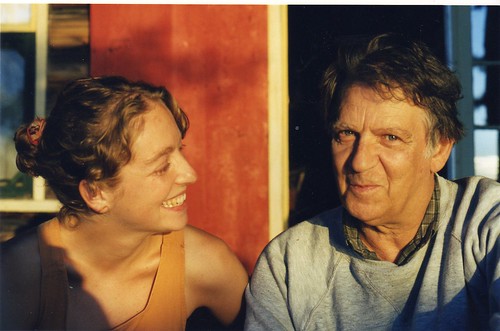
Jennifer Alleyn avec son père Edmund.

Il n’y a pas longtemps j’ai eu l’occasion de voir ‘l’Atelier de mon père’, un trés beau film de Jennifer Alleyn produit par Jeannine Gagné à Amazone Films. Le film prend l’affiche à ExCentris en français et au Cinéma du Parc et anglais à partir du 9 Mai. Excellent montage par Annie Jean. C’est un film à voir au grand écran.

Il était tout un artiste, Edmund Alleyn: un grand coloriste, créatif et aussi très original. Il ressort du film de Jennifer que son père a effectué bien des ruptures au cours de sa carrière. Chaque fois qu’il obtenait un grand succès il délaissait le style qu’il avait affectioné pour se lancer dans une nouvelle aventure imprévisible.

Créatif, original, mais pas loquace. Jennifer a faut une entrevue avec lui, qui commence le film. Il livre des vérités lourdes de sens, mais elle a du travailler fort pour lui les arracher. Et il est mort pas longtemps après. Le film témoigne de sa vie et de son art.

En plus des grandes qualités du film en termes cinématographiques je me suis en quelque sorte reconnu dans ce film, puisque mon père Arne est un artiste. Il vit en Suède, il a quatrevingt-onze ans, et il continue à peindre. Mon oncle Torsten, décédé il y a un an, était peintre et sculpteur. Ma soeur Eva peint des aquarelles et fait des dessins. En regardant le film de Jennifer j’ai presque senti l’odeur de la peinture d’huile des studios d’artistes de mon enfance.

J’ai imaginé que ça n’a pas été facile pour Jennifer de faire un film sur son père, et je lui ai posé quelques questions.

Comment t’es venue l’idée de faire un film sur ton père?
Je me suis trouvée devant une pensée, une philosophie que j’ai eu envie d’approfondir, de mieux connaître. Le fait qu’il s’agisse de mon père m’est même d’abord apparu comme un obstacle. J’étais consciente qu’il n’avait ni la reconnaissance de Riopelle, ni le pouvoir d’attraction d’un Borduas. Mais son parcours me fascinait. C’est celui d’un esprit libre.

Quels sont, dirais-tu, les grands thèmes que l’on retrouve dans le film?
Le film s’articule autour de deux thèmes chers à Edmund Alleyn, qui sont la mouvance et la fixité. La mouvance, métaphore de la vie, se retrouve non seulement dans le parcours géographique de cet artiste qui a vécu à Québec, puis à Paris et enfin à Montréal; mais aussi, d’un point de vue iconologique, dans les symboles représentés dans les oeuvres, au premier plan le motif de l’eau qui traverse la peinture d’Edmund Alleyn, du début à la fin. L’idée de fixité, qui apparaît plus tardivement dans l’œuvre, est présente dès le début du film. Cet atelier déserté par l’artiste, ce lieu où le temps est suspendu, suggère la fixité de la mort, un arrêt du mouvement.
image2

C’est un film très personnel, as-tu hésité avant de l’entreprendre ?

Je n’ai pas hésité, mais j’ai attendu longtemps. Je savais qu’il serait impliquant et truffé de risques! J’avais déjà tenté d’approcher mon père avec une caméra, mais il redoutait les entrevues, il était secret. Puis, trois ans avant sa mort par un après-midi d’été, il a ouvert la porte et j’ai pu lui poser quelques questions. Après son décès, ces bandes vidéo ont pris une autre valeur. Et lorsque j’ai hérité de son atelier, le projet s’est imposé de lui-même.

Aurais-tu pu faire le film pendant que ton père était en vie? Regrette-tu de ne pas l’avoir fait?

Le seul regret que j’ai, c’est qu’il n’ait pas pu assister à la première du film!
Mais il aurait été impossible de faire le film de son vivant parce qu’il aurait voulu tout contrôler et j’aurais fait son film! Un peintre, par définition, est un créateur total. Avec son décès, un mur est tombé. Maintenant je le remercie d’avoir mis cette paille, si riche, dans mon berceau. Il a fallu qu’il parte, que le lien émotif ne soit plus là, entre nous, comme une interférence, pour que je puisse entrer dans son monde.

Tu as choisi de parler à ton père. Est-ce avant tout un choix de communication avec le public, ou parce que tu avais des choses à lui dire, ou à mettre au clair entre vous ?
En cours de recherche, il m’arrivait d’écrire à mon père de courts textes. Ils étaient souvent trop intimes, mais ils ont nourri la narration. Et j’ai gardé le Tu qui me semblait à la fois personnel et permettant une implication du spectateur. On a tous un père à qui l’on a dit tu. J’ai fait ce film parce que je crois au dialogue, à l’humain, à la richesse des idées partagées. Mais le dialogue dont je parle à la fin du film est celui que j’entame avec son oeuvre. C’est celui de l’art, qui va de soi à soi et qui ne finit jamais.
Pioneering coalition-building: L’Observatoire du documentaire.

J-P&Maonon.72250004

Jean-Pierre Gariépy and Manon Barbeau, respectively Executive Director and President of the Observatoire. My photo.

I’d like to tell you about a pioneering coalition-building experience based here in Montreal, one which could serve as an example for the rest of Canada and even internationally.

Since it was founded ten years ago, I have worked with Montreal’s documentary film festival, the Rencontres. Five years ago, the Rencontres took the initiative for the setting up of the Observatoire du documentaire, which was given the ambiguous english name The Documentary Network. It is actually a coalition, a pressure group which brings together all the main forces producing, broadcasting and distributing documentary film. It brings to the table – for monthly meetings – the professional organizations of producers, directors and technicians, the main television networks producing docs, the National Film Board, distributors, and of course the Rencontres. There is no parallel to this anywhere else in the country. Instead of treating each other as opponents, all these forces come together around common goals: favouring and strengthening documentary filmmaking and its role in society.

Having such disparate organizations working together creates a most interesting dynamic. Everyone has to put some water in their wine and make an effort to come to agreement with the others, but that is only half the story. The representatives of the organizations then have to go back to their respective organizations and fight for what has been agreed on, or what is being prepared for the next meeting. This means that the representatives of the producers or directors have to convince their own colleagues – many of whom produce fiction and television series – to defend the interests of documentary. It means that the broadcasters have to deal with the concerns of the documentary community not just as ‘demands’ from the outside, but as common concerns in which they also have a stake. The Observatoire acts to cement the alliance of all the partners and thereby gives them greater force as a lobby group. During this past year, the Observatoire intervened in numerous ways with the CRTC and other government agencies to favour the interests of documentary production.

Although it’s based in Quebec, the Observatoire has several pan-canadian members. It could serve as an inspiration for English Canada, or it could potentially become a truly representative, bilingual, coast-to-coast organization. It is definitely setting an example.

As a director working in both English and French, I am a member of two organizazations: the Associaction des Réalisateurs et Réalisatrices du Québec (ARRQ) and the Documentary Organization of Canada. Both of these are members of l’Observatoire. I used to be on the executive of DOC, when it was called the Canadian Independent Film Caucus, but these days I attend the meetings of the Observatoire as one of the representatives of the ARRQ.

Cinema Politica faces funding crisis.

BigSellout

Townshop residents in South Africa connect to power grid. From The Big Sellout.

Cinema Politica is the name of a program of screenings which was started at Concordia University in Montreal by Ezra Winton and the Uberculture media arts non-profit five years ago, and which has branched out to a number of other cities on the North American continent and even overseas. Its list of screeings reads like a roll call of the best of recent sociopolitical documentaries: Loose Change, The Corporation, Crude Impact, Seeing is Beleiving, McLibel, The Big Sellout....OK now I can hear my webmestre Kim saying ‘you should have links to these movies.’ But actually, they are all there on the Cinema Politica website, along with many other great films, so check them, out.

The Cinema Politica screenings in Monteal have been a huge success. The two or three screenings I went to last year were attended by about five hundred people. There is a real thirst and enthusiasm out there for political docs, for films that are hard to find on TV. But now, sadly, Cinema Politica’s survival is threatened by a funding crisis. It is really essential for this series of screenings to continue ! I put a few questions to Ezra Winton.
ezra_aeroplane

How did Cinema Politica start and how long has it been running ?
I started it in 2001 at Langara College and it eventually migrated
with me to Concordia where it was renewed in 2003. I started in order
to:
a) address the incredible lack of diversity in Canadian movie theatres
b) help build audiences and support independent Canadian documentary
and fiction
c) use film to inspire audiences (especially students) into actions
around social justice and cultural participation.

How did it expand to other cities ?
People have been to the Concordia events or heard about them and know
how hugely successful we are there. They then contact us and we help
them set up in their communities. They are emboldened by the Concordia
success and want to be part of a network that can hopefully breed that
kind of political cinema energy, and they get a lot of support from us
in the way of licensing costs, website support, etc.

Programming is terrific, how does it work ?
Thanks! I’ve been the programmer for five years at Concordia, and
every year I make suggestions to the 30+ locals in Canada and Europe
on films I think are excellent, but ultimately the other locals do
their own programming. As for how I select, it’s about the quality of
filmmaking, the level of commitment to the politics (ie, films that
take a stand or illustrate a stand), and diversity. I think that our
screenings have resonated with students at Concordia especially,
because every week they know they will experience cinema that is
politically, geographically, and issue-oriented diverse. We even throw
in the odd fiction feature and short to keep things interesting. I
should also mention that my partner, Svetla Turnin, plays a big part
in helping me sort out the gems we will screen from the 100+
acquisitions and submissions I go through every year.

With such an incredibly successful initiative ( when I was there, there were 400-600 people) can you not finance it with ticket sales ?
Part of the mandate of our parent organization (non-profit
überculture) is to promote the media arts to new audiences and to
ensure accessibility. We therefore have asked that none of the locals
charge admission. We do ask for donations, and raise a bit at each
screening that way. The Concordia CP also has its own funding
apparatus – a fee levy that all students pay into, amounting to 2
cents per credit and giving the series almost the budget it needs to
clear great films and bring in speakers. This kind of “collective
payment” method works wonderfully at that one local, our flagship
local, but the funds need to stay there. Funding the rest of the
network is the problem we face. Basically, for $40,000 a year as a
base minimum, we could get a phone and hire a coordinator to keep
things going. With more, we could build the biggest and most active
alternative distribution and exhibition network for documentary and
independent political cinema Canada has seen. For now, we’ve been
running the network on $5,000 per year, thanks to CitizenShift’s
ongoing support and faith in the project.

What happened with Canada Council funding ? Any explanations ?

It’s the second time we’ve been turned down. This time the jury
recommended we get funded and had comments that were all incredibly
positive. They even commented that they couldn’t believe we had
survived so long on volunteer labour!! Unfortunately the jury ranked
us so low the money in the envelope ran out by the time they got to
us. We are actually a bit shocked, as there was even an alternative
video distribution person and a doc filmmaker on the jury….We know
it’s not the Council’s fault, but I am starting to realize how
documentary is discriminated against in the media arts world when it
comes to funding. So many people told us that the jury would love us
(the grant was for organizational funding, exactly what we need) that
we kind of held our breath thinking we’d get it. We are now left with
the option of finding $30,000 to 40,000 over the summer or shutting
down the project. We are discussing a Network membership fee for
locals that would be instituted in the fall and be sliding scale. DOC
has also contacted me to have a meeting later this month, but I know
DOC is not like Toronto International Film Festival – not a lot of money to throw around. So, if
anyone has ideas or access to suitcases of cash, please contact us!
The wind is gone from our sails, but I guess we’re not sunk yet.

Thanks Ezra, keep up the good work !

Ezra also publishes aa news and resources blog and website on Canadian
independent cinema called “Canada Screens” – http://www.canadascreens.ca

Well-deserved award to Serge Giguère (with videos.)

Serge Giguère


If you are a subscriber to this blog and you receive this by e-mail, you need to go to the blog to see all video excerpts.

The other day one of our great Quebec doc makers, Serge Giguère, received one of the Governor General’s awards for creative achievement in media arts. And he deserves it ! Last year Serge and his producers at Les Films du rapide blanc released A Force de Rêve, a fantastic film about elderly people who remain passionately active, for which he received a Jutra award.

Serge has his finger on the pulse of the Quebec population, not the elites but the ‘ordinary people.’ His films look at lives lived and popular culture, but always with a strong creative twist. He is extremely close to the people he films, but at the same time he uses his imagination. In fact, his imagination seems to be triggered by incidents in the lives of his characters, or the locations, and he just takes off from there. Since he does his own camera work, his images express exactly what he saw and imagined, in a very organic whole.

Some time ago my close friend and colleague Simon Bujold and I filmed a presentation by Serge organized by the Quebec chapter of DOC. Here are a couple of excerpts, with a little english summary translation. I’m puttint the translations first for those of you who have some highschool French.

Characters is everything says, Serge in this first clip. You may have a good subject, but without the characters that doesn’t take you very far. He learnt that from the pioneers of cinema direct in Quebec, Pierre Perrault in particular.

[youtube ZBm4rYTlM1c]

In this second clip, Serge talks aboutwhat we often call a ‘mise en situation’ though he doesn’t use the term. Again referring to Perrault, he says brining people together and encouraging thm to interact can be tremendously fruitful. You don’t script what they are going to say, just make some suggestions, perhaps even pushing them a little to engage in an exchange.

[youtube ZppF4ULGKb0]

In the third and last clip, Serge talks about the imagination, and where he gets his ideas. And it’s always from the characters themselves, although he then takes liberties with them and finds ways to amplify them. For example, in his film on country singer Oscar Thiffault, he made use of a huge mock airplane. But the idea came from Oscar, who already had a smaller one around his place.

[youtube L5CzrkqGOwk]

You can find more info about Serge’s films on the web site of Rapide Blanc films which he co-founded with Sylvie van Brabant in 1984. And here’s a little background from the Governor General’s announcement.


Serge Giguère is one of Quebec's leading documentary filmmakers. Over
the course of three decades and in 11 documentaries, he has forged an
identity for documentaries in Quebec that reflects the collective
consciousness. He began his career as a cinematographer, working on
60-odd films, before becoming a critically acclaimed director. He
co-founded Les Films d'aventures sociales du Québec in 1974 and
remained a partner until 1984, when he joined Sylvie Van Brabant to
establish Les Productions du Rapide-Blanc. From 1998 to 2001, he was
filmmaker-in-residence at the National Film Board of Canada. Mr.
Giguère has sat on numerous juries and has been the recipient of many
awards, including the Prix de l'Association québécoise des critiques
de cinéma for best medium-length film of the year (1988, 1991, 1995),
a Prix Gémeaux (1992), and a Prix Jutra (2007). Hot Docs devoted a
retrospective to his work in 2006. Serge Giguère lives in
Saint-Norbert-d'Arthabaska (QC).


Blog thoughts

Siena cathedral 40470019
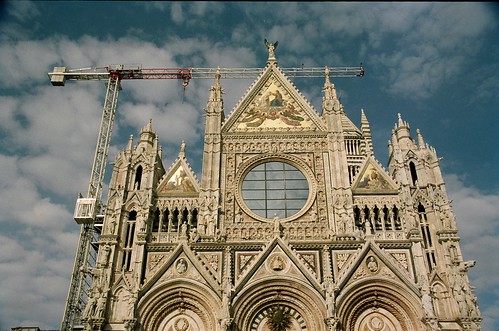
The Cathedeal in Siena, Tuscany, my photo.

If you are a subscriber to this blog, you might have noticed that I have been posting less frequently lately. This was not only because I was on a holiday trip in Tuscany, Italy, for two weeks. It was also because I have been thinking about what direction to take with the blog.

8 months after starting this adventure, with the help of my young friend and webmestre Kim Gjerstad, I was feeling both overextended and a little confused. Publishing twice weekly in both English and French was taking too much time, and I found myself tempted to do too much: review significant new docs, do my best help stir up debate about different issues, report on my own work – all this while maintaining good picture quality and occasionally inserting videos. Some of this activity was the result of good feedback: people seem to appreciate the blog and urge me to cover things. But it was getting out of hand and starting to get in the way of my work.

So I took advantage of my holidays to think about where to go with the blog. By serendipity I picked up a special issue of the progressive French paper Libération on fiction writers. There was an article where several writers talked about how they use their blogs – mainly as ‘carnets de bord,’ a sort of log book, a scrap book on the side, a place to talk about things that don’t necessarily fit into whatever they happen to be writing but need to be said. This brought me back to my original intent with the blog: to share my own experiences and thoughts on documentary filmmaking. So from now on I will write mainly about films I see and people in meet in the course of my regular activities, and of course about my own work. On occasion I will continue to use the blog as a tool to satisfy my own curiosity – I have enjoyed doing that and it has led to some interesting cyber-encounters.

I welcome your comments.

Americano prend l’affiche

photo Americano 1

Mon ami le grand documentariste Carlos Ferrand a déjà été primé à plusieurs reprises pour son film ‘Americano’, un excellent ‘road movie’ continental dans lequel il prend le pouls des Amériques au complet, et arrive à un diagnostic qui n’est pas très encourageant, mais où l’espoir réside dans la force des personnages.

De la terre de feu à la terre de glace ‘Americano’ est le voyage personnel d’un cinéaste québécois-péruvien parcourant les ruelles des Amériques. De la Patagonie au Nunavut, au cours de quatre années, Carlos Ferrand a revu des amis chers, des hommes et des femmes rencontrés jadis lors de ses vagabondages américains : des parents, des cinéastes et professeurs, la cuisinière de son enfance, un médecin, tous porteurs d’une mémoire et d’histoires fortes et signifiantes, qu’il a voulu tirer de l’ombre.

amricano 2
Le visionnement d’Americano nous laisse le souvenir du plus beau legs qu’un immigrant puisse faire à son pays d’accueil: lui raconter d’où il vient et de lui parler de la blessure de l’exil. Il laisse le souvenir d’un cinéaste qui chante, d’une cuisinière qui sait parler aux animaux, d’un chasseur d’ombres et de peuples disparus, de lutteurs masqués et de sacrifices humains, d’une prière à la Santa Virgen de la Guadalupe, d’hommes et de femmes qui se battent pour la justice; souvenir aussi d’un chant gospel et d’un poème d’Aimé Césaire; et enfin de « la princesse d’un futur incertain » et des espoirs d’un cinéaste pour un continent.

Vaste par le territoire qu’il embrasse, le film demeure un voyage intime par le regard qu’il pose et la parole qu’y tient Ferrand. Il se déploie comme un long chant de blues inspiré par la présence des peuples fondateurs. Americano est inclassable : road movie, plongée dans la mémoire, journal intime, film engagé sans être militant, film poétique empreint d’une profonde humanité.

Ne manquez pas ce grand film qui prend l’affiche le 21 mars 2008 au cinéma l’Excentris.

Doc engagé: Numéro spécial de la revue Possibles.

AndreThibault_SimonBujold2090
André Thibault, photo Simon Bujold

A l’invitation de André Thibault, j’ai collaboré au numéro spécial de la revue Possibles sur ‘le documentaire, art engagé’ qui vient de sortir. Au menu une table ronde avec des documentaristes ainsi que des articles sur notamment le collectif des Lucioles, Gilles Groulx, le documentaire et les femmes et bien d’autres sujets. En plus de participer à la table ronde, j’ai contribué un article intitulé ‘Le temps joue pour nous,’ et une entrevue avec le grand documentariste de L’Inde Anand Patwardhan. J’ai posé quelques questions à André Thibault, le principal responsable du numéro.

Explique-nous c’est quoi la revue Possibles.

Ce périodique, qui a 31 ans d’âge, s’est voulu dès le départ une revue d’idées progressiste et critique non alignée à une orthodoxie idéologique, combinant des essais sur des sujets sociaux, politiques, économiques et culturels regroupés chaque fois autour d’un thème – et des textes de poésie et de fiction. Les fondateurs incluaient des sociologues engagés (ex. Marcel Rioux, Gabriel Gagnon) et des poètes (ex. Gaston Miron, Roland Giguère). Les valeurs d’autonomie et d’émancipation constituent le fil conducteur de la diversité des sujets traités. Distribuée par Dimédia, la revue est présente dans les principales librairies a vocation culturelle. Autrement, on peut s’y abonner ou commander un exemplaire en appelant 514-529-1316. La page WEB Possibles donne l’éditorial et la table des matières des derniers numéros, mais n’est pas interactive.

Pourquoi vous avez choisi de faire un no spécial sur le doc engagé ?

Il nous est apparu que dans l’actuelle relance des mouvements et de la critique sociale, le documentaire, de plus en plus mûr comme forme d’art, s’inscrivait comme partenaire important à côté des formes plus classiques d’activités de sensibilisation et de mobilisation : revues, livres, conférences, colloques, manifs. Nous avions besoin de mieux comprendre (et de le faire partager à notre public lecteur) la spécificité de son apport et le pourquoi de l’engouement qu’il connaît présentement. Face à la fébrilité éclatée des diverses formes d’intervention en rupture avec la pensée unique, c’était aussi l’occasion de bâtir des ponts entre partenaires poursuivant les mêmes buts mais ayant peu d’occasions de se rencontrer et encore moins de travailler ensemble.

Qu’est-ce que tu as appris en faisant ce numéro ?

D’abord la ferveur de la communauté virtuelle que constituent les documentaristes, ferveur tant sociale que créatrice. Comme je l’ai fait ressortir dans mon édito, l’alliage d’engagement et d’empathie m’est apparu un trait dominant : plus d’émotion humaine dans l’engagement, et plus de vision sociale dans l’exploration de l’émotion humaine. Les documentaristes représentatifs des tendances présentes n’ont pas de solution magique à proposer et encore moins à imposer, ils ne divisent pas le monde en une colonne des absolument bons et une des absolument méchants. Ils viennent chercher l’être sensible et le citoyen dans chacun et l’amèment à se questionner et à ajouter ses propositions dans un débat citoyen permanent revigoré. Et cela en utilisant toutes les ressources de l’art de raconter, mais appliquées au réel.

Socially commited docs: special issue of the Quebec magazine ‘Possibles’

AndreThibault_SimonBujold2090
André Thibault, photo by Simon Bujold

Invited by André Thibault, I recently had the opportunity to collaborate on the latest issue of the magazine ‘Possibles’ on the subject of ‘Documentary: socially committed art’. ( my translation). In this issue you will find – in french -a round table with documentary filmmakers, articles on the collective Lucioles, on Gilles Groulx, on documentary film and women, and many other subjects. In addition to participating in the round table, I contributed an interview with India’s great documentarian Anand Patwardhan and an article entitled ‘Time is on Our Side.’ I asked André Thibeault, editor in chief, a few questions about the magazine and the special issue.

Could you tell us a little bit about the magazine ‘Possibles’?

This 31 year old journal was from the very beginning a review of progressive ideas and non-conformist criticism of an ideological orthodoxy, combining essays on political, social, economical and cultural subjects summed around a specific theme each time, and fictional and poetic writings. The founders were socially committted sociologists (ex. Marcel Rioux, Gabriel Gagnon) and poets (ex. Gaston Miron, Roland Giguere). The central theme, present in all different subjects examined over the years, is that of values found in emancipation and autonomy. The magazine is distributed by Dimédia and is present in all major culturally oriented bookstores. You can also subscribe or order a copy by calling this number 514 529 1316. The web site Possibles offers the editorial and table of contents of previous issues, but isn’t interactive.

Why did you decide to publish a special issue on socially committed documentaries?

We thought that in the light of the recent revival of social movements and criticism, the documentary has emerged as a more mature art form and is now an equal and important partner to other more classical forms of mobilization and awareness rising, such as books, conferences, demonstrations. We needed to understand (and share it with our public) the specific contribution of documentary films and examine why are the creating such a craze. It was also an occasion to create bonds with different partners pursuing the same goals, but not having many opportunities to meet and even less to work together.

What did you learn while researching this issue?

First of all I became aware of the enthusiasm present in the virtual community of documentary filmmakers, this enthusiasm is as much social as it is creative. As I pointed out in my editorial, what really struck me is the strong bond between social involvement and empathy: more human emotion in the engagement and more social awareness in the exploration of the human emotion. The documentary filmmakers who stand for these tendencies don’t have a magical solution to propose and let-alone one to impose. They don’t divide the world in two categories, the all bad and the all good. Instead they reach out for the sensitive human being and the citizen present in all of us and they make us question ourselves and incorporate these ideas in a permanent and invigorated civic debate. And this by using all the artistic means to tell a story but a real one.

Panel sur le cinéma engagé aux RVCQ

panel RVCQ

Photo Sylvain Légaré.

IL Y A DES EXTRAITS VIDÉO DANS CE POST, CERTAINS USAGERS DOIVENT LES ACTIVER EN BAS DE LA PAGE.

La semaine passée j’ai participé à une discussion de panel sur le cinéma engagé, dans le cadre des Rendez-vous du Cinéma Québecois . J’ai trouvé fort intéressant d’entendre des réalisateurs de fiction parler du documentaire, et j’ai demandé à mon assistante Dijana Lazar de résumer le débat et d’en choisir quelques extraits. Voici ce qu’elle a retenu:

La discussion sur ce sujet percutant et pertinent, autant pour le cinéma que pour la société en générale, a rassemblé cinq réalisateurs, vivant chacun à leur manière la vocation de ‘cinéaste engagé’. Manon Barbeau, Philippe Falardeau, Richard Desjardins, Bernard Émond et Magnus Isacsson ont tous, à travers leurs oeuvres cinématographiques, exprimé leurs préoccupations sociales ou politiques et débusqué des injustices et des inégalités dans le monde qui les entoure.
L’animatrice, Marie-Louise Arsenault a introduit la discussion en posant la même question révélatrice à tous les invités : « Qu’est-ce l’engagement pour vous? »

Bernard Émond a souligné que l’engagement social se trouve au coeur de ses préoccupations en tant que cinéaste, et même s’il ne fait de pas des films politiques en soi, ces notions sont toujours présentes dans ses oeuvres.
Il s’est aussi penché sur la question du cinéma documentaire par rapport au cinéma de fiction, dénonçant la situation très difficile et injuste dans laquelle se trouvent les documentaristes aujourd’hui au Québec et soulignant que les meilleures productions du cinéma québécois sont issues du cinéma documentaire.

[youtube IUJy7iO2gwg]

Pour Philippe Falardeau être engagé : ça veut surtout dire être cohérent et fidèle à ses idées et à ses principes. Il a aussi parlé du sort difficile du film documentaire, accusant les télédiffuseurs de charcuter les films des documentaristes qui travaillent souvent avec moins de moyens mais ayant les mêmes obligations au niveau dramatique que les cinéastes de fiction.

[youtube oITHGBosDNg]

Questionné sur l’ampleur de son engagement et parlant de la controverse qui entoure souvent ses films, dont ‘L’Erreur Boréale’ qui a soulevé un grand débat sur la coupe de bois au Québec, Richard Desjardins a profité de la tribune pour dénoncer la manière discriminatoire dont les amérindiens sont traités dans la société québécoise, et préconiser une démarche sur la scène internationale afin de remédier à leur situation et améliorer leurs conditions de vie.

[youtube 6_hSYEcFuZA]

Manon Barbeau, interrogée sur la facilité de faire les films engagés au Canada et au Québec, a répliqué que c’était beaucoup plus facile de réaliser ce genre de films ici que dans d’autres pays, qui subissent les mêmes problèmes sociaux mais qui ont des systèmes de censure très rigides. Elle a dit que le problème avec le cinéma engagé au Canada, c’est souvent la diffusion des films et non leur réalisation en soi.

[youtube vf6Reo_u29k]

En finissant la discussion, les invités ont tous partagé avec le public les titres de quelques oeuvres cinématographiques qui leur tiennent particulièrement à coeur, et Magnus Isacsson a souligné qu’il aime beaucoup voir des oeuvres de fiction car il en tire une inspiration pour ses propres films surtout par rapport à la construction de la courbe dramatique et l’exploration des personnages. Il a aussi parlé de ce qu’il considère être des ‘conditions gagnantes’ pour réaliser un documentaire qui sera satisfaisant, non seulement par la pertinence du sujet, mais aussi du point de vue dramatique.

[youtube lU35tY4XxtA]

Merci à Michael Julian Berz pour le tournage, à Dijana Lazar pour le résumé et les extraits vidéos, et aux RVCQ pour la photo.

Impressive doc hits big screen: Up the Yangtze

yantze1

I just saw the very successful Canadian-produced documentary ‘Up the Yangze’ and was very impressed. This is a first film, by a young Montreal-based director of Chinese origin, Yung Chang. It tells an epic story, with grand visuals of the transformation of the Three Gorges and the Yangze river valley, but it tells it through a touching and closely filmed story mainly of one family. They are poor uneducated farmers, and they cultivate a small plot of land by the river. As the plans for damming the river move ahead, they know their land will be flooded and they will be displaced along with 2 million other people. Unable to pay for her education, they send their oldest daughter to get a job on a tourist tour boat which travels up the river to the dam, in the final stages of construction. This provides terrific opportunities for showing the encounter of two worlds, and for cutting back and forth between the obsequious tour guides who are prepared to say anything to please the authorities and make a buck, and the struggling farm family for whom this whole development is a disaster. The filmmakers mine this rich vein for all it’s worth, to great effect. The numerous ironies and the poignancy of the situation steers the film away from any kind of simplistic analysis. And far from romanticising the old ways, they contrast the hardships of the age-old poverty with the glitter of a new shamelessly promotional commercialism. Through the story of one family you get a portrait of all of China and its dilemmas, economic, environmental, human. It’s also beautifuly filmed and edited. What an accomplishment ! I encourage you to go and see this film on the big screen, we need to show that there’s a place for theatrical screenings of docs.

My assistant Steven Ladouceur added the following information and links – apologies for the repetition.

This Friday February 22nd opens the Montreal screenings of Yung Chang’s highly acclaimed first feature-length documentary film, Up the Yangtze, at the AMC Forum. The Mirror says viewing this film is “one of those experiences that reinvigorates and restores your faith in the documentary film medium.” Chang graduated from Concordia University’s Film Production programme and his latest achievement stems from a “surreal” journey with his family to China in 2002. One year later, Chang was receiving support from EyeSteelFilm productions through former professor Daniel Cross and then the National Film Board. After developing and refining the project throughout 2004 and 2005, the film was mainly shot in 2006 and post-production ended in July of 2007. From it’s inception Up the Yangtze has been receiving awards and is continuing to do so now more then ever as it is breaking box office records.