The Interactive doc: Bob Lang and Diamond Road

MR_in_SL
From The Diamond Road

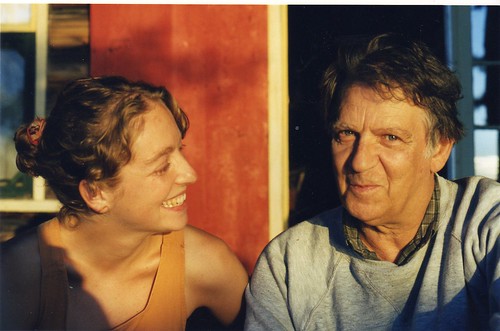
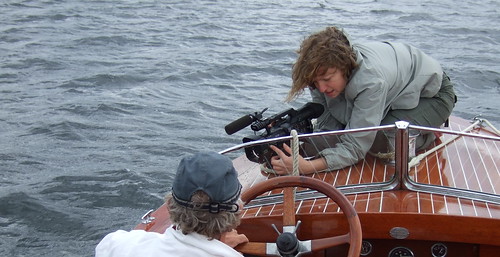
Can you be a documentary filmmaker in the present tough context and still have a life I do my best to have time for family and friends, and to get out in the bush or on a river somewhere regularly. This past weekend I was out paddling with another documentary producer/director, my friend Bob Lang from Port Hope. Bob has made some terrific films and television series, and he is one of the sanest people I know in the ‘business.’ For one thing, he has a great sense of story, only works on things he cares about, and makes very smart decisions. This has allowed him to keep his company, Kensington Comunications, going successfully for some twenty-seven years. Among his many excellent productions are The Sacred Balance, a four-hour series with David Suzuki.

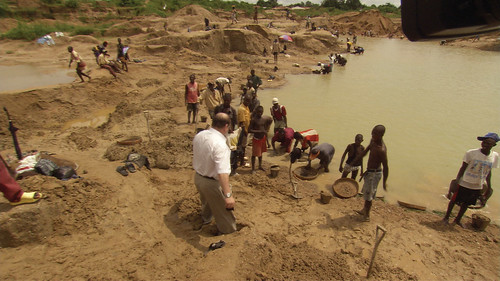
One of Bob’s recent productions is the series Diamond Road, three television hours but also a feature film version which just received the top documentary award at the Houston 41st Annual WorldFest . In addition Bob and his team have created a non-linear interactive version of the film, Diamond Road Online. Here you can dip into the complex story of the world diamond trade at whatever entry point you select on a world map. After viewing the segment you picked, you can select another one, out of a total of more than three hundred, and in that way construct your own story. It’s an ingenious use of Web 2.0 technologies, driven by a new sense of interactive, non-linear storytelling. The underlying architecture is such that it is able to calculate your personal interests by the choices you make and then offer suggestions, Amazon-style, for where to go next. You can even, as a user, contribute stories, edit clips and thus enrich the site for others.

This reminded me of my visit to the World conference of Wikipedia two years ago. I interviewed one of the founders of the movement whose name now escapes me, and asked what he thought would be the next cutting edge, the next frontier. His answer was instantaneous, short, and to the point: ‘collective story-telling.’
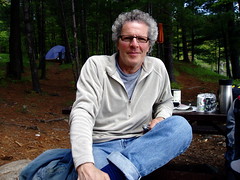
Bob Lang
Bob Lang in Frontenac Park.

Bob and I discussed whether we, as documentary filmmakers, used to structuring our stories in ‘auteur’ fashion, should be afraid of these kind of developments. I think we both agreed that yes, there will always be a place for stories in which we fashion and control the dramatic arc and editorial ‘line,’ but we should also welcome the participatory and democratic nature of these new experiences. If we trust the viewers they will make good use of the story material. Have a look at Diamond Road Online, it’s very well made.
http://www.diamondroad.tv/


a really inspiring doc: Young@Heart

groupshot[1]
Young@Heart

One of the most inspiring documentaries I have seen in recent years is playing in at least one theatre in Montreal right now. Young@Heart , by British filmmaker Stephen Walker, tells the story of a choir of elderly people preparing for an important concert in their Massachusetts home town. But they are not singing old folk songs and the national anthem. Classics of rock and roll and hip hop like Yes We Can or Shizofrenia take on a completely new meaning – or perhaps they just reveal their true meaning – when sung by people who are at the end of their lives. The preparations for the concert give the film a natural dramatic arc, but unforeseen events add surprising and touching turns of events. An impromptu prison concert is one of the best scenes in the film, and the death of two of the choir’s oldest members in the last week before the big concert adds a lot of poignancy. This is a must see film !

And it’s of special interest to me in the context of my own work. About ten years ago I made a film about a choir of homeless men in Montreal, called Enfants de Choeur in French and The Choir Boys in English. It was edited by Louise Côté and produced by Paul Lapointe at Érezi productions. Of all my own films, this is one of my favourites. It tells the real inside story behind the simple success story much covered by the media. The main theme of the film is the conflict between the choir director, a Mormon missionary, and the chorists who – in spite of all their addictions and other issues – aspire to controlling their own lives. As in Young@Heart, thanks to Louise, the songs really speak to what’s going on in the lives of the characters. The film was broadcast on the CBC and and on Radio-Canada’s flagship sunday night program Les Beaux Dimanches, a blessing in disguise as it came on the heels of the sound mix and on-line and prevented any theatrical distribution.

Also, right now I am working on the creative aspects of my film on the Raging Grannies, another film which will combine music and entertainment with serious social issues. As in Young@Heart and another recent film, Acros the Universe, I am planning to shoot some of the songs as video clips. This is going to be a lot of fun, for me and the crew, and also for our Granny friends who tend to be in their eighties.

A beautiful film : ‘My father’s studio’

image
Jennifer Alleyn with her dad Edmund.

Not long ago I had the chance to see ‘My father’s studio’, a beautiful film by Jennifer Alleyn produced by Jeannine Gagné at Amazone Films. The opening screening will be at ExCentris in French and at Cinéma du Parc in English starting May 9th. Excellent editing by Annie Jean. It’s one of those films one should see on a big screen. It won the award for best Canadian production at the Festival des films sur l’art (FIFA) in Montreal.

He was a great artist, Edmund Alleyn: a master colorist, very creative and original. We learn from Jennifer’s movie that her dad made many new departures during his career. Every time he had a real success, he let go of whatever style he’d been working in, and started again in a new uncertain adventure.

Creative, original, but not talkative. Jennifer did one interview with him which is placed right at the top of the film. What he sais is heartfelt and full of meaning, but she had to work really hard to get just a few sentences from him. He died not long after. The movie is a testimony about his life and his art.

Beyond the cinematic qualities of the film, I found myself in familiar territory, because my dad Arne is an artist. He lives in Sweden and he still painting and teaching at age 91. My uncle Torsten, who died one year ago, was a painter and sculptor. My sister Eva paints watercolours and does drawings. Watching Jennifer’s film, I almost could smell the oil paint of the artist studios of my childhood.

I am sure it was not easy for Jennifer to make a film about her dad, and I asked her some questions.

How came up the idea to make a movie about you’re dad?
I’ve been wanting to do a film about my father for a long time. His double identity intrigued me. Born to an English family in Quebec City, he liked to say he was “French to the skin, English to the bone”. I feel connected to that reality. I was born in Paris in May 1968 and we immigrated back to Quebec in 1971. His life span covers recent Quebec history.
But it took me years and his departure, to find the approach that would allow me to plunge into his universe, his imaginings, while remaining respectful of his privacy. Can we ever access the soul of another being? During the research, I discovered he was quite a free thinker, and a philosopher as well as a painter. But the film doesn’t resolve or explain anything. It offers images to the viewer’s own interpretation. One mustn’t forget it is a posthumous dialogue, taking place in the silence of painting..

What are, do you think, the big themes in the movie?
I was very inspired by his work & notes . The fact that I started filming while he was alive and persued the shoot in his absence, gave a particular tonality to the film. In a way, it gave me the opportunity to follow some of his privileged themes: movement and stillness.
Life and death coexist in the film. But it was a celebration of life that I wanted to put on the screen. The title of the film refers to the physical space in which he worked for 40 years, but also to the creator’s mind, constantly processing images, memories, ideas, hopes or unfinished projects.
image2

It’s a really personal film, did you hesitate before starting the process?

I never hesitated, but I went to television to see if the subject could interest others. Surprisingly, the French CBC immediately agreed to the voyage I was proposing. I knew my father was not a celebrity in Quebec, like Jean-Paul Riopelle or Borduas. But his path was very inspiring. He was as free spirit. Now that the film is finished I wonder what will be the next project that will drive me with such strength. It was so dense and deep.

Could you have done the movie while you’re dad was still alive? Do you regret that you didn’t ?

My only regret is that he couln’t be at the premiere of the film!

But had he still been around, it would have been impossible to do this film . He was quite a director himself. He would have called the shots and hired me as his assistant! So I waited for my turn. After his departure, I could revisit his life, question his trajectory, search for the missing fragments. Inheriting his studio gave me a dramatic starting point. The idea of structuring the film according as a stream of consciousness imposed itself very soon. Knowing my father’s love for Virgina Woolf, I would’nt be surprised if she whispered from the darkness…

In the narration,you decided to talk to you’re dad. Is it mainly a choice you made to communicate with the public, or is it because you had things to tell him, to clear up between the two of you ?
During the scriptwriting process, I wrote short texts to my father. Like Haicu’s. Some of them were too personal, but some made their way to the final narration.Through this very intimate dialogue, the father-daughter relationship is offered up. I though people could enter more easily into this intimate space if it was raw. No detour, no mask. Bluntly intimate!. The father figure has always been one of knowledge for me. His absence made me realise I had to turn to other sources to find answers. I guess I had a few unanswered ones I needed to bounce at him. I hope people can interchange characters and address their own parent, in the anonymity of the cinema!

Un trés beau film: L’atelier de mon père

image
Jennifer Alleyn avec son père Edmund.

Il n’y a pas longtemps j’ai eu l’occasion de voir ‘l’Atelier de mon père’, un trés beau film de Jennifer Alleyn produit par Jeannine Gagné à Amazone Films. Le film prend l’affiche à ExCentris en français et au Cinéma du Parc et anglais à partir du 9 Mai. Excellent montage par Annie Jean. C’est un film à voir au grand écran.

Il était tout un artiste, Edmund Alleyn: un grand coloriste, créatif et aussi très original. Il ressort du film de Jennifer que son père a effectué bien des ruptures au cours de sa carrière. Chaque fois qu’il obtenait un grand succès il délaissait le style qu’il avait affectioné pour se lancer dans une nouvelle aventure imprévisible.

Créatif, original, mais pas loquace. Jennifer a faut une entrevue avec lui, qui commence le film. Il livre des vérités lourdes de sens, mais elle a du travailler fort pour lui les arracher. Et il est mort pas longtemps après. Le film témoigne de sa vie et de son art.

En plus des grandes qualités du film en termes cinématographiques je me suis en quelque sorte reconnu dans ce film, puisque mon père Arne est un artiste. Il vit en Suède, il a quatrevingt-onze ans, et il continue à peindre. Mon oncle Torsten, décédé il y a un an, était peintre et sculpteur. Ma soeur Eva peint des aquarelles et fait des dessins. En regardant le film de Jennifer j’ai presque senti l’odeur de la peinture d’huile des studios d’artistes de mon enfance.

J’ai imaginé que ça n’a pas été facile pour Jennifer de faire un film sur son père, et je lui ai posé quelques questions.

Comment t’es venue l’idée de faire un film sur ton père?
Je me suis trouvée devant une pensée, une philosophie que j’ai eu envie d’approfondir, de mieux connaître. Le fait qu’il s’agisse de mon père m’est même d’abord apparu comme un obstacle. J’étais consciente qu’il n’avait ni la reconnaissance de Riopelle, ni le pouvoir d’attraction d’un Borduas. Mais son parcours me fascinait. C’est celui d’un esprit libre.

Quels sont, dirais-tu, les grands thèmes que l’on retrouve dans le film?
Le film s’articule autour de deux thèmes chers à Edmund Alleyn, qui sont la mouvance et la fixité. La mouvance, métaphore de la vie, se retrouve non seulement dans le parcours géographique de cet artiste qui a vécu à Québec, puis à Paris et enfin à Montréal; mais aussi, d’un point de vue iconologique, dans les symboles représentés dans les oeuvres, au premier plan le motif de l’eau qui traverse la peinture d’Edmund Alleyn, du début à la fin. L’idée de fixité, qui apparaît plus tardivement dans l’œuvre, est présente dès le début du film. Cet atelier déserté par l’artiste, ce lieu où le temps est suspendu, suggère la fixité de la mort, un arrêt du mouvement.

image2

C’est un film très personnel, as-tu hésité avant de l’entreprendre ?

Je n’ai pas hésité, mais j’ai attendu longtemps. Je savais qu’il serait impliquant et truffé de risques! J’avais déjà tenté d’approcher mon père avec une caméra, mais il redoutait les entrevues, il était secret. Puis, trois ans avant sa mort par un après-midi d’été, il a ouvert la porte et j’ai pu lui poser quelques questions. Après son décès, ces bandes vidéo ont pris une autre valeur. Et lorsque j’ai hérité de son atelier, le projet s’est imposé de lui-même.

Aurais-tu pu faire le film pendant que ton père était en vie? Regrette-tu de ne pas l’avoir fait?

Le seul regret que j’ai, c’est qu’il n’ait pas pu assister à la première du film!
Mais il aurait été impossible de faire le film de son vivant parce qu’il aurait voulu tout contrôler et j’aurais fait son film! Un peintre, par définition, est un créateur total. Avec son décès, un mur est tombé. Maintenant je le remercie d’avoir mis cette paille, si riche, dans mon berceau. Il a fallu qu’il parte, que le lien émotif ne soit plus là, entre nous, comme une interférence, pour que je puisse entrer dans son monde.

Tu as choisi de parler à ton père. Est-ce avant tout un choix de communication avec le public, ou parce que tu avais des choses à lui dire, ou à mettre au clair entre vous ?
En cours de recherche, il m’arrivait d’écrire à mon père de courts textes. Ils étaient souvent trop intimes, mais ils ont nourri la narration. Et j’ai gardé le Tu qui me semblait à la fois personnel et permettant une implication du spectateur. On a tous un père à qui l’on a dit tu. J’ai fait ce film parce que je crois au dialogue, à l’humain, à la richesse des idées partagées. Mais le dialogue dont je parle à la fin du film est celui que j’entame avec son oeuvre. C’est celui de l’art, qui va de soi à soi et qui ne finit jamais.

Impressive doc hits big screen: Up the Yangtze

yantze1

I just saw the very successful Canadian-produced documentary ‘Up the Yangze’ and was very impressed. This is a first film, by a young Montreal-based director of Chinese origin, Yung Chang. It tells an epic story, with grand visuals of the transformation of the Three Gorges and the Yangze river valley, but it tells it through a touching and closely filmed story mainly of one family. They are poor uneducated farmers, and they cultivate a small plot of land by the river. As the plans for damming the river move ahead, they know their land will be flooded and they will be displaced along with 2 million other people. Unable to pay for her education, they send their oldest daughter to get a job on a tourist tour boat which travels up the river to the dam, in the final stages of construction. This provides terrific opportunities for showing the encounter of two worlds, and for cutting back and forth between the obsequious tour guides who are prepared to say anything to please the authorities and make a buck, and the struggling farm family for whom this whole development is a disaster. The filmmakers mine this rich vein for all it’s worth, to great effect. The numerous ironies and the poignancy of the situation steers the film away from any kind of simplistic analysis. And far from romanticising the old ways, they contrast the hardships of the age-old poverty with the glitter of a new shamelessly promotional commercialism. Through the story of one family you get a portrait of all of China and its dilemmas, economic, environmental, human. It’s also beautifuly filmed and edited. What an accomplishment ! I encourage you to go and see this film on the big screen, we need to show that there’s a place for theatrical screenings of docs.

My assistant Steven Ladouceur added the following information and links – apologies for the repetition.

This Friday February 22nd opens the Montreal screenings of Yung Chang’s highly acclaimed first feature-length documentary film, Up the Yangtze, at the AMC Forum. The Mirror says viewing this film is “one of those experiences that reinvigorates and restores your faith in the documentary film medium.” Chang graduated from Concordia University’s Film Production programme and his latest achievement stems from a “surreal” journey with his family to China in 2002. One year later, Chang was receiving support from EyeSteelFilm productions through former professor Daniel Cross and then the National Film Board. After developing and refining the project throughout 2004 and 2005, the film was mainly shot in 2006 and post-production ended in July of 2007. From it’s inception Up the Yangtze has been receiving awards and is continuing to do so now more then ever as it is breaking box office records.

Doc impressionnant prend l’affiche: Up the Yangtze

yantze1

Je viens de voir le succès documentaire Up the Yangtze, production canadienne qui m’a vraiment impressionné. C’est un premier film de Yung Chang, jeune réalisateur d’origine chinoise, basé a Montréal. Il raconte l’épopée de la transformation du Three Gorges et de la vallée de la rivière Yangtze avec des éléments visuels grandioses, mais la raconte principalement à travers l’histoire touchante et intimement filmé d’une famille. Ils sont des fermiers pauvres et sans éducation et ils cultivent un petit lot de terre près de la rivière. Alors que les plans pour créer un barrage avancent, ils savent que leur terre sera inondée et ils seront déplacés ainsi que 2 millions d’autres personnes. Incapable de payer pour son éducation, ils envoient leur fille aînée pour obtenir un emploi sur un bateau de croisière pour touriste qui voyage le long de la rivière jusqu’au barrage, qui en est a ses dernières étapes de construction. Ce qui permet une opportunité formidable de montrer la rencontre de deux mondes et couper entre les guides de tournée obséquieux qui sont prêts à dire n’importe quoi pour plaire aux autorités et faire de l’argent, et la lutte de famille de fermier pour qui ce développement est un désastre. Les documentaristes minent cette veine riche à fond avec brio. Les nombreuses ironies et le caractère poignant de la situation dirige le film loin d’une analyse simpliste. Et loin d’idéaliser les anciennes façons, ils créent un contraste entre les vieilles difficultés de la pauvreté et le scintillement effronté d’un nouveau commercialisme promotionnel. À travers l’histoire d’une famille, vous avez le portrait de toute la Chine avec ses dilemmes économiques, environnementaux, humains. Il est aussi magnifiquement filmé et monté. Quel accomplissement!

Mon assistant Steven Ladouceur ajoute ceci: ( pardonnez quelques répétitions.)

Ce vendredi 22 février a Montréal débutera les projections de Up the Yangtze, le premier long-métrage documentaire extrêmement acclamé de Yung Chang au Forum AMC. La version française du film prendra l’affiche le 7 mars au cinéma Quartier Latin. Le Mirror dit que voir ce film est « une de ces expériences qui revigore et restaure la foi en medium du film documentaire. » Chang est un diplômé du programme de Production Cinéma de l’Université Concordia et son dernier accomplissement trouve ses origines d’un voyage «surréaliste » avec sa famille en Chine en 2002. Un an plus tard, Chang recevait du support des productions EyeSteelFilm à travers un ancien professeur Daniel Cross et puis par l’Office National du Film. Après avoir développé le projet en 2004 et 2005, le film a principalement été tourné en 2006 et la post-production a terminé en juillet 2007. Dès ses débuts, Up the Yangtze reçoit des prix et continue à le faire maintenant plus que jamais alors qu’il établit de nouveaux records au guichet.

Chronicle of everyday life

071111-159
Workshop: Denys Desjardins et Jacques Leduc

During the Rencontres Internationales du Documentaire de Montréal last november, my wife Jocelyne Clarke attended a workshop on a really unique film series called ‘Chronicle of Everyday Life,’ with Jacques Leduc, Denys Desjardins and Richard Brouillette. Jocelyne is a filmmaker ( her most recent film is ‘Edith and Michel’) and she has participated in the programming at the Rencontres since the beginning. Here is her report from the workshop:

Phot Jocelyne Clarke
Jocelyne Clarke

I ceased counting the number of times the word “freedom” was uttered when referencing this outstanding work in the annals of Quebec documentary.

Started in the early 70’s, officially produced in 1977 by Jacques Bobet at the NFB, the project was conceived and directed by Jacques Leduc in collaboration with a few dozen other illustrious craftsmen from our cinema. The result was a four and a half hour opus, divided into 8 films of lengths varying from 10 to 82 minutes.

The idea behind the project was to revisit direct cinema at a moment when it was already heavily “contaminated” by mass TV (which Leduc describes as a’ transmission method ‘ and not a ‘cinematographic language ‘), and to reflect on the times through the main axes of life – love, money, food, home, hearth, death. Small filmmaking teams went out in search of serendipitous moments : a parade of men in underwear, houses being built in the suburbs, a group of well-to-do women doing charitable works. Unusual yet essential stereotypes of urban life in those still innocent times. The material was organized as it came in, in an organic back-and-forth between filming and editing, and was divided into themes, which finally became the days of the week.
Footage that was too precious to leave out, but did not fit into the final structure, was edited into an epilogue for the series – Le plan sentimental – remarkable for its visual improvisation as well as its elaborately constructed soundtrack.

The workshop discussion eventually led to the question: could such a work be made today? No categorical answer was forthcoming, but it was generally agreed that today’s televisual requirements – fixed lengths for films, detailed scripts, releases, – definitely limit such freedom, without completely destroying it. Today we have the technological advantages that come with small, inexpensive tools, undreamt-of distribution channels – (all that’s lacking are salaries for filmmakers). Jacques also brought up how film subjects in the 70’s had a much less reflexive relationship with the camera than today, in the wake of reality shows and all manner of idols.

A remarkable series, too little appreciated by the public, which really deserves to be re-issued in a DVD package.

For more information, check out the NFB website, search in the collections under “series”, or search individual titles as follows.

Lundi – Une chaumière, un coeur.
Mardi – Un jour anonyme.
Mercredi – Petits souliers, petits pains.
Jeudi – À cheval sur l’argent
Vendredi – Les chars.
Samedi – Le ventre de la nuit.
Dimanche – Granit
Hors série – Le plan sentimental.

Chroniques de la vie quotidienne

071111-159
Denys Desjardins et Jacques Leduc

Lors des Rencontres Internationales du Documentaire de Montréal en novembre dernier, ma femme Jocelyne Clarke a assisté à un atelier très intéressant avec Jacques Leduc, Denys Desjardins et Richard Brouillette, autour d’une série de films unique: Chronique de la vie quotidienne. Jocelyne est réalisatrice ( Edith et Michel) et a participé à la programmation aux Rencontres depuis le début.

Phot Jocelyne Clarke
Jocelyne Clarke

J’ai cessé de compter le nombre de fois que le mot “liberté” à été prononcé en référence à cette oeuvre unique dans l’histoire du documentaire québécois. Produit officiellement en 1977 (mais entamé plusieurs années avant) par Jacques Bobet à l’ONF, conçue et réalisée par Jacques Leduc en collaboration avec quelques douzaines d’autres illustres artisans du cinema d’ici, elle s’étale sur 4 heures et demi, réparties en 8 films de longueurs disparates variant de 10 à 82 minutes. L’idée et l’urgence étaient un retour au cinema direct – déjà “contaminé” par l’arrivée en force de la television (que Leduc qualifie de “moyen de transmission” et non de “langage cinématographique”). On voulait témoigner de l’époque à travers les grands axes de la vie – l’amour, l’argent, l’alimentation, l’habitation, la mort. Des petites équipes partaient tourner quelqu’événement – un défilé d’hommes en bobettes, la construction de maisons en banlieu, un groupe de femmes aisées s’affairant à des oeuvres charitables. Des clichés insolites mais essentiels, du quotidien de la ville en ces temps encore innocents. Le matériel s’organisait au fur et à mesure, dans un va-et-vient organique entre les tournages et le montage. Le piétage fut réparti en thèmes qui devinrent éventuellement les jours de la semaine. Avec les chutes trop précieuses pour laisser de côté mais qui n’entraient pas dans la structure découverte, on a monté un dernier petit court – Le plan sentimental – remarquable autant pour son visuel improvisé que sa trame sonore soigneusement élaborée.

La discussion s’est attardée un bon moment autour de la question – une telle oeuvre pourrait elle être réalisée aujourd’hui? Pas de réponse catégorique mais on était d’accord généralement que les contraintes télévisuelles – les longueurs fixes, l’exigence de scénarios détaillés, les quittances – vont à l’encontre d’une telle liberté, sans toutefois la brimer complètement. On a parlé aussi d’une naïveté et d’une insouciance face à la caméra, longtemps révolues dans la foulée des “reality shows”. Aujourd’hui par contre, l’accès aux technologies légères et à diverses formes de distribution sont des atouts inconnus à l’époque.

Une série remarquable trop peu apprécié par le public et qui mériterait certainement son coffret DVD. Pour en savoir plus, aller sur le site de l’ONF et faites une recherche dans la collection sous “série”, ou rechercher chaque titre, que voici:

Lundi – Une chaumière, un coeur.
Mardi – Un jour anonyme.
Mercredi – Petits souliers, petits pains.
Jeudi – À cheval sur l’argent
Vendredi – Les chars.
Samedi – Le ventre de la nuit.
Dimanche – Granit
Hors série – Le plan sentimental.

The Invisible People – what happened to the debate ?

Peuple invisible 53540_06
The Minister shaking the hand of a young Algonquin.

During the holidays, I read a collection of articles by the great critic of American cinema Andrew Sarris entitled ‘Confessions of a Cultist.’ One phrase struck me. “Everyone adores a dissident poet – in someone else’s society.” (quoting from memory.)

And I had the opportunity to see the courageous and powerful new film from Richard Desjardins. I will clarify, for those who are not from Quebec, that he is a great poet, composer, and singer-songwriter as well as the author of important documentaries, with Robert Monderie. Almost ten years ago, their film l’Erreur Boréale spurred an enormous debate concerning the state of the boreal forest in Quebec, and it is one of those rare documentary films that one can say led to real change in society. Now, with Le Peuple invisible (The Invisible People), will they manage to provoke a similar debate about the situation of native people in Quebec?

But first, what is this film about? It is the finely spun and well-documented tale of how the Algonquins, the traditional inhabitants of a vast territory north of Ottawa, suffered at the hands of white colonists and governments—not to mention the Jesuits and the Catholic Church. The film does not treat the colonisers tenderly. Here is what my friend and close collaborator Simon Bujold writes:

This film is a great history course. The sort of course that the Quebec school books never dared imagine. Richard Desjardins has again accomplished a brilliant intellectual feat designed to make us think.
The Algonquins, who are they?

“Our brothers,” said Desjardins in an interview. ‘Those whom we have systematically ignored since our ancestors no longer needed them to survive the rigors of the land. They have always been there. They have reasonably accommodated the European and his descendants well before the Bouchard-Taylor commission.’ ( An allusion to the present debate on tolerance toward immigrants and minority cultures in Quebec.)

Nevertheless, as the film by Monderie and Desjardins demonstrates, the Algonquins are an invisible people in the eyes of the Québécois. Criticism has been fired specifically at the sovereignty movement, which asserts a distinct national identity while completely ignoring the First Nations. One victim who shows no solidarity with another even more badly off. “I want us to be able to live together in harmony and peace,” says the conqueror as a testimony to the lost friendship he has just crushed. Why concern oneself with the fate of the weaker when one is the stronger. Many viewers exited the theatre still covered with the shame and guilt that rose up in us when confronted with this reality. Powerlessness in the face of a tragedy of such scope. What disturbs the spectator most is that the accusing finger turns slowly towards us as we discover, one by one, the past and present injustices the Algonquins have sustained. In L’Erreur Boréale, evil was the company, no sweat. In this film there is the cruel reflection of the mirror.”

The film gives no answer to the question everyone has. What to do? What to do today?
Can we overcome hundreds of years of organized contempt to destroy the barrier of cultural ignorance.
Billions for the tsunamis, millions for Haiti. Schools for the young Afghans, Iraq for Iraqis. And for our neighbors? Nothing.

Merci Simon !

And the debate ? What has become of the debate ?
Well, for a while I thought it was going to erupt. The official spokesperson for the Rencontres Internationales du Documentaire de Montréal, the singer Biz of the group Loco Locass, wasn’t ashamed to attack the film. According to Biz, heard on Radio-Canada, Desjardins and Monderie criticize the Québecois without emphasizing that the Americans and the Canadians had done even worse. Some days later, also on Radio-Canada, I heard the writer Dany Lafférière, a Québecer of Haitian origin, assert that Desjardins had taken it upon himself to speak about the oppression of the Algonquins rather than letting them speak for themselves. But aside from that… not a lot. I believe this is a film that makes people very ill at ease. Will the debate eventually take place ? Perhaps after the television broadcast.

Le Peuple invisible – le débat a-t il eu lieu ?

Peuple invisible 53540_06
PHOTO: Ministre serrant la main d’un jeune Algonquin.

Durant la période des fêtes, je lisais une collection d’articles du grand critique de Cinéma américain Andrew Sarris intitulé ‘Confessions of a Cultist.” Une phrase m’a frappé: ‘Tout le monde adore voir un poète dissident – dans une autre société que la sienne.’ ( ma traduction libre).

Et j’ai eu l’occasion de voir le nouveau film, courageux et percutant, de Richard Desjardins. Je précise pour ceux qui ne sont pas du Québec qu’il est un grand poète, compositeur et interprète en plus d’être l’auteur de films documentaires importants, avec Robert Monderie. Il y a presque dix ans leur film l’Erreur Boréale avait causé un débat énorme sur l’état de la forêt boréale au Québec, et c’est un des rares films documentaires dont on peut dire qu’il a conduit à des changements réels dans la société. Maintenant, avec Le Peuple invisible, arrivent-ils a provoquer un débat semblable sur le sort des peuples autochtones au Québec ?

Mais d’abord, de quoi parle ce film ? C’est le récit minutieux et bien documenté du sort que les Algonquins, habitant traditionellement un vaste territorire au nord d’Ottawa, ont subi aux mains des colons et gouvernements blancs – sans oublier les pères Oblats et l’Église catholique. Le film n’est pas tendre envers les colonisateurs. Voici ce qu’en dit mon ami et proche collaborateur Simon Bujold:

Ce film est un grand cours d’histoire. Le genre de cours que les réformes scolaires québécoises n’ont jamais osé imaginer. Richard Desjardins accomplit encore une fois un brillant exercice intellectuel. Prendre la parole pour atteindre notre regard.

Qui sont-ils? «Nos frêres» dit Desjardins dans une entrevue. Ceux que l’on ignore systématiquement depuis que nos ancêtres n’en ont plus besoin pour survivre à la rigueur du territoire. Depuis toujours ils sont là. Ils ont accommodé raisonnablement l’européen et sa descendance bien avant la commission Bouchard-Taylor.

Pourtant comme le film de Monderie et Desjardins le démontre, les algonquins sont un peuple invisible aux yeux des québécois.

Des critiques sont lancées spécifiquement vers le mouvement souverainiste qui revendique une identité nationale distincte tout en ignorant les Premières Nations. Une victime qui ne se solidarise aucunement d’une autre encore plus mal en point. «Je veux que l’on puisse vivre ensemble dans l’harmonie et la paix», dit le vainqueur en gage d’amitié au perdant qu’il vient d’écraser. Pourquoi s’embêter avec le sort du plus faible quand on est le plus fort. Plusieurs spectateurs sortent de la projection encore habités de la honte et de la culpabilité qui montent en nous face à cette réalité. Impuissance face à l’ampleur du drame. Ce qui embête le plus le spectateur c’est que le doigt accusateur se tourne lentement vers nous alors que l’on découvre une à une les injustices historiques et présentes que subissent les Algonquins. Dans l’Erreur Boréale, le méchant c’était la compagnie, facile. Ici c’est le reflet cruel du miroir.

Le film ne donne pas la réponse à la question qui s’installe en chacun. Quoi faire? Que faire aujourd’hui?

Pouvons-nous désarmer des centaines d’années de mépris organisé pour vaincre la barrière de l’ignorance culturelle. Des milliards pour les tsunamis, des millions pour Haïti. Des écoles pour les jeunes afghanes, l’Iraq au Iraquiens. Et pour nos voisins? Rien.

Et le débat ? Qu’est-il advenu du débat ?

Eh bien, je pensais qu’elle allait avoir lieu, car même le porte-parole des Rencontres Internationales de Montréal, le chanteur Biz, du groupe Loco Locass, ne s’était pas géné pour attaquer le film. Selon Biz, entendu à l’émission de Christaine Charette à Radio-Canada, Desjardins et Monderie critiquent les Québecois sans souligner que les Américains et les Canadiens anglais ont fait pire. Quelques jours plus tard j’ai entendu l’écrivain Dany Laffèrière, québecois d’origine Haïtienne affirmer, aussi à Radio-Canada, que Desjardins prend la parole pour parler de l’oppression des Algonquins plutôt que de leur laisser la parole. Mais après cela… pas grande chose. Je crois que c’est un film qui met les gens très mal à l’aise. Ce débat-là, veut-on réellement l’avoir ? Aura-t il d’avantage lieu lors de la télédiffusion ?