Interesting structure, interesting texture: ¿¡Revolución!?

Revolucion
Venezuela’s President Hugo Chavez

Hugo Chavez, the President of Venezuela, has won his most recent referendum, modifying the constitution so that elected officials – notably including himself – can be reelected for several terms. Is this good or bad ? Only the future will tell, but at least he submitted the change to a popular vote, in stark contrast to the may military coups in Latin America, supported by – if not orchestrated by – some of the countries who like to suggest Chavez is a dictator-in-the making.

I recently organized a screening of a film I really like, ¿¡Revolución!?, directed by Charles Gervais. It is a doc about Chavez’s ‘Bolivarian’ revolution in Venezuela. In terms of the meaning of that revolution the film is generally positive but not at all uncritical, and Chavez’s enemies are given lots of space. That gives the film a healthy tension and it certainly avoids the pitfalls of propaganda. And it has many other qualities. There is one important strand of the film made up of animated images of Cervantes’s Don Quixote, with a gravelly voice-over which seems to represent the knowledge of a veteran revolutionary formulating some general principles for social and political upheavals – you could imagine him to be a Che Guevara speaking from the grave, but his thoughts also remind one of Machiavelli, formulating some general principles about his subject based on years of experience. There are ten of these principles in as many segments, and they signpost ten chapters in the film. The actuality material is very well edited – by Étienne Gagnon – and was treated for contrast and texture in a way more reminiscent of edgy fiction films than of documentaries. I asked Charles how he developed this treatment.

How did you come upon the Don Quixote idea? Was it hard to make it work in the film?

Charles Gervais: In 2005, when I first got the idea of making this documentary, Chavez was distributing 1 million copies of Don Quixote books to the people of Venezuela. Chavez said that it was necessary to nourish the minds, to be inspired by someone who searched “to rectify the wrongs and to rearrange the world”. I found it unusual for a political leader, fascinating. At that time, I knew little about Chavez, and it brought me wanting to know more. During my research, what I found is that Chavez is in fact a real Quixotic figure: a dreamer that wants to do good to the people, but becomes so overwhelmed in his quest that he doesn’t always see the reality clearly anymore. How did I suggest this in the film? Don Quixote is everywhere in the film. At the very beginning, Chavez refers to him when he talks about passion, and drawings of Quixote’s adventures are used to present the theory of a modern revolution; and at the end, the storyline of Chavez and Don Quixote clearly mix together. It’s even a quote of Quixote himself that closes the film, warning Chavez to be careful not to lose himself in passion forgetting his true cause. (“Let not thine own passion blind thee in another man’s cause.” / Miguel de Cervantes)

Your film has a very interesting structure, and also an interesting texture. How did you develop those?

Charles Gervais: We wanted to create a structure that would give the film a possibility to stay interesting and insightful, whatever happens with Hugo Chavez. That led us to invent a step-by-step guide for a modern revolution that would succeed in bringing about radical change without resorting to violence and repression. (I worked on this with a specialist in Theory of the Revolution from the Trudeau Centre for Peace and Conflict Studies.) So if Chavez got mad with power and ended up as a true dictator, our film could help understand why. And if he continued to work on his «socialist revolution of the 21st century» on a democratic way, we could even pretend that we might have helped him! (I’ll let you decide which path he is on today!)

Talking about the texture, we wanted to follow a certain aesthetic about slums, poverty and «end of the world» kind of places that was brought by some great movies like City of God or Traffic. The dominant color all over the film, amber, reminds me of an old newspaper that was forgotten for a long time under the hard sun – how the people living in Venezuela’s slums possibly felt like. So technically, we took the almost too perfect HD images (shot with a Sony CineAlta F900) and alter the signal with a kind of «bleach bypass». The resulting images, with deep black and deep white, but cold, was then colored with this amber texture.

REVOLUCION_POSTER_ENG small

Thanks to Jorge Bustos-Estefan for help with this blog.
Taking Root: The Vision of Wangari Maathai

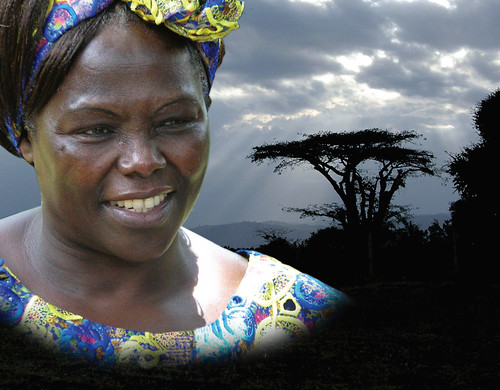
takingrootfilmWangari Maathai [Photo credit: Lisa Merton]

One of the best films I saw at the Rencontres Internationales du Documentaire de Montréal last November was Taking Root: The Vision of Wangari Maathai, which won both the best documentary award in the ‘Eco-camera’ section and the audience award for the whole festival. The film documents the struggle of Maathai and the Green Belt Movement she started, against authoritarian governments and for the protection of the environment in Kenya. I was particularly impressed by the way archival footage of past actions and repression were interwoven with contextual and current materials, making for a compelling and inspiring story. The filmmakers, Lisa Merton and Alan Dator, told me they were far from the only ones who wanted to make a film about Maathai.

Maathai directors.6992
Alan Dater and Lisa Merton, the directors of the film [Photo: Andrei Khabad]

Alan: I think we got to make the film because we got along well with Wangari. And because we started making the film before she won the Nobel Peace Prize, before she had that level of recognition. We weren’t after a “famous” person, we were interested in her life and her work for its own sake. Her story is universal.

We grew up on the land as Wangari did and so we have similar sensibilities in many ways; we understand the rhythms of the natural world, the web of life of which we all are part, and our total dependence on the natural world for our very survival. Something she understood from childhood.

You succeed in portraying the person, the movement and, at least to some extent, the situation in the country. Was that difficult, or did it come naturally?

Lisa: It came naturally. Wangari’s approach to change is holistic so we wanted to show that in the way we made the film. She links sustainable development, democracy and peace in a beautiful, organic way in her life and work. When she had no choice but to become political, she became political. She and the women of the Green Belt Movement could not plant trees without speaking truth to power.

We also felt that we couldn’t make the film without putting it in historical context. The way people survive on the land they live on is an integral part of how their culture is shaped over time. For us the cultural aspect of Wangari’s work is deeply important. Her recognition of the ways in which people lost themselves, their dignity, and their sense of self-worth during colonialism and neo-colonialism is part of what the Green Belt Movement (GBM) addresses in its Civic and Environmental Education Seminars that we show toward the end of the film. It is here that the participants of GBM make the linkages themselves – they learn to know themselves in a new light and therefore are also able to understand what is best for the common good.

Takingroot5
[Photo Credit: Ariel Poster]

Merci à Jorge Bustos-Estefan pour l’aide avec ce blogue et à Andrei Khabad pour la photo des cinéastes.

A year in class, fiction meets documentary.

Entre_les_murs
A still from Laurent Catnet’s film The Class [original French title: Entre les murs]

Have you noticed how many and how many recent fiction films look like documentaries, or are inspired by documentaries? I recently wrote about Milk – up for several Oscars – which borrows many scenes from the documentary The Times of Harvey Milk. Last fall I saw a marvellous fiction film which had many scenes with a purely documentary quality, Tulpan, a story from the life of sheep herders on the Kazakh steppes, by Sergei Dvortsevoy. And one of my favourite films this year, nominated for best foreign film at the Oscars, is the French film The Class, by Laurent Cantet (Entre les murs is the French title). The director came upon a reality-inspired novel by François Begaudeau, a teacher in a ‘difficult’ multiracial school in the suburbs of Paris, describing some of the challenges he was up against. Cantet then organized improvisation groups with actual college students and did a combination of casting and training, until he was able to put together his own fictional class. The students drew upon their own experiences to develop their characters. The result is surprisingly convincing, subtle but dramatic, and very documentary-like. It got the ‘Golden Palm’ award at Cannes.

Etre_et_avoir
A frame from Nicolas Philibert’s documentary Être et avoir [‘To Be and to Have‘]

Seeing this film reminded me of two other excellent documentaries which also did nothing more than spend a year in class, but did it well. There was the touching Être et avoir (To Be and to Have) by Nicolas Philibert, shot in a small class in a primary school in France, which had a long run in theatres there and in many other countries. The film got additional press coverage as the main character, the marvelously attentive school teacher Georges Lopez who showed another side of his personality and claimed large sums of money from the producers after the film was successful. And there was La Classe de Madame Lise, a film shot in the multicultural neighborhood of Mile-End in Montreal, nearby where I live. Directed by Sylvie Groulx and produced by Galafilm, the film got a Genie for best doumentary in 2006.

(Another Oscar-nominee for best foreign film this year is Waltz with Bashir, a hybrid, combining documentary and animation.)

La_classe_de_Mme_Lise
An image from La Classe de Madame Lise – a movie by Sylvie Groulx

Thanks to Jorge Bustos-Estefan for help with this blog.

An Essential and Moving Film About Torture

Sous_la_cagoule_1
Photo of Haj Ali, an Iraqi teacher. He was held captive at the Abu Ghraib prison. His left hand is permanently paralyzed due to badly undergone treatments.

My friend Patricio Henríquez, who settled in Canada after he fled Chile due to the coup d’état led by Pinochet, is one of the best documentary filmmakers in the country. His latest film is now out, entitled Under the Hood, a Voyage into the World of Torture (French title: Sous la Cagoule, un voyage au bout de la torture). The documentary was produced by Macumba International in co-production with the NFB. It premiered at the Festival du Nouveau Cinéma, and is currently showing at the Ex-Centris. It’s a deeply moving film in terms of testimonies, and is highly accomplished on the aesthetic level as well. It brings up essential issues concerning the U.S. foreign policy agenda and the ‘war against terrorism.’ I attended the first screening at Ex-Centris, where Patricio was present and members of the audience were given the chance to say a few words. One of them was Adil Charkaoui, who is originally from Morocco and is presently under the cloud of a ‘security certificate.’ After having been in prison for a long time, he is not allowed to move around freely, and the reasons for these measures are confidential. During the discussion that proceeded the film, some people raised the question of Canada’s complicity in U.S. foreign policy and security tactics. I asked Patricio a few questions.

What was your thought process for the strategies of making this film? It’s not an easy subject matter!

Patricio Henríquez: For this type of film, since it deals with such a vast subject matter within time and History, the approach must bind together a whole array of elements: people, shooting locations, archival sources, information, etc. And even after performing a thorough research, one still doesn’t know everything there is to know when the time comes to start shooting, which limits the possibilities of defining a style. However, it had been clear to me from the beginning that the topic was to be addressed mainly through testimonies. We favoured the shots and the lighting setups that helped to emphasize the personality of the testifiers. We also decided to shoot the interviews with two cameras. One would be in constant movement, very close to the interviewees, thus exploring their corporal expressions to the maximum, while the second one would be set to take medium shots. Inevitably, many decisions regarding the style were taken during the montage, which had an effect on our predilection for orienting the graphical aspect toward the period prints as well as toward images that were mostly impressionistic and which were shot over the course of the montage.

Continue reading An Essential and Moving Film About Torture

Un film bouleversant et essentiel sur la torture

Sous_la_cagoule_1
Photo de Haj Ali : Enseignant irakien, il a été détenu à la prison de Abu Ghraib. Sa main gauche est toujours paralysée, conséquence des mauvais traitements subis.

Mon ami Patricio Henríquez, installé au Canada depuis qu’il a fui le Chili suite au coup d’état de Pinochet, est un des meilleurs documentaristes du pays. Il vient de sortir son dernier film, Sous la cagoule, un voyage au bout de le torture. Le documentaire est produit par Macumba International en co-production avec l’ONF. Aprés un lancement au Festival du Nouveau Cinéma, le film est actuellement en salle à Ex-Centris. C’est un film bouleversant au niveau des témoignages et très fort sur le plan esthétique, qui soulève aussi des questions essentielles concernant la politique étrangère Américaine et la ‘guerre contre le terrorisme.’ J’étais présent à la première projection à Ex-Centris et Patricio a laissé la parole à Adil Charkaoui, marocain d’origine, qui est sujet à un ‘certificat de sécurité’ au Canada. Après un long séjour en prison, il ne peut pas circuler librement, et les raisons de ses mesures sont gardées secrètes. Dans la disucssion qui a suivi le film, quelques personnes ont soulevé la complicité du Canada dans les politiques extérieure et de sécurité des États-Unis. J’ai posé quelques questions à Patricio.

Magnus Isacsson : Quelle a été ta réflexion sur les stratégies de réalisation ? Ce n’est pas un sujet facile !

Patricio Henríquez : Avec ce type de film avec une thématique si vaste dans l’espace et dans l’Histoire, il faut composer avec une grande diversité: personnages, lieux de tournage, sources d’archives, information, etc. Et malgré un travail de recherche poussée, on ne sait pas tout au début des tournages, ce qui laisse peu de possibilités pour définir un style. Cependant, il a toujours été clair pour moi que le sujet allait être traité essentiellement sur la base de témoignages. Nous avons favorisé des éclairages et des prises de vue qui mettaient en relief les personnalités de nos témoins. Nous avons aussi décidé de tourner toutes les entrevues à deux caméras. L’une en mouvement, très proche des personnages, explorant au maximum leurs expréssions corporelles, alors que la deuxième était fixe avec des plans moyens. Forcément, beaucoup de décisions de style ont été prises au montage et nous ont permis d’orienter le travail infographique sur les gravures d’époque ainsique quelques images plutôt impressionistes tournées en cours de montage.

Lire la suite »

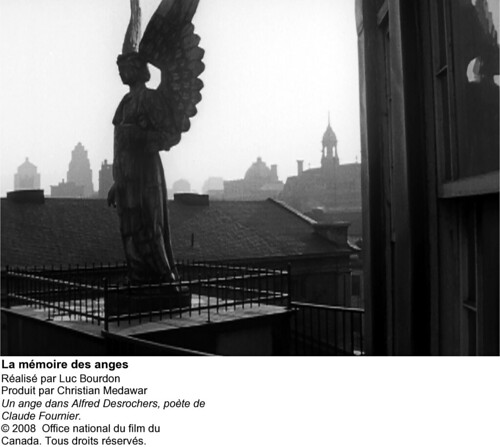
La Mémoire des Anges

La mémoire des anges

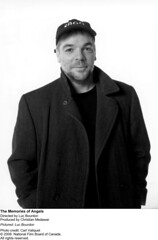
Peut-on savoir qu’un film est exceptionnellement beau sans l’avoir vu ? Dans ce cas, oui, parce que des amis auxquels je fais confiance l’ont vu. Et je connais le talent des cinéastes qui l’ont fait. Luc Bourdon l’a réalisé, Michel Giroux l’a monté – et le monteur est ici ( comme toujours, mais plus encore…) un artisan crucial, puisqu’il s’agit d’un film composé uniquement d’archives- et Christian Medawar l’a produit pour l’Office national du film. J’ai demandé à Luc et à Michel de me dire qu’est-ce qu’ils ont trouvé particulièrement important avec ce projet aui nous présente Montréal à l’époque de nos grands-parents.

Luc Bourdon
Luc Bourdon

« Avoir du temps… Ce temps si précieux qui permet de faire de la recherche afin de cerner un sujet. Avoir aussi, dans le cadre de ce projet, le privilège de scénariser avec l’aide d’un petit banc de montage et la complicité d’un bon ami qui a du talent (et de l’écoute), soit le monteur Michel Giroux. Avoir le temps d’effectuer un premier travail de montage (maquette) afin de voir s’il y a un projet à poursuivre, à nourrir, à faire grandir. Une fois le sujet et un style clairement définis… Administrativement approuvé… Pouvoir numériser 200 films issus de la collection de l’ONF et jouer… avec les images et les sons… rigoler… se perdre… Bref, pouvoir rire et pleurer en toute impunité. Se retrouver face à des souvenirs, des réminiscences d’un passé pas si lointain mais totalement oublié. Avoir du temps et la légitimité de créer et pouvoir ainsi retrouver une époque, des moeurs, des attitudes. Revoir des rêves. Voir des gueules d’hier qui nous ont rappelé celles d’aujourd’hui. Se souvenir de nos pères, mères, s¦urs et frères, nos voisins et nos pairs… Retrouver des fragments d’une société bien documentée, vachement bien filmée et prendre, ainsi, au vol, une grande leçon de cinéma. Avoir du temps pour travailler, c’est pour ainsi dire… être libre de créer! Maintenant, l’espoir est que tout cela (le résultat – un film!) soit contagieux… à suivre.»
Luc Bourdon

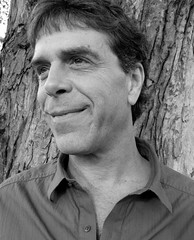
Michel Giroux
Michel Giroux

« Le plaisir immense de revisiter ces films, de jubiler, fantasmer, monter avec Luc, un ami avec qui il fait bon créer, dans un cadre idéal fournit par l’ONF, à partir d’une source de matériel aussi riche. Le pouvoir évocateur des archives, des vieilles images des souvenirs. Les anges, ceux que l’on voit, cette vie qu’on observe confortablement car eux ne nous voient pas. Cet espace, le même dans lequel nous vivons aujourd’hui s’est métamorphosé et ces gens ne sont pour la plupart plus là. Parfois, être touchés des fois juste d’unir ces images aux sons, aux voix, aux musiques et aux chansons et de les sentir nourrir le sens, l’émotion, l’énergie de ce qu’on voit. La joie de se faire parfois surprendre par ce qui émerge sur l’écran et dans nos oreilles. On nous a appris que les anges nous voient, qu’on ne peut pas les voir. Les anges c’est aussi tous ces créateurs et artisans, qui ont mis au monde cette mémoire, auxquels on a eu le sentiment de rendre hommage. »
Michel Giroux

La Mémoire des Anges sera à l’affiche au Festival du Nouveau Cinéma les dates suivantes:
• vendredi 10 octobre – salle Fellini à 19h00
• dimanche 12 octobre – salle Cassavetes à 17h00
• dimanche 19 octobre – salle Parallèle à 21h20
[Le festival aura lieu du 8 au 19 octobre.]

Par la suite, Mémoire sortira au Cinéma Parallèle, à Ex-Centris, le 20 octobre et au Clap à Québec le 31 octobre.

Merci à Jorge Bustos-Estefan pour l’aide avec ce blogue.

Les Femmes de Bruckman

CeliaetIsaac
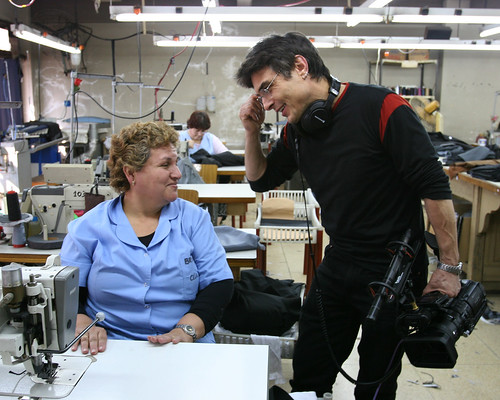
Isaac Isitan avec une des travailleuses, Celia

Je viens de voir un très bon film sur la prise de contrôle d’une usine de vêtements en Argentine par les travailleurs, et surtout travailleuses. Un film réalisé par Isaac Isitan et co-produit avec Carole Poliquin, pour Isca Productions. C’est dans le contexte de la crise économique terrible de 2001 que les employées de la firme Bruckman se sont retrouvés sans patrons et sans leur paye, les propriétaires ayant pris la fuite avec leur argent. Plutôt que de s’en aller chez elle et chômer, elles ont décidé de prendre charge de l’usine et de continuer à travailler. Elles sont devenues leurs propres patronnes. Mais avec l’amélioration de la sitution économique, les patrons ont voulu revenir et reprendre l’usine. Le film documente la lutte qui s’ensuit, sur une période de cinq ans. On a l’impression d’assister à un leçon d’auto-organisation tout à fait exemplaire, selon les principes défendues par la gauche anti-autoritarie dans laquelle j’avais moi-même milité quand j’étais jeune. J’ai bien aimé le film, entre autre parce que le réalisateur n’a pas peur de parler des nombreuses contradictions et conflits internes qui sont inévitables dans de telles luttes. J’ai quand même posé quelques questions critiques à Isaac Isitan.

Il n’y a pas beaucoup de suspense dans le film, on a l’impression de savoir dès le début comment la bataille va se terminer. Commentaire ?

Pour la majorité de spectateurs c’est tout le contraire. C’est juste les gens plus activistes, très informées et préoccupés sur l’actualité qui connaissent la fin de l’usine Brukman.

Tu as très bien couvert la lutte dans l’usine et dans la rue, mais on ne rentre jamais dans l’intimité des femmes, on ne voit pas la conséquence sur leurs vies personnelles. Pourquoi ?

Le focus du film était l’éveil politique des femmes, ainsi que leur découvert de certains tâches qu’elles avaient jamais pensé réaliser, tel que l’administration et gestion d’une usine. Ce qui m’intéressais était montrer les changements soufferts dans leurs vies face à la gestion et control de la manufacture Bruckman, qui sont aussi des changements personnels.

L’action initiale a lieu dans le contexte de la crise de 2001, mais après on n’apprend rien sur l’évolution de la situation politique et économique, si ce n’est que la visite de quelques ministres. Est-ce que le changement de la situation en Argentine n’a pas conditionné ce qui se passait dans l’usine?

Oui, absolutement. L’élection de Kirchner a influencé dans la victoire sur le plan égal, mais c’est grâce aux mouvement sociaux que Kirchner est arrivé au pouvoir et que les femmes ont récupéré l’usine. C’est ça que j’ai voulu montrer dans le film. Je ne voulais pas faire un film comme The Take dans lequel on ne fait que suivre la crise argentine. Mon film raconte l’évolution des femmes, leur éveil, leurs façons de faire. Comme les femmes de Brukman dissent: “C’est la lucha popular (la lutte sociale) qui les a aidé et les a emmené où elles sont présentement” C’est cette lutte que j’ai voulu montrer dans mon film.

Leaving the Fold, Interview with Eric Scott

LTF_La_Chaim
Rivens, father and sons

The other day I went to see an excellent documentary directed by Eric Scott and produced by my friend Frederic Bohbot and Evan Beloff of Bunbury Films, here in Montreal. The film is called ‘Leaving the Fold’ and it’s about young people who have left their Orthodox jewish families and culture to live an ordinary life.

It is still playing at the Park Cinema in Montreal, and will be shown on Radio-Canada later in the season. ( It was turned down by the CBC, hard to understand !)

I was very impressed with the choice of characters, and with the access to the normally very closed Hasidic milieu. One of the things you learn is that life among the Hasidim is strictly regulated and controlled, and the rebellion of those who decide to leave the fold seems totally comprehensible. But of course they have grown up with those very strong values and strictures, and will never be able to completely leave them behind.

As a result, they are ‘free’ but still conflicted individuals. The way they open up and share their thoughts and feelings is very touching.

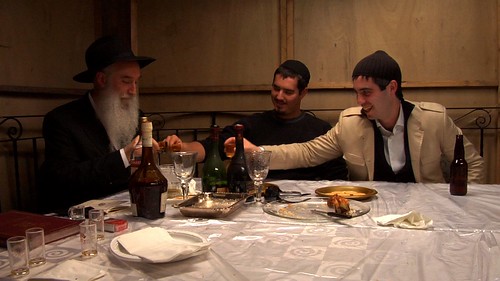
The most fascinating scenes are with a father, Pincus Riven, and his two sons Hudi and Levi who have left the fold. They all speak very honestly and emotionally. We follow the father to prayer sessions and ceremonies where his deep concern and sorrow for his ‘lost’ sons is clearly in evidence. But then, in a surprising twist which ends the film, we find them eating and drinking together and discussing their differences with a considerable amount of compassion and mutual understanding.

I put a few questions to Eric.

Eric_Scott_Head_shot
Eric Scott

How did you get access ? Was it possible because you were dealing with Lubavitch orthodox jews who are known to be relatively more open to the world ?

Although Pinchus Riven is a member of the most “open” Lubavitch Hasidic sect, that alone was not sufficient grounds to give me access. In my mind the more determining factor is that Pinchhus is a ‘baal tshuva’, someone who has repented, in other words become hasidic. He is familiar enough with “outside” culture so as not to be afraid of it. In the course of my research I met other ex-Lubavitch kids who came from “old line” Lubavitch families and the stories were as shocking as those of kids coming from more “closed” Hasidic sects. In those cases there was no question of the parents ever considering participation in a documentary.

The father and sons, in spite of their differences and the father’s sadness, they seem to have a very warm relationship – is this surprising to you, as someone who knows the community ?

The Riven boys do have a surprisingly warm relationship with their father, considering the gravity of their decision and its impact upon the family and its status in the community. Often the arranged marriage negotiations of younger siblings are put into jeopardy because a family would be considered “tainted” if another child has chosen to leave the fold.

The father thinks he did something wrong… is it possible that the reason two of his sons left was instead that he had some special quality, openness, curiosity… that he passed on ?

In the case if the Riven family, the reason that the boys left came more from their personal dissatisfaction with Hasidic life than from their father’s openness or curiosity. After all, they have 6 other siblings who have stayed firmly in the fold. The boys’ two religious brothers (the eldest and youngest of the four) are no less intellectually gifted or curious than Hudi or Levi.

‘Sexy’ – an important short film

Affiche_Sexy_inc_fr_lowres_FINAL.pdf - Adobe Reader
Sexy

A report by Quebec’s Conseil du Statut de la Femme (Status of Women Council) published this week sounds the alarm. The stereotyping in the media and in advertising lead to the hypersexualisation of youth, young women in particular. The girls have to be seductive and do everything to please the boys. Their self-esteem is out the window, jeopardizing the advances made thanks to decades of feminist struggles. The Quebec media were – not surprisingly – very critical of the report.

Filmmaker Sophie Bisonnette – who has made a number of feminist films, including Quel NuméroWhat Number – made a film on this subject last year. Seeing her film, it is obvious that there are some serious issues here. I asked her a few questions.

The Council came out with its report now, but you were on to this much earlier. How long have people been aware of these issues, and who were the first people -or organizations – to bring them up ?

Sophie Bissonette : The sexualisation of our environment has happened insidiously and it manifests itself now in all media and consumer products for children and youths. The Women’s Y in Montreal, to my knowledge, was the first association to sound the alarm about it 4 years ago. In the youth programs the Y offers to girls to develop girls’ leadership and self-esteem, the facilitators became aware that the girls were being exposed continuously to sexualized images in their environment and it had a negative effect on them. The Y approached the community services at University of Quebec in Montreal and they put together a research and training project called Outiller les jeunes face l’hypersexualisation, to develop tools to help children and youths face the sexualisation of their environment. I approached the NFB who accepted to produce Sexy inc. which is the result of this collaboration.

This is an important subject, but the film was made on a very mall budget. Why ?

It’s a complex issue and the consequences are many and quite dramatic. The subject deserves to be treated more extensively and with more resources. However, we worked with a strong feeling that we needed urgently to bring out a film about this phenomenon, especially because it is affecting younger and younger children. As you well know Magnus, financing a documentary can take several years. So I decided to do a short half-hour small-budget film so it could be done within the year. I feel it was a sound decision : the film is a blockbuster for the NFB. There is an exceptional demand for it.
I still believe the subject matter deserves to be treated more extensively, so I would really like to do another film to go futher on that topic.

Sexy-director
Sophie Bissonette

Did you make the film for a young audience, or for adults ? Can you do both at the same time ?

The film is intended for an adult public, to help parents, teachers and all people responsible for children’s well-being to understand the phenomenon and be better equiped to talk to children and youths about it. Corporations and marketers have targeted our children and teenagers to sell them sexualized and very stereotypical images. Our children are now immersed in this environment nos. It is crucial that parents and all those responsible for educating children react and act upon it to claim a territory we have lost out to private interests. The film also works very well for 14 to 16 year-olds but it is inappropriate for a younger public.
No, it is not possible to do both. I needed in this film to make adults aware of the images their children were exposed to, including pornography, and to let social workers and doctors talk about the harsh realities kids are experiencing, including their sexual experiences.

Could you make an effective film for a young audience on this subject, when they are already so inundated with messages with the other point of view ?

Our children and youngsters are very uncomfortable with these sexualised images. They do feel under pressure, invaded by these images and resent that a very stereotypical model is being pushed on them, which may not correspond to their personal aspirations. We need to help them develop their critical thinking and to turn them into resistants to these images, we need to offer other models and alternatives (let’s not forget that as parents we ARE their models). We also need to trust them and with them try to push back this phenomenon. It is true that we are facing big interests here, so we must all do it both on a personal level with our children but also collectively if we want to succeed. For instance we see in the film a mother who decides to do an activity with her very young children to dress up in a creative way the half-naked women of an ad by American Apparel on the back cover of « Voir », a weekly magazine in Montreal and they send their art work to the companies. This seems to me to be a very inspiring initiative that could be taken up by others to create a mass movement.

‘Sexy’ – un court-métrage important.

Affiche_Sexy_inc_fr_lowres_FINAL.pdf - Adobe Reader
‘Sexy’ de Sophie Bissonette

Un rapport du Conseil du Statut de la Femme publié cette semaine tire la sonnette d’alarme. Les stéréotypes dans les médias et la publicité conduisent à l’hypersexualisation des jeunes, jeunes femmes en particulier. Les filles doivent être séductrices et tout faire pour plaire aux garçons. L’estime de soi prend le bord, hypothéquant les acquis arrachés de haute lutte par le mouvement féministe depuis les années ’60. Les médias ont contre-attaqué, la controverse fait rage.

La cinéaste Sophie Bisonnette qui a plusieurs films féministes à son actif (dont ‘Quel Numéro’, ‘What Number’, ‘Des lumières dans la Grande Noirceur’ et ‘Partition pour voix de femmes’) a sorti un film sur le sujet l’année passée: Sexy inc, Nos enfants sous influence. En regardant le film, on ne peut pas nier qu’il y a là un probléme sérieux. Produit et distribué par l’ONF, le film est un succès de distribution. Je lui ai posé quelques questions.

Depuis quand est-on conscient de ces problèmes, et qui – ou quel organisme – a été les premiers à mettre le doigt dessus ?

Sophie Bissonette : La sexualisation de notre environnement s’est installée insidieusement dans tous les médias et dans les produits de consommation offerts aux enfants et aux jeunes. Au Québec, c’est le Y des femmes de Montréal qui en premier a sonné l’alarme il y a 4 ans. Dans les programmes que le Y offre aux filles pour développer le leadership et l’estime de soi des filles, les animatrices se rendaient compte que les images sexualisées auxquelles les filles étaient exposées avaient un impact négatif important sur elles. Le Y des femmes a obtenu la collaboration des Services à la collectivité de l’UQAM pour monter un projet de recherche et de formation qui s’appelle Outiller les jeunes face à l’hypersexualisation. Et j’ai approché l’ONF qui a accepté de produire le film Sexy inc. Le film est le fruit de cette collaboration.

C’est un problème imporant, mais ton film a été fait avec un très petit budget. Pourquoi ?

Tu as raison Magnus, le sujet est complexe et les conséquences sont très graves. Cela mériterait que plus de ressources y soient consacrées. Nous avions un sentiment d’urgence qu’il était nécessaire de produire un film rapidement sur le phénomène, d’autant plus qu’il touche des enfants. Comme tu le sais Magnus, trouver le financement pour produire un documentaire prend maintenant plusieurs années. J’ai donc opté pour un film d’une demi-heure à petit budget pour qu’il puisse se faire dans l’année. On ne s’est pas trompé: le film est un blockbuster de l’ONF. La demande est très forte. Ceci dit, je sens qu’il y encore beaucoup à dire sur le sujet, et j’aimerais bien pouvoir faire maintenant un autre film pour poursuivre.

Sexy-director
Sophie Bissonette

C’est un film pour les jeunes, ou pour les adultes ? Est-il possible de faire les deux en même temps ?

En fait, c’est un film pour les adultes, pour aider les parents, les enseignant/e/s, les éducateurs/trices et les intervenant/e/s jeunesse à intervenir auprès des enfants et des jeunes, pour les outiller. Des entreprises commerciales ont ciblé nos enfants et nos jeunes pour leur vendre des images sexualisées et très stéréotypées. Nos enfants baignent dans cet univers-là maintenant. Il faut absolument que les parents et tous ceux et celles responsables de nos enfants réagissent et reprennent le terrain perdu à ces entreprises. Le film est aussi très percutant pour les jeunes de 14 à 16 ans, mais il est inapproprié pour un public plus jeune. Non, il n’est pas possible de faire les deux. J’avais besoin dans ce film de conscientiser les adultes en leur montrant quelles sont les images auxquelles leurs enfants sont exposés y compris la pornographie et d’avoir des témoignages parfois crus sur les impacts, notamment les pratiques sexuelles des jeunes.

Quel rôle un film avec un contre-message peut-il jouer auprès des jeunes, alors qu’ils sont justemment inondés de messages ?

Les enfants et les jeunes sont très mal à l’aise avec ces images. Ils se sentent envahis, sous pression, qu’on leur propose un modèle unique, des stéréotypes qui ne correspondent pas à leurs aspirations personnelles. Il faut développer leur esprit critique et leu discernement pour en faire des résistant/es à ces images, leur proposer d’autres modèles (nous-mêmes en tant que parents sommes les meilleurs modèles) et leur offrir des alternatives. Il faut faire confiance à nos enfants et avec eux et elles repousser ce phénomène. Nous avons affaire ici à de gros joueurs, donc il faut s’impliquer à la fois personnellement auprès de nos enfants et collectivement si on veut y arriver. Comme on le voit dans le film, une mère de famille décide de faire l’éducation de ses jeunes enfants en rhabillant de façon créatrice les filles à moitié nues d’une publicité d’American Apparel à l’endos du journal “Voir” et d’envoyer les créations des enfants avec leur message aux compagnies en question. C’est un exemple d’une très belle initiative qui pourrait être reprise par d’autres.