Montréal-Nord – les jeunes

Je vous ai déjà parlé de mon tournage en cours à Montréal-Nord. C’est donc pour un film produit par Jeannine Gagné à Amazone films qui sera diffusé à Canal D. Le processus de ‘casting’ a été long, mais voici mes trois ‘personnages’ principaux, que nous suivons pendant un an et quelques mois.
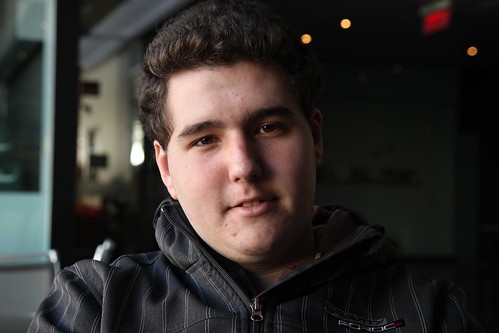
Danny Raymond - 'Musique X'

Danny Raymond est un jeune homme intelligent qui a des talents de ‘leader.’ Il est plein de projets, mais il ne sait pas comment les réaliser. Ayant vécu dans des foyers de groupe et des familles d’accueil pendant une bonne partie de sa jeunesse, il a beaucoup manqué d’encadrement. Il a décroché de l’école avant de finir son secondaire parce qu’il ne se sentait pas accepté et n’étais pas motivé. Il vit encore chez sa mère qui a déjà été contorsionniste au cirque, alors que son père – qu’il voit maintenant quelques fois par année – était clown avant de devenir plombier.

Danny vient d’avoir 18 ans. Il a récemment été accepté pour un projet au Carrefour Jeunesse Emploi. Danny adore la musique et il participe activement à Musique X, un projet communautaire que nous avons suivi depuis ses débuts. Il adore aussi faire de la bicyclette. Les amis sont très importants pour lui, et nous les filmons souvent ensemble.
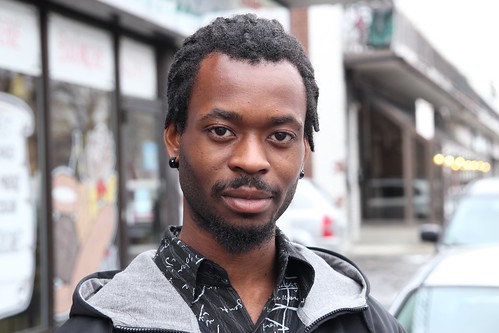
Michael Stiverne - 'Musique X'

Michael Stiverne est venu d’Haïti avec son père lorsqu’il avait 10 ans, alors que sa mère est restée là-bas. Le père, chauffeur de taxi au centre-ville, l’a laissé se débrouiller seul et s’occuper de son jeune frère Mickerson. A 22 ans Michael est un jeune homme responsable et motivé, qui a été très apprécié au programme ‘2e Chance’ des Fourchettes de l’Espoir, un organisme communautaire.

Mais il n’a pas toujours été si sage: plus jeune il a été inculpé pour possession d’armes, vols de voitures et trafic de drogue, et il en paye maintenant le prix. Il passe ses fins de semaine en prison, et le restant du temps à se chercher un emploi. Ce qui, pour un jeune noir de Montréal-Nord avec un casier judiciaire n’est pas facile!

Il passe des entrevues de manière assidue, et les employeurs potentiels promettent de le rappeler – mais ne le font presque jamais. Mikerson, 18 ans, a été mis dehors de son école parce qu’il ‘causait du trouble,’ mais comme son frère il est très motivé et essaye de s’en sortir. Il compose de la musique et il chante.

L’absence des parents l’a beaucoup fait souffrir, et il exprime cette douleur de façon touchante. Dans le film nous le verrons notamment raconter l’histoire de sa vie sous forme de rap.

Alex Bryson - 'Musique X'

Alexandre Bryson, 17 ans: ‘La violence, la drogue, les coups de feu, j’ai connu ça très jeune, ça ne m’intimide pas,’ dit Alex. Il a grandi à Pointe-aux-Trembles, parfois chez son père, parfois chez sa mère. Ils déménageaient souvent, et au primaire, il a souvent changé d’école. Dès sa jeune enfance, sa mère – d’origine MicMac- est devenue dépendante de la drogue et s’est même prostituée. A l’âge de 12 ans – le jour de son anniversaire – Alex est parti vivre avec son père. Mais lorsque celui-ci est parti travailler en Alberta, Alex s’est retrouvé en foyer d’accueil.

Alex a aimé l’école, et il avait de bons résultats au secondaire, mais l’instabilité de sa vie familiale l’a amené à décrocher après la deuxième année. Il a pris de la drogue, mais l’exemple de son frère ainé qui est accro et qui a fait de la prison l’a convaincu de laisser tomber. La personne qui l’a le plus influencé, en lui disant ‘tu vaux plus que ça’ c’est sa grand-mère paternelle – qu’il aime beaucoup, mais qu’il admet négliger.

Alex est maintenant de retour chez son père, à Bois-des-Filion. Mais il passe souvent du temps à Montréal-Nord. Intelligent et articulé, Alex passe surtout son temps à improviser du rap, ce qu’il fait très bien, seul ou avec des amis. Il a eu 18 ans le 12 juin 2011. Il a été accepté par le programme Katimavik, et ira passer 6 mois à l’Île du prince Edouard et en Ontario à partir de juin.

Merci à Tobi Elliott pour son aide avec le blogue.
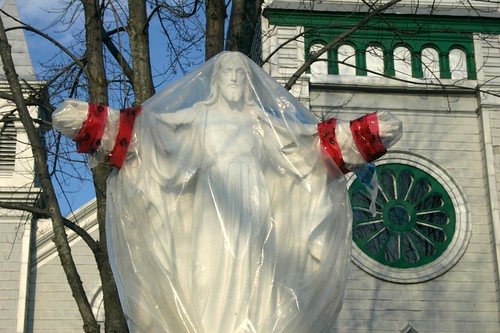
Nitoslawski doc on ‘accomodement’ sign of the times

'Liberté égalité accommodements' film

My friend Stefan Nitoslawski recently launched a film Liberty, Equality, Accommodation on a topic which is quite hot both in Quebec and elsewhere: ‘accomodement raisonnable,’ or the measures different bodies in society have to take to ensure peaceful coexistance and mutual respect betwen peoples and communities. Stefan followed the hearings Bouchard-Taylor Commission, co-chaired by the philosopher Charles Taylor, as well as some very interesting characters.

The views of the small-time politicians from Hérouxville are counterposed to those of two strong-minded muslim women. This film – produced by Paul Lapointe – deals with a topic which is covered in the press daily. But no broadcaster showed interest, and Stefan and Paul had to finish it with their own means. A sign of the times? I asked Stefan a few questions.

You have worked with many directors and observed them at work while at the same time making your contribution to the film as a DOP, as well as directing your own films. How is one different from the other?

For me wearing the directors hat or the DPs is very different. As director, I find that I’m juggling with may more aspects of the film. Content and structure are my focus but I also have to think of schedules, crew, relationships with the characters, research, budget, etc. Consequently, I’m thinking in broader terms and of many different aspects of the production. This is a challenge for me, as I find I have to think wide and then focus quickly on a specific task such as how to capture a given scene.

As DP, the focus is on the image and supporting the director and crew in getting the material needed for the film. It’s a more contained function. On this documentary I was often alone with my camera and sometimes I felt I was juggling too much but at others I felt a certain freedom to capture what I felt was important quickly and simply.

Stéphan Nitoslawski

What were the main challenges? (idem)

The main challenge was that the film received no financing. We received some support from rental houses, post production facilities and the ACIC program at the NFB for which I’m very grateful. Nonetheless this put a limit on what we could do in production and in editing and put a huge strain on the producer Paul Lapointe, the editor Carole Alain and myself. This film could not have existed if it were not for their dedicated commitment and belief that this is an essential film to make. It is the only film made about the Bouchard-Taylor Commission which is one of the important stepping stones in our society since the Quiet Revolution.

How do you see the contribution of the Bouchard-Taylor Commission ?

The value of the Commission is that it gave people the opportunity to learn about issues surrounding the notion of reasonable accommodation and express themselves about their identity, be it coming from the perspective of the majority or of the minority. The basic issue was how to find common ground between religious minorities and the secular majority. A potentially explosive subject. The Commission showed that we can tackle very difficult debates expressing what we think while taking time to listen to the other. I believe that this remarkable example of participatory democracy and the maturity of our society.

How did the discussion go after the screening in Quebec City, and what did Quebec Solidaire’s Amir Khadir ( a leftist) and the PQ’s Louise Beaudoin ( a nationalist) have to say ?

The discussion with Amir Khadir and Louise Beaudoin was fascinating. They both underlined the importance of the film in showing that the citizens were concerned and engaged in the debate and yet the government did not followed suit in creating a White Paper on secularism. Both Louise and Amir are on the parliamentary committee for Bill 94 (about ostentatious symbols in the public administration) and both feel that the discussions in this committee are endless and would have benefited from a clearer direction from the National Assembly. Furthermore, Louise Beaudoin said that she felt somewhat reconciled with Bouchard after having seen the film. I felt that was telling.

What have been the main issues in the discussions after the film ?

The discussions after the film were very interesting. On one hand, many of the concerns that were expressed during the commission came up again which signaled to me that these questions are still very much on peoples minds. But I also feel that there is an evolution. People are much more aware of the issues and have a clearer point of view. I also feel that after having seen the film, people recognize that, as a society, we have successfully carried out a challenging debate of which they can be proud of.

For more information on the documentary “Liberté, égalité, accommodements” please visit the Facebook page here.

Thanks to Tobi Elliott for her help with this blog.

Hommage à Garry Beitel

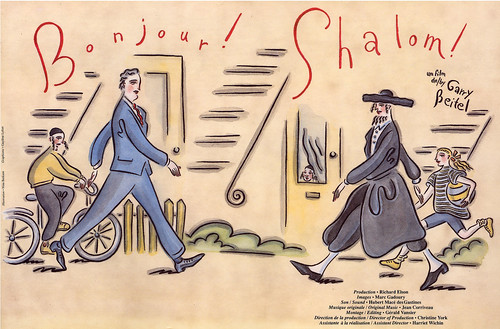
Bonjour/Shalom film poster
Poster pour le film 'Bonjour! Shalom!' de Garry Beitel.

Heureusement la Québec a une politique culturelle et s’est donné le cadre institutionnel nécessaire pour la mettre en pratique. La semaine passée, le Conseil des arts et des lettres du Québec (CALQ) remettait des bourses de carrière à quatre cinéastes : Jean-Pierre Lefebvre, Mireille Dansereau, André Gladu, et Garry Beitel. Ma collègue Helene Kladowsky et moi avons eu l’occasion de dire quelques mots sur l’impressionnant carrière de Garry, que voici.

MAGNUS:
Le contexte de production du documentaire est difficile, les fenêtres de diffusion et opportunités de financement se font rares. Dans ce contexte, les bourses de carrière du CALQ sont fort apprécieés. Nous sommes honorés d’avoir l’occasion de rendre hommage à Garry, un collègue inspirant et prolifique. J’ai l’impression que chaque année il sort un nouveau film, film qui raconte toujours une histoire touchante qui nous fait réfléchir sur la condition humaine.

HELENE:
À la fin des années 80, quand je suis arrivée à Montréal de Toronto, j’ai très vite entendu parler de Gary, ce grand cinéaste anglophone qui a exploré toute la richesse culturelle du Québec. Enraciné dans la culture anglophone et la communauté juive, Gary est aussi parfaitement bilingue et amoureux de la culture francophone de Montréal. En tant que cinéaste engagé, Gary a été un modèle pour moi.

MAGNUS:
Durant trente années, Garry a documenté des rencontres passionnantes entre des individus qui représentent différentes communautés, différentes sensibilités et différents points de vue. Des individus qui – comme Garry lui-même – tentent de construire des ponts et trouver un terrain commun, un langage commun.

Il a documenté des rencontres entre jeunes et personnes âgées – dans par exemple Livraisons Aigre-Douces

entre citoyens de souche et nouveaux arrivés – comme dans Aller-Retour ou Asylum.

Entre juifs et non-juifs – Helene vous mentionnera plusieurs titres –

Entre Anglophones et Francophones – comme dans Rien de Sacré

Entre gens en santé et gens malades et souffants – dans Endnotes par exemple, ou The Man who learned to fall.

Ces rencontres, il les documente toujours avec beaucoup de respect, avec de la compassion, avec un sens de l’humour. Ses films nous font découvrir des voisins que nous ne connaissions pas, ou pas asssez, et de comprendre les défis auxquels ils font face.

Je trouve ses films sur les gens qui sont gravement malades et sur les gens qui tentent de les aider maintenir une dignité et à donner un sens à la vie très touchants.

Ses films ajoutent des couches de profondeur à des gens et des lieux que nous pensions connaître. En voyant ses films nous nous aperçevons que cette connaissance était superficielle et qu’il y avait bien plus à savoir, sur le restaurant smoked meat a coin de la rue, sur l’artiste local que nous avions entendu à la radio, ou sur les caricaturistes des principaux quotidiens – anglais et français bien évidemment, qui nous font rire et réfléchir tous les jours.

Les films de Garry sont appréciés sur les écrans, grands ou petits, ici et ailleurs. Ils enrichissent notre mémoire collective, et demeurent pertinentes pour des années, voir des décennies, après leur sortie.

HELENE:
Garry s’est intéressé dans ses films à des communautés, à des individus en transition et à des artistes. Des films qui sont merveilleux.

Il a aussi fait vivre à l’écran la communauté juive du Québec dans toute sa diversité. Dans Bonjour! Shalom!, il a posé un regard sur les rapports parfois tendus, parfois harmonieux entre les juifs hassidiques et leurs voisins francophones et non religieux. Ma chère Clara raconte une histoire d’amour juive qui se déroule pendant la deuxième guerre mondiale à Montréal, en Pologne et en Russie.

Chez Schwartz nous fait pénétrer dans l’univers multiethnique des personnages et Socalled, le film, nous fait découvrir un artiste qui fusionne la musique traditionnelle klezmer, le hiphop et le funk. À plusieurs reprises, la communauté juive de Montréal a honoré Garry pour son travail et pour sa contribution humaniste.

En yiddish, une autre langue que Gary possède, on dirait de lui qu’il est un véritable « mensch », c’est à dire un être humain d’exception. Toutes mes félicitations Gary.

Merci a Tobi Elliott pour son aide avec le blogue.
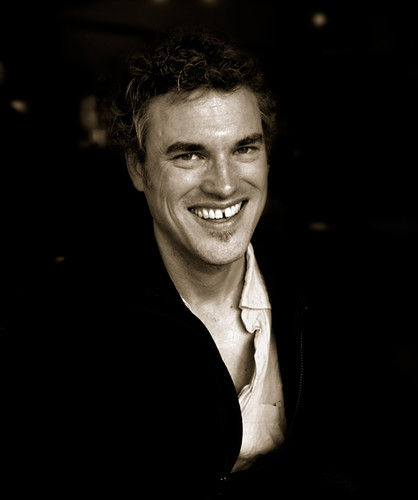
A tribute to Garry Beitel

Bonjour/Shalom film poster
The poster for one of Garry Beitel's films, 'Bonjour! Shalom! the relationship between Hassidic Jews in Montreal's Outremont district and their French-Québécois neighbours.

Quebec fortunately has a cultural policy and the institutional framework to implement it. Last week the Quebec Arts Council (Conseil des arts et lettes du Québec) celebrated the recipients of four special career grants in media arts. One of them very deservedly went to documentarian Garry Beitel. Together with Helene Klodawsky I was asked to say a few words about Garry’s work – here are our notes – in English. (I’ll post the French version also.)

MAGNUS: These career grants are announced at a time when the kind of work Garry does is severely threatened because of cutbacks and policy changes. We need people like him, courageous long distance runners who can help maintain the documentary genre. We are honoured to have the opportunity to pay tribute to Garry, a creatively inspiring colleague with an impressive track record, and a filmmaker with inexhaustible energy and drive. Every year, Garry has a new film out, with a touching and thought-provoking story to tell.

HELENE: When I moved from Toronto to Montreal in the late eighties, it didn’t take me long to hear about Garry – this great Anglophone filmmaker who was making films about subjects that reflected Quebec’s cultural diversity. For me, Garry provided a model of what engaged filmmaking could be in Quebec. Bilingual and in love with French Montreal, his spirit was also rooted in English and Jewish worlds.

Helene and Magnus with Garry (centre). Photo: Jean-Guy Thibodeau

MAGNUS:
His work over more than thirty years has provided a fascinating encounter between inspiring characters from different communities, with different viewpoints, who are trying to build bridges and find a common language. Garry has documented relationships between young and old (in Bittersweet deliveries), between citizen and newcomer (in Aller-Retour and Asylum) Jew and non-Jew (Helene will mention some examples), Anglophone and Francophone (Nothing Sacred) between the healthy and the infirm (Endnotes, The Man who Learned to Fall) with great respect, compassion and humour. His films lead us to discover neighbors we didn’t know and become familiar with the challenges they confront.

I find his work on people whose health is severely challenged – and the people who try to maintain a sense of dignity and meaning in their life, especially touching. His films give new depth to people and places we thought we know, but – we realize when watching his films – only knew superficially– for example Schwartz’s smoked meat restaurant, Santropol Roulant’s meals on wheels for the elderly, Josh Dolgin La Presse and the Gazette’s cartoonists Serge Chapleau and Aislin. His films are embraced by a large public on both the small and big screens, and in festivals around the world. His stories enrich our collective memory and still speak to us twenty and thirty years after they were created.

HELENE:
Besides making wonderful films about community, individuals in transition, and the creative process, Garry’s films have brought us inside various expressions of Jewish life in Quebec. For example, in Bonjour! Shalom! Garry took us, for the first time, to Outremont to explore the tensions and friendships between Hassidic Jews and their secular, and French Catholic neighbours.

My Dear Clara is a Jewish story of love and longing set in Montreal, Poland and Russia during the Second World War. In Chez Schwartz our appetites are whetted as we follow a delightful melting pot of characters, and The Socalled Movie brings us inside a joyful fusion of funk and hip hop with traditional Klezmer music. The Jewish community has also recognized Garry for his films and for his all-round humanity and generosity.

In Yiddish, Garry’s other language, he is called a true “mentsh”, or a great human being. We are thrilled for you Garry.


Thanks to Tobi Elliott for help with this blog.

Uranium film festival of Brazil

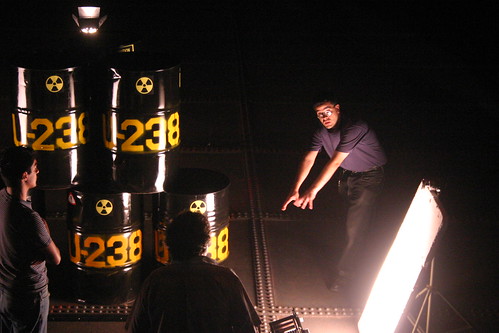
Uranium festival: Uranium 238
"Uranium 238: La bomba sucia del Pentágono"selected as one of the eight best films of the Uranium Film Festival of Rio de Janeiro 2011.

One of my films, Uranium, 1990 (in Canada you can watch it on the NFB website here) was selected to participate in the first international Uranium Film Festival in Brazil, which just ended. (Read a wrapup article here from Environment News Service.)

As Brazil is not known for its uranium or nuclear industry, I found this intriguing. I put some questions to Marcia Gomez de Oliveira, the Director of the Festival, and the director of programming Norbert G. Suchanek.

1. Why a festival of films on uranium?

Marcia Gomes de Oliveira: Because nuclear power plants cannot exist without uranium mining. And that factor is still not known to the general population or society. Also totally unknown to the public here in Brazil and in Latin America are the environmental and social consequences and the negative health effects of uranium mining and other installations of the complex nuclear energy industry. Our film festival wants to change that, wants to “popularize” this important information.

Most of the documentaries and movies about uranium, mining, nuclear energy or the Chernobyl disaster have never been shown in Brazil and were never translated into our language, Portuguese. There is a huge language barrier between the English and Portuguese-speaking world. Our festival is the first step in breaking down that wall. In addition, of course we want to stimulate filmmakers, especially filmmakers from Latin America and from Portuguese-speaking African countries, to produce documentaries and movies on nuclear and radioactive subjects.

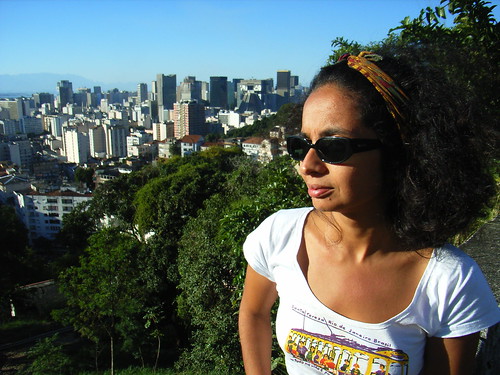
Marcia Gomes de Oliveira

And why in Brazil?

Marcia: Because we have nuclear power plants and uranium mines. And, starting with ex-president Lula da Silva, the Brazilian government wants not only to triple the production of Yellow Cake but also in the near future export enriched uranium. That is not all. The government is now constructing a third nuclear power plant, Angra 3, and wants to build up to 40 or 50 new nuclear power plants all over Brazil. Our government wants to transform our country into a globally important nuclear power. The Brazilian people until today have not been aware of this huge nuclear program. And we have to discus it, before it becomes reality, before it is too late.

Why on uranium and not for example hydroelectric dams?

The nuclear or uranium question is as important as the question of hydroelectric dams. The difference is that in Brazil, since the 1980s people already know about the negative effects of the big dams and hydroelectric power plants like Itaipu, Tucurui or Balbina. They are visible. However, the effects of radioactivity, the effects of uranium mining are not yet visible in our society. For that, we are working to spread independent information in form of documentaries about the whole nuclear energy complex and the radioactive risks.

2. For Norbert: You have seen pretty much everything that’s been done on uranium mining and its consequences over the last 30 years (40, right ?)

Norbert: As journalist and activist born in formerly West Germany, I followed the nuclear question for more than 30 years now. In Europe, “uranium mining” was always a forgotten subject because most of the uranium mining happens in other continents. The huge uranium mine of East Germany was also “forgotten” because it was simply a secret behind the Iron Curtain. The huge problems in the uranium mines of Portugal were not questioned outside of Portugal because of the language barrier and because that small country in the edge of Europe was not part of the early European Community. Therefore, for decades uranium mining was not visible to the European public and to most of the people worldwide.

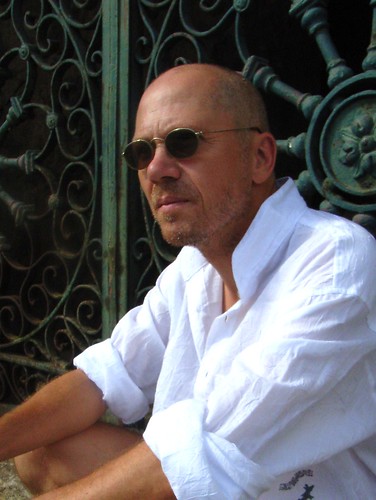
Norbert G. Suchanek

Looking at all of them, what role has documentary played with respect to this issue?

Documentaries have been one of the most important vehicles to bring the uranium case into the public. Like I said, mining was not visible for the people, because it happened in secrecy or in other countries. Until today, the question of Nuclear Energy has been mainly fixed on the question of “Nuclear Waste” from nuclear power plants and nuclear accidents.

Starting with documentaries about uranium mining in Australia, documentaries about the fight of indigenous peoples against mines, people in the industrialized nations are becoming slowly aware that the fuel of Nuclear Power plants do not come from heaven. But will require many more documentaries to inform all of our societies, so that the people and their politicians can make correct and wise decisions in future.

Can you mention a couple of films which stand out ?

First of all your documentary Uranium and this is not because I want to be polite. Your documentary is simply a good piece of work with impressive images and one of the first that explores the consequences of uranium mining in Canada in a profound way.

From the other films that we selected for our festival, I personally like very much the documentary Fight for Country (the story of the Jabiluka Blockade) from Pip Starr, a film director who sadly died far too young. In the year 1998, Pip Starr spent over a year working with the aboriginal Mirrar people opposing a second uranium mine on their land. Finally, thousands of people from all over Australia traveled to the Kakadu National Park to join the Mirrar in their struggle. Produced in 2001, Fight for Country shows that people who stand up against uranium mining are not alone!

The third documentary I want to mention is a new production by film director Klara Sager from Sweden. The location of “Under the surface – Om bergen faller sönder produced in 2010/11 is the Hotagen, a mountain area in the North of Sweden.

Young, well-educated geo-engineers and technicians are hiking through a beautiful landscape in search for uranium, without any feeling, about what will happen to that amazing place of earth if one day uranium mining starts. On the other side, you have normal local people, elderly, who do not want uranium mining nor uranium prospecting happen in their land.

It is interesting to see, that Swedish people who are against uranium mining are not young students or “hippy”-type activists, but normal, elderly people. Under the surface also brings to light another kind of modern generation conflict – technicians and engineers fresh from the university working for international mining companies against elderly local people, grocery shopkeepers, housewives and the indigenous Sami, reindeer herders, with a totally different concept of nature and living.

Thanks to Tobi Elliott for her help with the blog.

Disgrace

Silda Wall Spitzer and Eliot Spitzer in CLIENT 9: THE RISE AND FALL OF ELIOT SPITZER, a Magnolia Pictures release. Photo courtesy of Magnolia Pictures.

With the news of the indictment of International Monetary Fund Managing Director Dominique Strauss-Kahn on charges of sex crimes against a hotel maid in New York, you may wonder why a wealthy and powerful man practically considered to be a front-runner for president of a world power (France) would (if indeed guilty) do something so unacceptable and self-destructive.

Some fragment of the answer having to do with the intoxication of power and fame can be glimpsed from a truly excellent documentary called Client 9: The Rise and Fall of Eliot Spitzer. It tells the story of how former New York Governor Eliot Spitzer got caught using an agency to book appointments with thousands-of-dollars-an-hour call girls.

Spitzer was famous for taking on the banks and speculators in Wall Street, and had been touted as a possible democratic candidate for the U.S. presidency. He didn’t commit the kind of crime Strauss-Kahn is accused of, but he fell from high and hit the ground hard.

The film, directed by Alex Gibney, is a model of documentary filmmaking. Not of the unpredictable fly-by-the-seat-of-your-pants kind, but on the contrary, very carefully planned and executed. The mix of sex of politics is explosive, the characters, including Spitzer himself, hookers, madams and Wall Street sharks – his powerful enemies who helped get him caught -are fascinating.

Highly recommended!

Thanks to Tobi Elliott for help with this blog.

Adding Insult to Injury: the Lubicons

From Greenpeace aerials: www.greenpeace.org

Image from Greenpeace: www.greenpeace.org/canada/en/Multimedia/Photos/Tar-sands/Aerial-2-of-Alberta-Oil-Spill/

An estimated 28,000 barrels of crude oil – 4.5 million litres – has spilled from the Rainbow pipeline onto the land of the Lubicon Indians in Northern Alberta. This is another terrible blow for an aboriginal community which was among the first in Canada to suffer the environmental impact of the oil industry.

Almost 30 years ago, in 1985, I covered this story as a television producer for Radio Canada, the French network of the CBC, together with one of my favourite journalist colleagues, Hélène Courchesne. We discovered and reported on a Cree community which had been left out of the treaty process, denied a land claims settlement, and was suffering the consequences of uncontrolled oil exploration and extraction.

Lac Lubicon- traditions 1982 Lac Lubicon- oil extraction 1982

ABOVE: Two of Hélène’s photos from 1982 show both traditional life and oil extraction.

Since then, hardly any progress has been made in settling the community’s claims. Instead, the mad rush for oil and gas has continued to impact them negatively. And now they have to deal with this horrendous pollution from the pipeline owned by Plains Midstream Canada – a subsidiary of Plains All American. The community of Little Buffalo is not far from the spill (the figures reported vary from 7 to 30 km) and the residents are complaining of health impacts such as headaches and nausea. The cleanup is underway, and will take many months. And how effective will it be ?

One of the great privileges of working for the CBC and Radio-Canada in those days was to be able to pretty much choose my subjects. For sure, they had to be approved by my superiors, but with a convincing pitch they usually said yes. I was very interested in the situation of aboriginal people and environmental issues, and I did a lot of those kinds of stories– 20-minute stories with a 3-week turnaround. The experience with the Lubicons was one of the most memorable and touching. Their situation was and still is one of Canada’s most shameful.

Here are a few links to organizations supporting the Lubicon or protesting the spill.

Amnesty International

Green Party of Canada

Lubicon.org

Greenpeace.org

Council of Canadians

Tar Sands Watch.org

KAIROS.org

Thanks to Tobi Elliott for her help with the blog.

Hot Docs: ‘Position among the Stars’

I wasn’t at the Hot Docs festival in Toronto this year, because I’m in production. But my colleague Tobi Elliott, the writer and filmmaker who helps me with this blog was there, and picked this film to write about. Over to Tobi:

You won’t find a stronger documentary that so beautifully brings out Indonesia’s churning social and religious questions than Position among the Stars (Stand van de Sterren), which screened recently at Toronto’s Hot Docs festival. Earlier this year the film took home the Best Feature-length Documentary at IDFA and a World Cinema Special Jury Prize at the Sundance festival.

Directed and shot by Dutch filmmaker Leonard Retel Helmrich, it’s the concluding film in a trilogy following a poor family living through modern-day Indonesia’s tumultuous decade of change. (His first two films The Eye of the Day and Shape of the Moon won the Joris Ivens Award IDFA – 2004, and the World Cinema Documentary Grand Jury Prize at Sundance – 2005.)

Position among the Stars continues Helmrich’s 12-year documentation of Rumidjah, an elderly Christian grandmother living in the world’s largest Muslim community, and her family. Rumidjah struggles to keep her non-observant Muslim sons on track, and to provide for her granddaughter’s uncertain future in an increasingly globalized economy. Through the microcosm of a single family, we see all the issues Indonesia is struggling to come to grips with today.

Helmrich’s cinematography style is astonishingly intimate. Using his unique “Single-shot Cinema” method – his excellent website where he describes his trademark style is here – and an array of relatively cheap consumer cameras, he brings the audience into startling moments of truth in the family’s life.

After a screening he answered some questions about his film:

Describe your filming technique and how you got such intimate scenes with this family.

I didn’t want to be just an observer, and standing, shooting scenes from the outside. I wanted to be a participant, among them. As I filmed, I was just being with them, together.

There is a drama going on always, and when you get to know people you can predict what will happen, and I just make sure that I get the right angle from the right place. I call it single-shot cinema. At a scene, I shoot in a single shot and only in the editing it gets cut.

I also used five different cameras, normally I have just consumer cameras, but they are all specialized in certain things. I use them like a painter would use a brush. So I can say that in this situation, “this camera would be best.”

In the scene of the boy running (ED NOTE: a long scene with multiple shots of a young boy running through Jakarta’s alleys after he’d stolen some clothes) I just ran after him, and he ran away… but I knew where he would go, I knew his labyrinth by then. So when I had a number of my shots and I thought “if I want to make my story round I should do something extra – I should do with the camera what he wanted to do himself.” The boy wanted to fly. So I took the little camera and put it on a bamboo stick and lifted it up to get a kind of a crane shot.

How much time did you spend with the family, and how did you meet them?

I was there about 14 months, almost every day, actually living their life for that time. This is the third part of a trilogy, the first I shot almost 12 years ago, so they know me quite a lot.

In 1990 was the first time I went to the village where my mother was born, and it was there I met them. Rumidjah’s husband was still alive, he was about twenty years older than her and he still could speak a little Dutch. Because of the old colonial tie. So it was a great bond between us and we became friends. It was just before the fall of Suharto (May 1998.)

And then I hired Bakti (Rumidjah’s son) as a driver and I was seeing what was happening with the family. And it was historical, this change in the country because the Suharto family was a dictator and he had to step down, and there were huge protests, and it was similar to what is happening now in Arab countries. And I saw that what was happening in their life was a microcosm of what was happening in greater Indonesia so I thought, I’d better focus on them.

Can you talk a bit about the themes you pulled out?

The main reason I decided to focus on religion, economy and politics is because it’s the three things that are very much changing and making this turmoil in Indonesia. If you look at every newspaper they are really the three main things. The economy is booming, but there is a also a kind of reaction from the religious part. And politics of course, you have to cope with these events.

Helmrich said he doesn’t plan to film a fourth installment, but if something were to happen in the family that was important with respect to Indonesia, then “I’m ready.”

Shooting in Montreal North

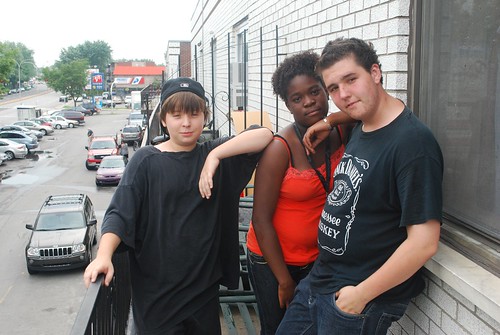
Joel, Shellby et Danny à Montréal-Nord.
Joel Shellby and Christopher.

For the last nine months – and with six months to go – I have been shooting a documentary in Montreal North. With my DOP Martin Duckworth and our assistant Franck Le Coroller, I have been immersed in the daily reality of a mutli-ethnic ‘underprivileged’ neighborhood.

Compared to downtown Montreal where we live ourselves, this is quite another world, although the differences are not always what you’d expect. The neighborhood has been the subject of much sensationalist press coverage focusing on violence and street gangs, and definitely doesn’t have a good reputation. The ‘Villanueva affair’ which saw a youth killed by police in a park three years ago called attention to the racial profiling and discriminatory attitudes of the police.

Since then, there has been a push for change in Montreal-North. But are things changing fast enough?

At the centre of most of the controversies are the young men of Montreal-North who are considered ‘at risk.’ And they are the subjects of our film. Produced by Jeannine Gagné at Amazone films with a license from Canal D and investment by SODEC and The Canadian Media Fund, it will follow three young men who are struggling to improve their situation despite tremendous difficulties.

Until now, our main challenge has been the ‘casting,’ the choice of our main characters. Each one of the young men we focus on will likely have a link to a community organization that is trying to make a difference in the neighbourhood. In a few weeks I’ll tell you more about them, and about a video training course we organized for one group of young people.

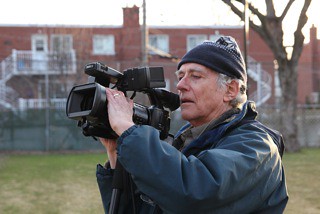
Martin Duckworth tourne à Mtl-N.
DOP Martin Duckworth.

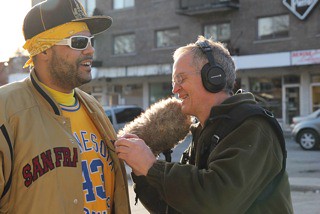
MI et Big Joe à Montréal-Nord.
I put a microphone on 'Big Joe", Jonathan Duguay, youth worker at the Maison Culturelle et Communautaire de Montréal-Nord.

Thanks to Tobi Elliott for help with this blog.

Tournage à Montréal-Nord

Joel, Shellby et Danny à Montréal-Nord.
Joel, Shellby et Danny. Montréal-Nord

Depuis neuf mois – et pour encore six mois – je tourne un documentaire à Montréal-Nord avec le directeur photo Martin Duckworth et notre assistant Franck Le Coroller. Nous sommes plongés dans la réalité quotidienne d’un quartier multi-ethnique défavorisé – un autre monde par rapport au Centre-Ville de Montréal où nous habitons.

Le quartier a fait l’objet d’une couverture médiatique sensationnaliste centrée sur les gangs de rue et la violence et n’a donc pas bonne réputation. ‘L’affaire Villanueva’ qui a vu un policier abattre un jeune homme dans un parc il y a trois ans, a mis en lumière le ‘profilage racial’ et les attitudes discriminatoires de la police. Depuis cette crise, il y a beaucoup d’efforts de changement à Montréal-Nord. Mais les choses changent-elles assez vite?

Au cœur des controverses, il y a la réalité des jeunes hommes ‘à risque’ de Montréal-Nord et c’est là le sujet de notre film. Produit par Jeannine Gagné à Amazone Films avec une license de Canal D et la participation financière de la SODEC et du Fonds des Médias du Canada, il suivra trois jeunes qui font des efforts pour améliorer leur situation malgré le contexte difficile.

Jusqu’à maintenant, notre principal défi a été le ‘casting’: le choix des principaux personnages. Chacun des jeunes que nous choisirons est en lien avec un organisme communautaire qui tente d’aider la jeunesse, et surtout avec des individus clés de ces organismes, travailleurs de rue ou intervenants sociaux.

Dans quelques semaines, je vous présenterai nos principaux personnages. Je vous parlerai aussi d’une formation sur la production vidéo que nous avons donné à quelques jeunes du quartier.

Martin Duckworth tourne à Mtl-N.
DOP Martin Duckworth
MI et Big Joe à Montréal-Nord.
Je mets un micro sur ‘Big Joe,’ Jonathan Duguay, intervenant jeunesse à la Maison Culturelle et Communautaire de Montréal-Nord.

Thanks to Tobi Elliott for help with this blog.