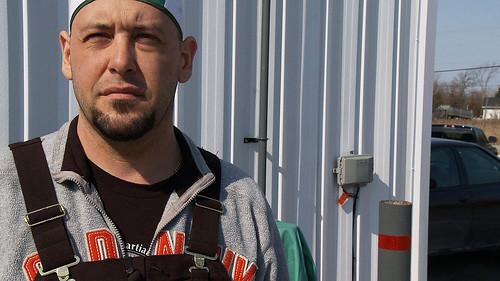
La crise économique ad marem usque ad marem: PIB

PIB/GDP: 'Famille à la casse'
Copyright: ONF/NFB

Cette semaine à Sunny Side of the Doc à La Rochelle, l’ONF et ARTE France ont annoncé une collaboration pour la production de documentaires pour le web. Ils produiront un documentaire par année, avec un budget de 100.000 $ Can. Les deux ont déjà une expérience considérable avec les webdocs.

Depuis presque un an déjà, l’ONF a mis en ligne un projet majeur, PIB – L’indice humain de la crise économique Canadienne. La Directrice du programme français, Monique Simard, une ancienne dirigeante syndicale et politicienne dont les préoccupations sociales sont bien connues, a pris l’initiative de cette expérience.

Son intuition de départ: la crise économique ne serait pas passagère, et elle serait assez profonde pour changer le cours de la vie de beaucoup de gens. Le projet PIB a permis à beaucoup de cinéastes et photographes à travers le pays de suivre des personnes affectées par la crise. Je n’ai pas regardé tout, évidemment, mais voici quelques impressions.

D’abord, l’architecture du site est impressionnante, le design aussi. On a accès aux histoires racontées dans les deux langues officielles, avec sous-titres au besoin. On peut voir des épisodes multiples dans l’ordre qu’on choisit. On peut commenter, partager, utiliser les médias sociaux pour en parler.

Pour le contenu, je l’ai trouvé très inégal. Il y a d’excellentes histoires, comme ‘Famille à la Casse’, l’histoire d’un couple formé d’un travailleur et une travailleuse de l’automobile, Brian et Cassandra, qui perdent leurs emplois et doivent se battre pour survivre. C’est très dans la tradition du documentaire, sans la structure dramatique mais en échange l’avantage du suivi de l’histoire à travers les épisodes.

La même chose vaut pour un reportage sur une famille immigrée qui tient un motel en Colombie Britannique – on rentre dans leur univers, on comprend les défis qu’il doivent relever et leurs émotions. Parfois une série commence bien, comme cette histoire d’un groupe de jeunes femmes dans l’Ouest qui tentent de sortir de leur endettement – mais à un moment donné il ne se passe plus grand chose, on tourne en rond et on fait du remplissage. Et puis, il y a malheureusement des histoires qui ne donnent pas grande chose, ni côté humain ni côté production.
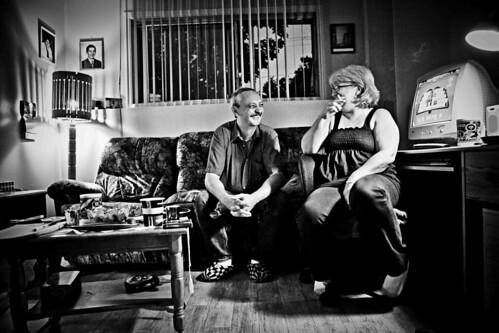
Daniel Poulin / St-George de Beauce
Copyright: ONF / Photo : Renaud Philippe

Une des plus belles surprises de ce projet est la qualité des reportages photo, réalisés notamment par Renaud Philippe à Québec, Brian Howell à Vancouver, Goh Irotomo et Craig Chivers à Toronto. La photo ci-haut est tirée justemment d’un reportage de Renaud Philippe intitulé ‘Le vouloir c’est le pouvoir’.

La semaine prochaine: une conversation avec Hélène Choquette, la réalisatrice qui coordonne PIB/GDP.

Merci à Tobi Elliott pour son aide avec ce blog.
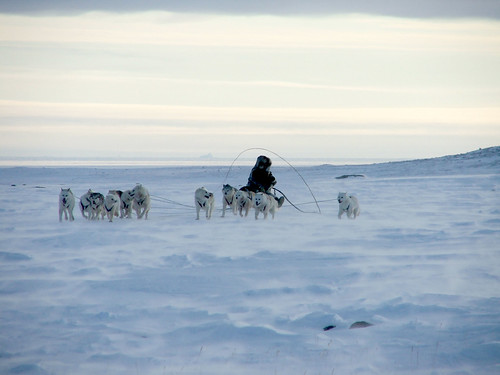
Qimmit – the mysterious disappearance of the Inuit’s sled dogs

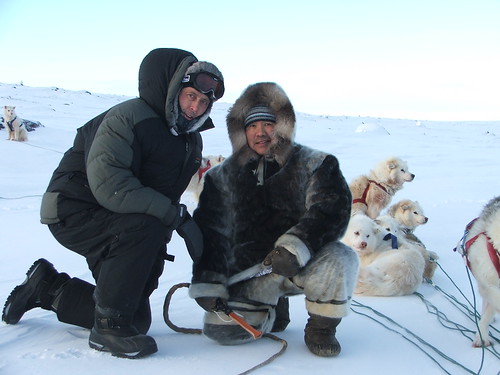
Joelie Sanguya's dog team

Last Friday night, Ole Gjerstad‘s and Joelie Sanguya‘s film Qimmit: A Clash of Two Truths premiered at the Cinéma Parallèle as part of the Présence autochtone aboriginal film festival.

Co-produced by Piksuk Media Inc. and the National Film Board of Canada, the film won the Rigoberta Menchu Second Prize at the 20th First Peoples’ Festival Awards.

Qimmit (“many dogs”) is the story of the seemingly mysterious disappearance of the dog teams in the Inuit communities of the Canadian north in the ’50s and ’60s, shortly after the Inuit were moved off the land and into communities. The film, sets out to tell the story of “one shock, two truths” as the Inuit and the ‘white’ authorities totally disagree on what happened.

Shot during a Quebec inquiry (for Nunavik, the Quebec Arctic territory) and a “truth commission” for Nunavut (the rest of the Eastern Canadian Arctic) the film is full of emotionally wrenching testimony. For the Inuit, there is no doubt that the authorities, and specifically the police, exterminated the dogs in order to force the aboriginal people to become sedentary.

The former constables interviewed for the film denounce these views as lies and fabrication. But the Inuit testimony is very convincing, and the filmmakers wisely see this whole story as an expression of a colonial power relationship. The film is very well made with some stylish and evocative but restrained re-enactments.

Ole Gjerstad and Joelie Sanguaya in Canadian North
Ole Gjerstad with Joelie Sanguya on the set of their film ‘Qimmit: A Clash of Two Truths'

I put a few questions to Ole Gjerstad, who also happens to be one of my best friends.

What was the greatest difficulty making this film?

To convey to an audience in 2010 the colonial reality of the Canadian Arctic forty to fifty years ago. White authority simply took it for granted that they knew what was best for Inuit; Inuit were too intimidated by white authority — as embodied by any white person in their communities — to protest or resist. Things have changed dramatically, but if we cannot get the minds of the audience back to those days it will be very difficult for them to understand how something like this could happen.

“One shock, two truths…” but in the end the Inuit version is so much more believable, partly because it’s emotional first-person testimony. How to explain that the ex-RCMP have blocked this out?

The RCMP produced an internal review, which was conducted much like a police investigation, looking for “proof” and pretty much excluding the context. Add to that the many controversies and scandals that have plagued the RCMP in recent years, and I believe that the top RCMP brass decided the Inuit claims weren’t of much consequence. As for the Sûreté du Quebec, which was responsible for the killing of thousands of dogs after they assumed control of Nunavik in 1961, they simply ignored our requests, as did the Quebec government, saying they didn’t want to discuss the matter until they heard from the Inuit about settling the claims.

I wondered when you say the dogs are back in the lives of the Inuit helping to reconnect with their traditions – it is of course a great thing to say at the end of a film, but is it a reality in many communities?

There are dog teams now in nearly all the communities in Nunavut and Nunavik. They’re used by Inuit outfitters for tourism, for trophy hunting by foreigners, by others for teaching traditional skills to young Inuit, and simply for pleasure. Nobody depends on the dogs to survive, but their return to the communities have established a visible link to a tradition that was at the heart of Inuit life not so long ago.

Last month we filmed a ten-day traditional sled dog race, the Nunavut Quest, for a television series. The enthusiasm and level of interest in all the communities involved leaves me in no doubt that the dogs are like a weapon in Inuit hands to fight against cultural obliteration.

Thanks to Tobi Elliott for her help with this blog.

multi-platform: just another way to tell a story?

Gaza Sderot Arte.tv
arte tv's webdocumentary 'Gaza/Sderot: Life in spite of everything' can be found at http://gaza-sderot.arte.tv

I have heard many people say that multi-platform production is ‘just another way to tell a story.’ It sounds simple, clear-cut, reassuring.

But is that it? I think not. There is a huge difference in the way you can communicate content with a multi-platform project.

When you tell a linear story, you are grappling with some time-honoured issues such as dramatic structure, character development, narrative progression, resolution. I have struggled with these for so long, in so many projects, that I feel they have become second nature. Now, when I approach a film idea, I look at it from that angle right away, not just as a subject or a theme or an issue.

But in conceiving a multi-platform project, you are NOT just telling a story, you are conceiving an experience. Not even just a viewer experience, but – due to the interactivity of Web 2.0 – a user or participant experience.

I worked with producer Patricia Bergeron for a couple of months, and learned from her that the user experience is central to any multi-platform experience. (Patricia has many excellent texts about cross-platform production on her Delicious account.) As the winners of the DOC Reboot contest, we had the opportunity to consult with several leading experts in the field, and with Brett Gaylor of Eyesteel films. (See my previous post.)

But one of the best explanations I have heard of multi-platform production was provided at an NFB panel at Hot Docs a few weeks ago, by Hugues Sweeney and Rob McLauglin, respectively from the French and English production branches of the NFB.

Said Sweeney: “In multi-platform, the creator is an architect. Even before shooting, he/she has to edit, to conceive a space into which the user can come to live an experience. The role of the author really is to define that experience. This means a lot of preparation, and you have to think of the audience as being actively involved in the experience.”

For my own work, I certainly hope to continue making feature length documentaries. But I see multi-platform production as a way to actually bring back many of the things I felt I had to sacrifice in making a film: the context and background, information about issues, debates and points of view on the subject. I think actually that films sometimes aren’t as good as they could be because they try to incorporate too much of this kind of material in a linear story.

Now, with the possibility of exploring these kinds of materials on the other platforms, we could feel even freer to focus a film on excellent storytelling.

Provided, of course, that there is continued support and funding for linear docs as well as the new platforms.

Thanks to Tobi Elliott for her help with this blog.

The Socalled Movie

Socalled and The Socalled Movie
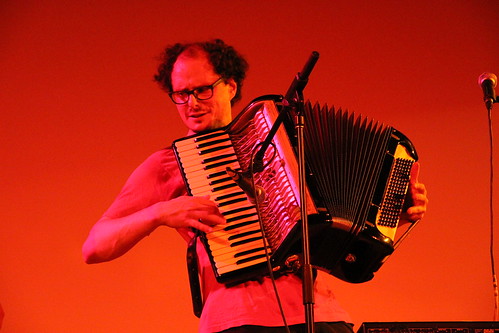
Socalled performed following the Montreal premiere. Photo by Emilie Nguyen Ngoc.

I went to see Garry Beitel’s film The Socalled Movie when it premiered in Montreal a few days ago. A terrific evening: great film, great audience, all very Montreal. The post-screening Q & A was followed by a concert by the film’s main character, musician Socalled (aka Josh Dolgin) with his band.

Socalled is a truly original creator of hard-to-classify music which (to borrow a few lines from the press release) mashes up funk and hip-hop with Jewish klezmer. “Socalled is a pianist, singer, arranger, rapper, producer and composer – and also a magician, filmmaker and visual artist – a creative force who blasts through the boundaries that separate music of different cultures, eras and generations.”

Josh is funny, creative, touching, and unstoppable. Garry Beitel sees the star of his film as having “an amazing ability to take great music from the past and plug it into the current moment.”

Socalled Movie - NFB still

The Socalled Movie is structured in neat little chapters, inspired by François Girard’s Thirty-two Short Films About Glenn Gould (1993). In spite of this, the film has real unity and a dramatic arc that really works. During the Q&A, Garry said he felt this approach was appropriate because the main character is such a multi-talented chameleon: “Just when you think you’ve figured out who he is, you discover another dimension which challenges your perception.”

Seeing Garry’s film, I had a sense of a filmmaker having reached real maturity. Everything about the film breathes experience and long-standing collaborative relationships – notably with DOP Marc Gadoury and editor Dominique Sicotte, who both did fantastic work.

The film was produced by Barry Lazar (reFrame Films) and Ravida Din (The National Film Board of Canada.)

The Socalled Movie begins its cross-Canada theatrical run June 4 – 11 here in Montreal @ Cinéma du Parc (3575 Ave. Du Parc), and June 5 – 8 & 10 @ CinemaSpace, Segal Centre (5170 Cote-Ste-Catherine).

It opens in Quebec City June 4 @ Le Clap (2360 chemin Sainte-Foy) and plays New York City’s NewFest June 08 @ JCC in Manhattan (334 Amsterdam Avenue.)

Other release dates on the film’s blog here.

Thanks to Tobi Elliott for help with this post.

The multi-platform revolution

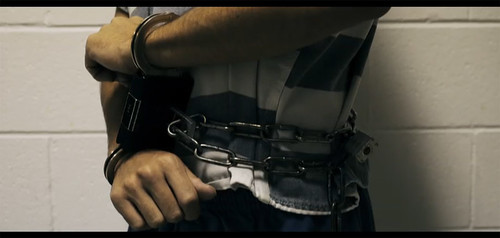
Prison Valley webdocumentary (screengrab)

This is a still taken from an excellent interactive web documentary, Prison Valley by David Dufresne & Philippe Brault, produced by arte.tv and upian.com, in partnership with FranceInter, Libération.fr and Yahoo.com.

The world of documentary production is in the midst of an upheaval, the likes of which have not been seen since the coming of cinema vérité/direct cinema in the first years of the sixties.

Digital technology and the Web 2.0 has meant that virtually anyone can be a content producer – or filmmaker – and that the user can express opinions and interact with other producers. We are no longer limited to watching programs on TV at predetermined times – and with commercial breaks.

There is no longer “an audience,” there are audiences. What used to be small niche audiences on a given territory can now be a substantial global audience. It is a revolution, and as all revolutions it comes with pain and loss as well as increased freedom.

We are experiencing this transition in quite a radical way in Canada right now, because government agencies such as the National Film Board and the new Canadian Media Fund have decided to invest heavily in multi-platform production.

Some filmmakers are focusing on the negative consequences. I think this is a mistake, because multi-platform production opens the door to new ways of reaching and audience, and new ways of telling stories. I don’t see these as replacing the traditional ‘linear’ stories but rather, complementing them.

But even this means a substantial change in the way we work.

More on this another day, as I will review several of these multi-platform projects and interview their authors.

Thanks to Tobi Elliot for help with this post.

Marcel Simard’s last film

MARCEL SIMARD, filmmaker
Director Marcel Simard

There is a reason why I write this in English. Most francophones in Quebec who take an interest in cinema will already be aware of what I’m about to tell you.

“There are adults who have antennas for the secret pain of our little ones – forms of suffering that are often taken to be unimportant.” Those are the opening words of Marcel Simard’s last film, spoken by himself. ‘Last film’, because Marcel is no longer with us.

Like the people he portrayed in his films, Marcel was incredibly sensitive. The sometimes overwhelming challenges of being alive and people who were close to the edge were not only his subjects, they were also an inescapable part of his own life. As he said in a statement read at his funeral, this suffering had become unbearable, and he wasn’t able to face it one more day. He isn’t here to enjoy the success of his film.

Le petit monde d’Elourdes, the title of Marcel’s beautiful film, is a play on words. It means Elourdes’ children, or Elourde’s little world. It follows the first- to third-grade students of a special Montreal school, and their incredible teacher Elourdes Pierre over a period of a year.

Elourdes Pierre, Montreal teacher
Montreal teacher Elourdes Pierre

A woman of colour, Elourdes is beautiful, sensitive, intelligent and caring. With infinite patience she attends to all the seemingly small dramas that play themselves out among the children. Many of them revolve around the conflicts between the girls who often seek exclusive friendship (a father of two daughters, I am very familiar with this. Margaret Atwood has written about it…), but others have to do with the aggressiveness of some of the boys.

For the children these are deadly serious issues, and Elourdes – just like Marcel – understands this. Her interaction with the children is beautifully filmed by Arnaud Bouquet – and kudos to sound man Pierre Duplessis who doesn’t miss one word of what the children say, or sometimes whisper.

In a very moving scene Elourdes explains her agenda: if she can teach these children to resolve their conflicts here, at this age, without violence or residual resentment, they will have learned a skill for life, and our world will be better for it.

In following the class for a year, this film resonates with other French-language films like Être et Avoir and La classe de Mme Lise. In its study of human motions as expressed at an early age, it is reminiscent of Claire Simon’s La récréation.

I made three films with Marcel Simard and his wife Monique Simard, at Les Productions Virage. (For titles see my web site.) Virage produced many of the best social-issue documentaries in Quebec. I loved Marcel’s understanding of people (he seemed to see right through any kind of façade or disguise, seeing people’s soul…) and of cinema.

Like a lot of Quebec filmmakers, social workers and people involved in fights for social justice, I will miss him enormously.

Erica Pomerance et les défis des femmes africaines

Erica Pomerance: 'Mère et enfant'

Jocelyne Clarke qui contribue régulièrement à ce blogue nous parle d’une cinéaste très engagée, aussi basée à Montréal.

À Vues d’Afrique cette année, j’ai vu un film important réalisé par Erica Pomerance, « Opération survie », sur un sujet pas très « sexy » mais o combien pertinent pour les femmes africaines, la fistule obstétrique.

Selon les statistiques, environ 2 million de femmes dans le monde sont affligées par cette condition, généralement associée à des accouchements difficiles, sans aide médicale, et en Afrique, à l’excision qui continue à être pratiquée de manière courante dans certaines régions. C’est un problème à la fois physique et social – les femmes sont exclues de leurs communautés parce qu’elles sentent mauvais, perdant constamment leur urine.

Le film a été réalisé avec la collaboration du Dr. Danielle Perreault, médecin généraliste et urgentologue québécoise avec un intérêt spécial pour la santé des femmes, chroniqueuse à RDI et photographe. Elle voyage tant au Grand Nord que dans les pays du Sud, toujours dans le but de sensibiliser et d’instruire.

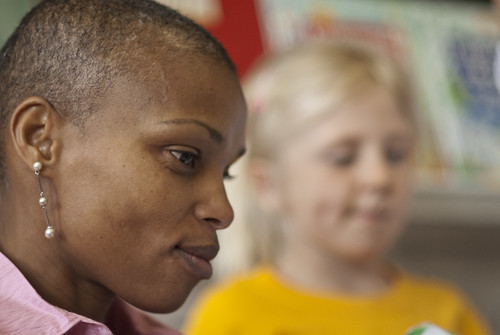
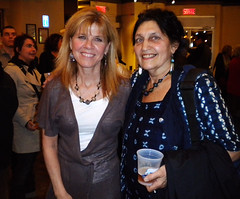
Dr. Danielle Perreault (gauche) avec Erica Pomerance

La Dr. Danielle Perreault et Erica Pomerance au lancement du film.

Erica Pomerance s’intéresse depuis longtemps à l’Afrique. En 1997 elle a réalisé le très beau « Tabala – rythmes dans le vent » sur la musique et la danse africaines à Montréal. En même temps, elle s’intéressait à la réalité des femmes africaines et avait amorcé une recherche sur l’excision, et surtout sur les gestes posés par les mouvements de femmes africaines qui s’y opposaient. Suite à presque dix ans de recherche et de travail acharné sur terrain, elle a sorti « Dabla ! Excision » avec la maison de production Virage et Monique Simard.

Depuis, elle a réalisé 4 autres films en l’Afrique : Miroir en Face (2006 Via Le Monde); Caravane (2008), auto-production avec l’intiative qu’elle a fondée, Taling Dialo, vouée à la formation vidéo en Afrique ; « Ndomo , Les Cinq Doigts de la Main » (2009), sur l’initiation des filles au Mali, co-réalisé avec Isabelle Garceau, et « Opération survie ».

Dans un contexte de production documentaire de plus en plus ardu, d’autant plus qu’elle parle de réalités lointaines, Erica possède une passion évidente et une détermination sans égal. Je la croise souvent alors qu’elle s’apprête à quitter le froid Canadien, caméra à la main, armée de la seule confiance qu’éventuellement elle trouvera le financement pour son nouveau projet.

À travers ses oeuvres et les réalités « autres » qu’elle nous fait connaître, Erica se mérite vraiment le titre de cinéaste engagée.

Seen at Hot Docs

Monica and David_2
Monica and David

I was at Hot Docs in Toronto, now one of the world’s leading documentary festivals, all of last week. I wasn’t able to see some of the films I really wanted to see because of meetings. But here are a few screening notes.

The most surprising film I saw was Feathered Cocaine, an Icelandic film which starts out as a film about falconeering and falcon smuggling, then veers off into the drug trade, and finally ends up very convincingly proving that the U.S. authorities never really tried to catch their declared Enemy # 1, Ousama Bin Laden !

While the Americans claimed to be searching for him in Waziristan, he spent several months every year in meetings with his financiers in hunting camps in the Iranian desert, with his five falcons which were all equipped with radio emitters.

The U.S. authorities, including the CIA and the Pentagon, showed no interest in first-hand information about these facts. The story is no joke, it’s journalistically sound, backed up with solid evidence. Chapeau !

Another very impressive film: Secrets of the Tribe, a shocking story of how several generations of anthropologists have used unequal power relationships to take advantage of the Yamomami people of the Venezuelan rain forests. Medical experiments without informed consent, pedophilia, the building on scientific reputations and super-egos on the backs of unsuspecting aboriginals, it’s a real horror story.

As a reader of the world’s best newspaper, the Guardian Weekly, I was well aware of this story already. But the film tells it well and should be a must-see for the academic world.

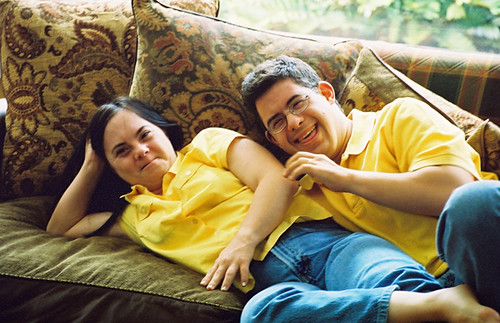
But the most moving film I saw was Monica and David, a film about two young people with Downs syndrome who get married. As in any case where the social conventions are stripped away and you are confronted with strong emotions, this is captivating.

But in this case, the emotion is love, and the two young people show enormous courage in confronting their challenges -as do their mothers and other members of the family. I was very impressed by the quality of shooting, sound recording and editing in this first film by director Alexandra Codina. Great work !

ACodina2774
Director Alexandra Codina

I am leaving for a future post John Walker’s excellent film A Drummer’s Dream.

Thanks to Tobi Elliott for help with this post.

Based on a true story: the Informant!

the informant_1

I just saw the film The Informant! labeled a dark comedy, directed by Steven Soderbergh, starring Matt Damon, based on the 2000 non-fiction book by the same name by journalist Kurt Eichenwald. It tells the story of a bumbling whistleblower who takes on the management of the giant agribusiness corporation he works for, but who is too naive and too compromised by his own complicity in the corporate game to succeed. Indeed, at the end of the movie he ends up in jail.

I often find fiction films more inspiring than documentaries when it comes to structure, style and texture, and this is one example. ( Another fairly recent one, which I loved for the style of shooting and editing, was Enemy of the State.) You can learn an awful lot from watching The Informant! about the amount of complexity a film can handle, about character development and ‘narrative economy’ and about a creative and entertaining way to convey the thoughts of the main character.

In addition, I have a long-standing interest in the role and fate of whistleblowers who play a key role in the fight for accountability and democracy. I sometimes discuss these issues with the Executive director of FAIR ( The Federal Accountability Initiative for Reform) David Hutton.

Hutton

David has this to say about The Informant! :

“Yes I did see the movie, and it was very entertaining. However, although Mark Whitacre helps expose a massive corporate fraud, he turns out to be a delusional fraudster trying to cover his own tracks with layer upon layer of untruths. This makes him completely unlike any whistleblower that I know.

The common characteristic that I have found among whistleblowers is personal integrity. They are ordinary people whose personal values simply would not allow them to collude in wrongdoing that would harm others. So they feel compelled to speak out even though this puts their own careers at risk. Even when their careers have been ruined, they often express no regrets, saying that they felt they had no choice but to do what they did. So in my mind the word ‘whistleblower’ is synonymous with ‘truth-teller’. Thank goodness that there are so many of them: they typically pay dearly for their courage, but the world would be a poorer and more dangerous place without them.”

The personal crises typical of the whistleblower experience are well rendered in another Soderbergh film, Erin Brockowich, one whose strength lies more in the writing and in the performances than in the visual treatment. Brockovich, as played by Julia Roberts, gets so caught up in her inquiry into corporate wrongdoing that she starts neglecting her children and her lover. When she receives a threatening phone call, it leads to increased stress and separation. The personal crisis theme is even more developed in The Insider, where Jeff Wigand (played by Russell Crowe) is subjected to all manner of blackmail,threats, intimidation and violence, with disastrous consequences for his family life. Again, the story line of The Insider stayed very close to the real life story, as told in the Vanity Fair article on which the film was based.

Thanks to Jessica Berglund and David Hutton for help with this post.

Extremely risky, equally crucial: Burma VJ

Burma VJ

A couple of days ago, I had the opportunity to once again see Burma VJ, one of the most remarkable documentaries from last year. The film documents the use of small digital cameras by courageous Video Journalists – VJ’s – to reveal what goes on inside the Burmese dictatorship. With digital cameras and satellite uploads it is possible to distribute images worldwide within hours. Working with the Democratic Voice of Burma, a non-profit media organization based in Norway where it gets some of its funding, these courageous video activists do just this. Their work made all the difference during the 2007 uprising led by buddhist monks across the country. Although international news crews were banned and the Internet shut down, images of both the protests and the repression were quickly communicated to the outside world. This striking footage made the newscasts on major networks including the BBC and CNN. This was in stark contrast to the successful information blackout during the student revolt twenty years ago, in 1988. So, as we have seen with the use of digital images and Twitter messages in Iran recently, courage and technology can be a powerful force for social and political change.

Burma VJ by Danish filmmaker Anders Ostergaard, produced by Magic Hour Films, combines VJ footage with some recreations of their ‘tactical leader’ Joshua directing operations over the phone. As the threat of life imprisonment and even death becomes very tangible for the VJ activists, the tension in the film is almost unbearable.

Burma VJ was shown last fall at the Rencontres Internationales du Documentaire de Montréal in the presence of Khin Maung Win who is one of the leaders of The Democratic Voice of Burma. My assistant Alexander and I took advantage of the opportunity to ask him about the use of small video cameras.

We also asked about the upcoming elections in Burma and what he expects the role of the VJ’s to be in that context.

Burma VJ has won some 30 International awards, the latest being the Grierson Best Documentary Award in Britain. The film is now on a short-list for best documentary at the Academy Awards. The finalists will be announced on February 2nd. I’m hoping that Burma VJ will be among them, because not only is this a cause that deserves all the attention it can get, but because it is also truly a great film.

Thanks for the help with this blog post to Alexander Carson and Jessica Berglund.